Your outdoor deck is one of the most valuable additions to your home. We at Home Owners Association know that choosing the right decking timber ideas can transform your backyard into a space you’ll actually use.
Whether you’re drawn to hardwoods, softwoods, or modern composites, the material you select will shape both how your deck looks and how long it lasts. This guide walks you through the options, design styles, and practical maintenance steps to help you build a deck that fits your budget and lifestyle.
Choosing the Right Decking Timber for Australian Conditions
Hardwoods dominate Australian decking for good reason. Spotted Gum offers an attractive grain pattern with minimal staining requirements, making it a practical choice for most homeowners. Blackbutt delivers excellent sun resistance and durability, though it requires regular sealing to maintain its appearance. Jarrah and Ironbark provide superior longevity but command higher prices-typically 40 to 60 per cent more than softwoods. Merbau presents a rich red tone that ages beautifully, but its tannins leach onto light-coloured surfaces nearby, so avoid placing it close to pale pavers or concrete. If budget is tight, treated pine offers solid performance at a fraction of the cost, though it demands more frequent sealing and maintenance. Cedar works well in sheltered positions but lacks the durability of hardwoods in exposed areas.
When Composite Makes Sense
Composite decking has genuinely transformed the market. These materials resist fade, rot, and warping without the seasonal maintenance timber demands. They perform exceptionally well for poolside installations because they resist moisture and warping, and last longer in chlorine environments. Recycled composite options now align with environmental values while delivering the durability homeowners expect. The trade-off is authenticity-composite lacks the natural warmth of timber and feels different underfoot. In fire-prone areas, composite becomes the safer choice, particularly in regions prone to bushfires where certain hardwoods pose real risks. Cost-wise, composite sits between budget softwoods and premium hardwoods, ranging from AUD 500 to AUD 900 per square metre depending on quality and brand.

Material Selection for Your Climate
Climate durability matters more than aesthetics. Spotted Gum, Merbau, and Jarrah withstand Australia’s intense UV exposure better than softer timbers. If your deck receives full sun exposure, these hardwoods justify their premium cost through extended lifespan. Conversely, sheltered decks in shaded positions can perform adequately with treated pine or cedar at substantially lower cost. Coastal properties face salt spray challenges that accelerate deterioration-hardwoods with proper finishes outperform softwoods by years. The decking costs typically range from AUD 300 to AUD 1,000 per square metre depending on material selection and installation complexity. Before you commit, order samples from established suppliers and observe how different timbers weather in your specific backyard conditions over several weeks. This hands-on approach reveals which materials truly suit your environment and personal preferences.
Designing Your Deck for Real-World Use
Minimalist Timber Decks That Maximise Space
Modern minimalist timber decks work best when you strip away unnecessary elements and focus on clean lines that complement your home’s architecture. Open layouts without visual clutter perform significantly better than cluttered designs-they create sightlines that make even modest backyards feel larger. Composite decking in neutral tones like grey or soft brown pairs exceptionally well with minimalist approaches because the uniform finish eliminates the visual busyness that timber grain patterns introduce. Built-in seating integrated directly into the deck frame saves space and delivers a sleek finished look without scattered furniture crowding the surface.

Avoid adding pergolas or shade structures to minimalist designs unless they serve a functional purpose; if shade becomes necessary, choose simple aluminium or vinyl options rather than ornate timber versions that compete visually with your clean aesthetic.
Poolside Minimalist Decks
Poolside minimalist decks benefit from non-slip composite finishes and clear sightlines around the water’s edge, which improves safety while maintaining the streamlined appearance you’re after. This approach eliminates unnecessary visual elements that distract from the water feature itself.
Coastal and Rustic Aesthetics
Coastal and rustic aesthetics demand different material choices and design approaches. Hardwoods like Merbau deliver striking golden-brown tones that define coastal character, though you’ll need to accept higher maintenance requirements and the natural colour variation that occurs over time. Wraparound decks that encircle your home work particularly well for coastal properties because they expand entertaining space and create multiple zones for dining, lounging, and entertaining without feeling cramped.
Multi-Level Designs for Uneven Terrain
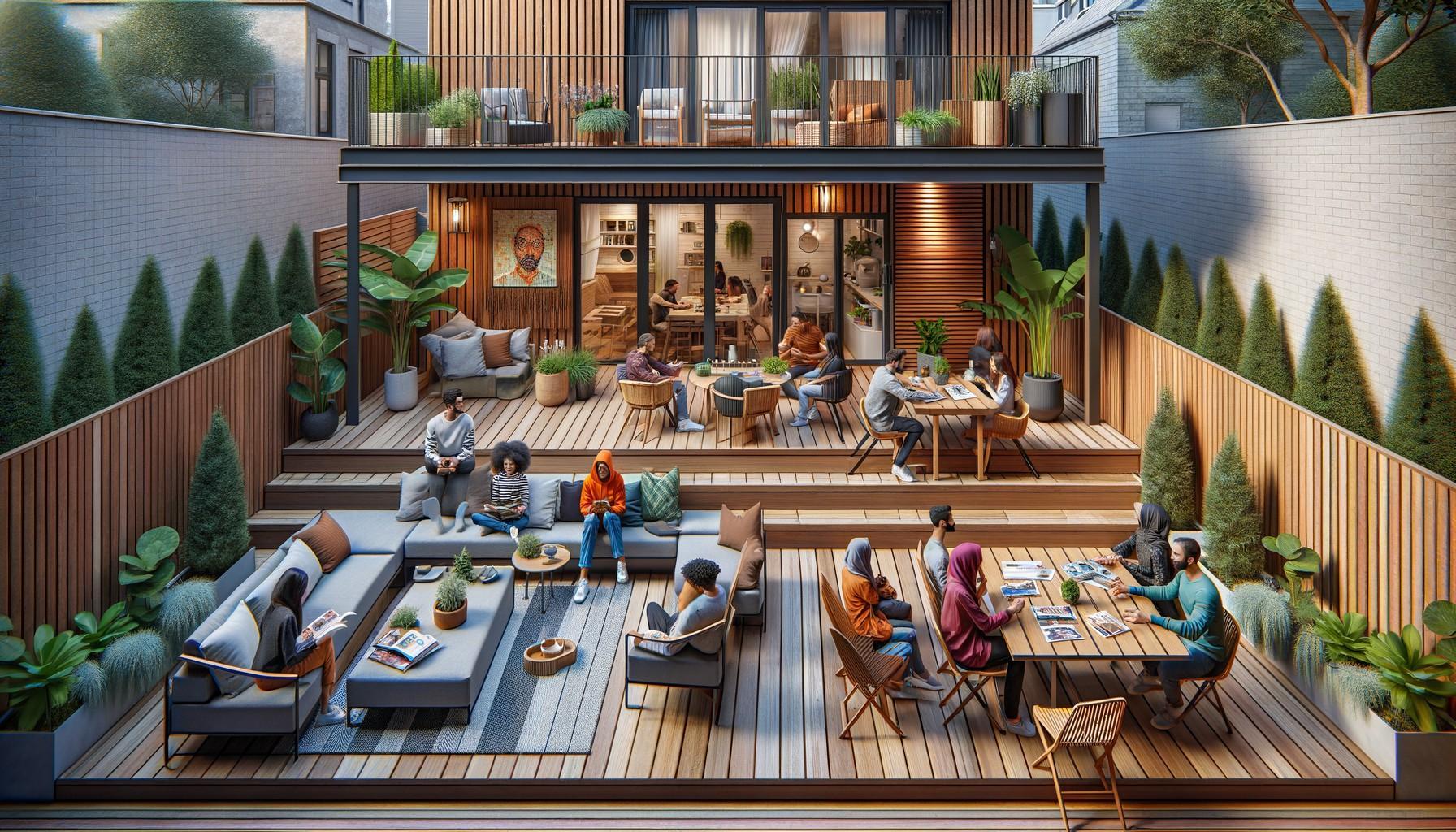
Multi-level decks transform sloped or uneven terrain into functional outdoor living, with upper tiers suitable for dining and lower areas for relaxed lounging. Connect each tier with stairs or ramps to improve accessibility and flow-this practical approach also adds visual interest that rustic designs genuinely benefit from. Built-in borders or planters around deck edges define zones and add a cohesive, finished appearance that ties the deck to surrounding landscaping.
Curved Decks and Lighting for Ambience
Curved decks offer a creative aesthetic that blends naturally with gardens and water features, transforming backyards into peaceful retreats rather than geometric extensions of the house. Deck lighting becomes essential for usability after dark; garden string lights, lanterns, and static solar lights enhance ambience while enabling year-round evening use without artificial harshness that detracts from rustic charm. These design choices set the foundation for understanding how material selection and maintenance practices work together to protect your investment over time.
Protecting Your Investment Through Smart Maintenance and Planning
How Maintenance Schedules Shape Your True Costs
Timber decks deteriorate fastest when maintenance falls behind schedule, and this reality shapes every decision about material selection and long-term costs. Hardwoods like Spotted Gum and Blackbutt require UV-protective finishes every 6 to 12 months in Australian climates, while treated pine needs annual attention to prevent moisture penetration and rot. Composite decking eliminates this burden entirely-these materials need only occasional cleaning with mild soap and water, making them genuinely superior for homeowners unwilling to commit to seasonal maintenance cycles. The cost difference becomes significant over a decade: a timber deck absorbs AUD 800 annually in sealing products and labour versus composite requiring perhaps AUD 100 yearly in basic cleaning supplies.
Poolside Installations and Material Reality
Poolside installations shift this equation dramatically because chlorine and constant moisture accelerate timber degradation, making composite the only sensible choice despite higher upfront material costs ranging from AUD 500 to AUD 900 per square metre. Hardwoods in exposed positions last 15 to 20 years with disciplined maintenance, while untreated softwoods fail within 5 to 8 years. Composite extends to 20 to 30 years with minimal intervention, and this longevity justifies the premium when calculated across the entire lifespan.
Labour Costs That Most Homeowners Overlook
Budget planning requires honest assessment of your maintenance commitment rather than romantic notions about natural timber aesthetics. Many homeowners underestimate costs because they ignore labour for professional sealing-contractors charge AUD 25 to AUD 45 per square metre annually for this work. A modest 20-square-metre deck translates to AUD 500 to AUD 900 yearly in maintenance labour alone, compounding dramatically over time.
Installation and Total Lifecycle Expenses
Installation costs add another layer: hardwood decks typically run AUD 400 to AUD 1,000 per square metre installed, while composite sits at AUD 500 to AUD 900 per square metre. A 30-square-metre hardwood deck costs AUD 12,000 to AUD 30,000 initially plus AUD 15,000 to AUD 27,000 in maintenance over 20 years. The same footprint in composite costs AUD 15,000 to AUD 27,000 upfront with only AUD 3,000 to AUD 6,000 in maintenance across two decades.

Permits and inspections add AUD 200 to AUD 1,500 depending on your local council, and this expense applies regardless of material selection.
Getting Accurate Quotes Before You Commit
Obtain multiple quotes from established suppliers before committing, as pricing varies substantially between regions and quality tiers. This comparison process reveals which materials and contractors offer genuine value for your specific situation and budget constraints.
Final Thoughts
Your decking timber ideas should balance material durability in Australian conditions, design that suits your lifestyle, and honest assessment of your maintenance commitment. Hardwoods like Spotted Gum, Blackbutt, and Merbau deliver authentic aesthetics and longevity but demand seasonal sealing and professional care. Treated pine offers budget-friendly performance for sheltered positions, while composite materials eliminate maintenance entirely and resist moisture and UV damage, making them the practical choice for poolside installations and fire-prone regions.
Design decisions matter equally because they determine how you actually use your outdoor space. Minimalist layouts with clean lines and built-in seating maximise small spaces, while multi-level decks transform uneven terrain into functional zones. Curved designs and wraparound configurations create character for coastal properties, and lighting extends usability into evening hours without requiring elaborate structures.
We at Home Owners Association recommend consulting with experienced professionals before committing to any major deck project. Members access trade pricing and expert guidance that ensure projects meet quality standards while delivering genuine savings on materials and labour. This partnership approach transforms deck building from overwhelming decision-making into confident planning backed by local expertise and community support.