Water damage in bathrooms costs homeowners thousands of dollars annually. At Home Owners Association, we’ve seen firsthand how waterproofing bathroom membranes prevent costly repairs and protect your home’s structure.
This guide walks you through the types of membranes available, installation best practices, and how to safeguard your bathroom for years to come.
Why Waterproofing Matters Now
Water damage strikes fast and costs more than most homeowners expect. Australian home insurance claims data from 2018–2021 shows that 24% of all claims were water-related, making moisture ingress one of the leading causes of structural damage and costly repairs. When bathroom waterproofing fails, water seeps behind walls and under floors, compromising the structural integrity of your home within months.

Mould develops quickly in damp environments, creating health hazards that affect indoor air quality and require expensive remediation. Electrical systems corrode when exposed to moisture, creating safety risks that demand immediate attention.
The Financial Reality of Water Damage
A small leak today becomes a five-figure repair bill tomorrow. Homeowners face repair costs ranging from $5,000 to $50,000 when water damage goes unaddressed, depending on the extent of structural compromise and the materials affected. Professional waterproofing costs between $50–$80 per square metre, making a standard bathroom waterproofing project around $700–$1,500 in labour alone. Compare this to the expense of replacing water-damaged joists, subfloors, or wall frames, which can exceed $15,000. The numbers make the choice clear: invest in proper waterproofing now or pay far more later.
Why Quick Fixes Fail
Attempting to repair waterproofing over existing tiles rarely works. The membrane cannot bond properly to old adhesive or tile surfaces, and most standards require stripping back to the substrate to meet AS 3740:2021 compliance. This means a quick fix transforms into a full bathroom renovation, multiplying costs dramatically. Delaying waterproofing creates a false economy that compounds over time. Proper membrane installation takes 3–4 days from application to tiling readiness-a reasonable investment that protects decades of home value.
Long-Term Protection Through Compliance
When waterproofing meets AS 3740:2021 standards, with shower walls protected to 1800 mm above the floor and wall-to-floor junctions sealed with proper 40 mm horizontal flashing, your bathroom resists moisture for the life of the building. The membrane acts as a continuous barrier that prevents water from reaching structural elements, finishes, and electrical systems. This protection reduces maintenance costs over 20–30 years, eliminates unexpected emergency repairs, and maintains your home’s resale value.

Proper ventilation paired with compliant waterproofing keeps humidity levels stable, preventing condensation-related mould growth.
Understanding the stakes of waterproofing sets the foundation for choosing the right membrane type. Each membrane option offers distinct advantages depending on your bathroom’s specific conditions and substrate type.
Types of Waterproofing Membranes
Liquid-Applied Acrylic Membranes Lead the Market
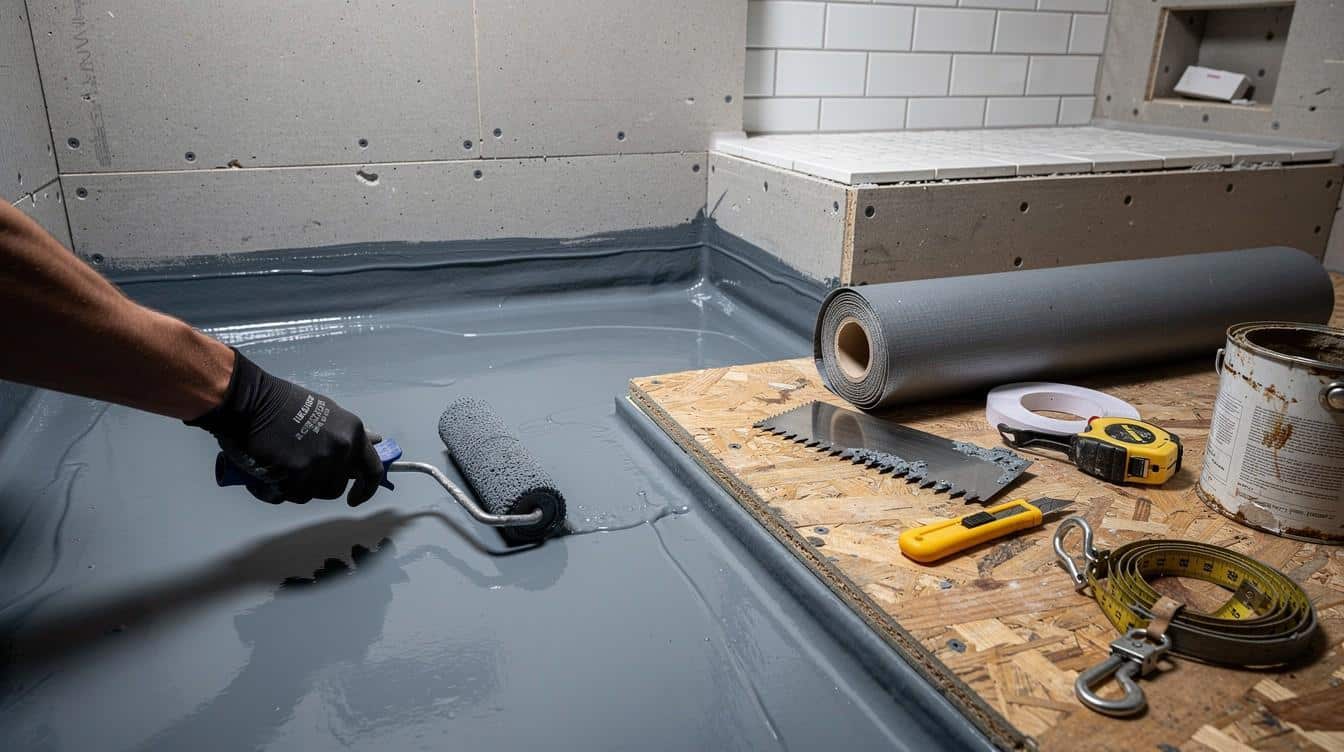
Liquid-applied acrylic membranes dominate Australian bathrooms for solid reasons. They cost around $8–$15 per litre, making them the most affordable option available, and they perform exceptionally well on concrete and render substrates that most bathrooms feature. The seamless coverage they provide eliminates seams that fail around irregular corners or penetrations-a critical advantage in wet areas where water exploits every weak point. A licensed waterproofer applies two coats at 90 degrees to each other, achieving the required 1.0–1.5 mm dry film thickness specified by AS 3740:2021. The first coat cures in 4–6 hours, allowing the second coat to go down the same day, so your project timeline stays tight.

Acrylic membranes resist UV degradation, meaning they won’t break down if accidentally exposed during construction delays. For most homeowners, liquid-applied acrylic offers the practical choice because it balances cost, performance, and installation speed without compromise.
Polyurethane Membranes for Movement-Prone Structures
Polyurethane membranes offer superior flexibility and excel when your bathroom sits on a steel-frame structure prone to minor movement. They bridge small cracks better than acrylics and accommodate building settlement that would crack a rigid membrane. The trade-off is price-expect to pay significantly more than acrylic-and installation requires more precision because polyurethane is less forgiving on damp substrates. Substrate moisture causes delamination, so preparation becomes even more critical with this membrane type.
Sheet Membranes and Cementitious Options
Sheet membranes provide consistent thickness and eliminate seam variability, but they demand perfectly flat, regular surfaces to bond properly. Any lumps or irregularities in substrate preparation cause voids that trap moisture and compromise performance. Cementitious waterproofing creates a rigid barrier suitable for robust wet zones but doesn’t accommodate movement and requires a structurally stable substrate to perform. Neither option adapts to surface variations as readily as liquid-applied systems.
Selecting the Right Membrane for Your Bathroom
For shower walls needing waterproofing to 1800 mm and wall-to-floor junctions sealed with 40 mm horizontal flashing, liquid-applied systems remain the most reliable because they adapt to every surface variation your bathroom presents. Whichever membrane you select, WaterMark approval is non-negotiable-using non-certified products voids warranties and breaches AS 3740:2021 compliance. A non-compliant membrane transforms a properly waterproofed bathroom into a liability that exposes your home to the very water damage you sought to prevent. The membrane choice sets the stage for installation, where surface preparation and application technique determine whether your waterproofing protects your bathroom for decades or fails within years.
Installation Best Practices for Bathroom Membranes
Proper installation separates bathrooms that stay dry for decades from those that fail within years. The difference comes down to three non-negotiable steps: substrate preparation that removes every trace of contamination, application technique that achieves the correct dry film thickness, and meticulous attention to the areas where water causes the most damage. Most waterproofing failures trace back to rushing substrate preparation or skipping the reinforcing bandage tape around corners and joints.
Prepare the Substrate Correctly
AS 3740:2021 demands a completely dry substrate, and damp surfaces cause membrane delamination faster than any other single factor. Licensed waterproofers begin by ensuring the substrate is structurally sound, clean, and free of dust, grease, and loose material. Fill any cracks with flexible filler and allow full curing before priming starts. The substrate needs a minimum 1:60 fall to the drain, meaning for every 60 mm of horizontal distance, the surface drops 1 mm toward the floor waste. Without this slope, water pools behind the membrane and compromises the seal. Once the substrate passes inspection, apply the primer first to bond the membrane to porous surfaces like concrete and render. This step is often skipped by inexperienced applicators, leading to delamination months after the work finishes.
Apply Coats With Precision and Timing
A licensed waterproofer applies the first coat evenly across all required areas, ensuring complete coverage of edges, corners, and penetrations. Before the coat cures, install reinforcing bandage tape around every 90-degree corner, wall-to-floor junction, and pipe penetration. This bandage is critical because corners are where water exploits failures first. After 4–6 hours of cure time, apply the second coat at 90 degrees to the first, achieving the required 1.0–1.5 mm dry film thickness specified by AS 3740:2021. Anything thinner than 1.0 mm breaches compliance standards.
Test and Verify Before Tiling
The membrane must cure fully for 24–72 hours before tiling starts. Flood testing by filling the wet area to at least 25 mm for a minimum of 24 hours reveals any leaks underneath before adhesive covers the membrane. Shower walls must reach 1800 mm above the floor substrate, and wall-to-floor junctions need a 40 mm horizontal flashing leg to stop moisture creeping sideways into the structure. Professional waterproofing typically costs $50–$80 per square metre, and this investment covers the difference between a 30-year membrane and a 3-year failure.
Document Everything for Warranty Protection
Always demand a written certificate listing products used, WaterMark approval numbers, treated areas, and the applicator’s licence details. This documentation protects your warranty and proves compliance if you sell the home. Using experienced, licensed installers significantly reduces installation risks and ensures your bathroom meets current standards and will resist water damage for decades.
Final Thoughts
Waterproofing bathroom membranes protects your home from the water damage that affects one in four Australian insurance claims. Licensed waterproofers understand substrate preparation, achieve the required 1.0–1.5 mm dry film thickness, and perform flood testing before tiling starts-investments that prevent five-figure repairs later. Compliance with AS 3740:2021 standards transforms your bathroom into a moisture-resistant space that maintains value for decades.
Contact a licensed waterproofer to assess your bathroom’s specific conditions and substrate type, then request quotes that include full documentation and warranty details. The 3–4 day timeline and $50–$80 per square metre cost represent genuine savings compared to the emergency repairs that follow waterproofing failures. Home Owners Association members benefit from substantial savings on construction materials and personalised support throughout their renovation journey.