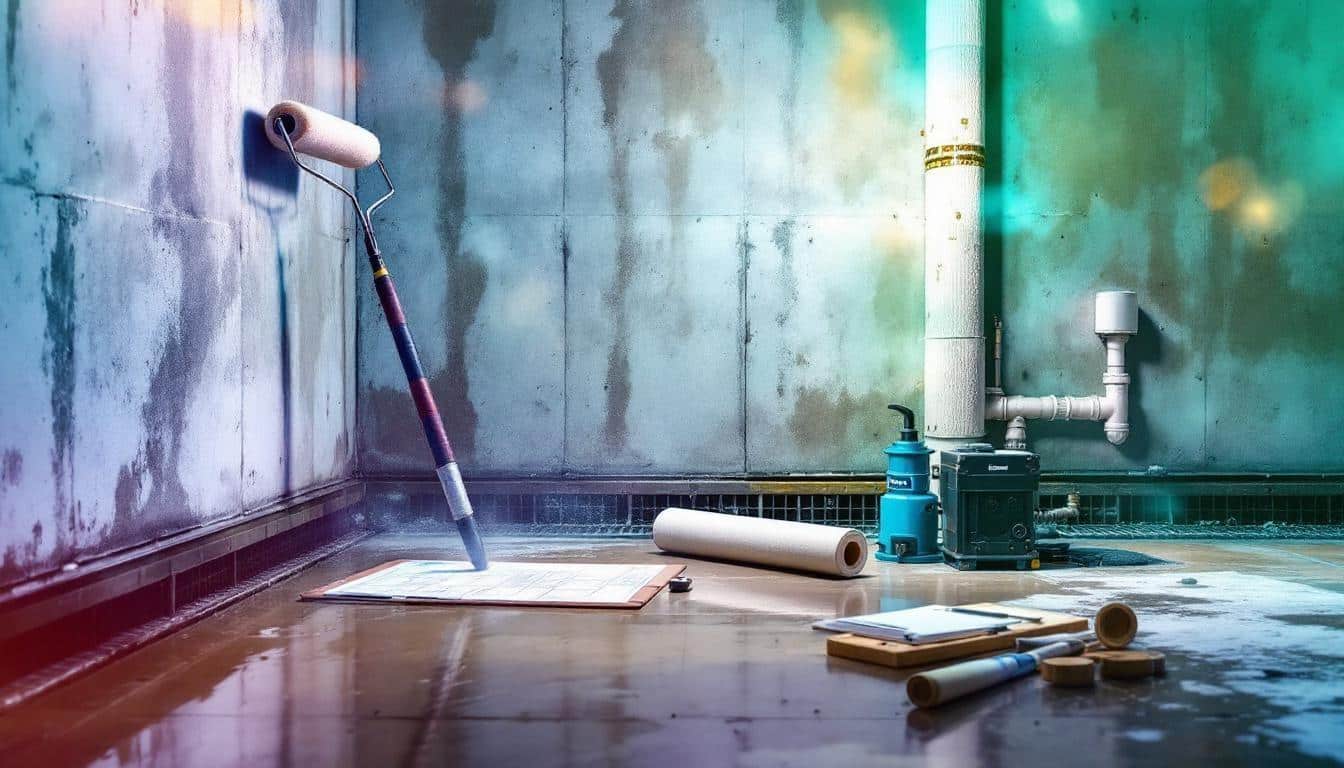
Water damage in Australian basements costs homeowners thousands in repairs every year. At Home Owners Association, we’ve seen firsthand how basement waterproofing Australia can be the difference between a dry, usable space and costly structural problems.
This guide covers the real causes of basement water damage, proven waterproofing solutions, and what you’ll actually spend to protect your home.
Why Basements Fail: Understanding Water Entry Points
Australia’s heavy rainfall patterns create genuine pressure on basement structures. Water doesn’t need a large opening to cause serious damage-it exploits weaknesses systematically. Foundation cracks wider than 3 mm allow water penetration, and even hairline fractures expand over time as soil moisture and hydrostatic pressure work continuously against concrete.
Poor Grading Directs Water Toward Your Foundation
Poor grading around your home’s perimeter ranks among the most underestimated problems we observe. When soil slopes toward the foundation instead of away from it, water pools against basement walls and forces its way through every vulnerable point. The ground should drop one inch for every one foot that you move away from the house for the first 5-to-10 feet around your home. Drainage systems around foundations often fail because installers position them incorrectly or they become blocked with sediment and roots over time.

Sydney and other coastal cities experience particularly aggressive water pressure because of high water tables and frequent heavy downpours, pushing costs for proper waterproofing to the higher end of the 70–100 AUD per m² range for basements.
Cracks and Structural Weaknesses
Foundation cracks develop from concrete shrinkage, ground settlement, and freeze-thaw cycles. Vertical cracks in basement walls prove especially problematic because they follow the path of least resistance for water pressure. Horizontal cracks indicate structural stress and demand immediate professional assessment-they’re not cosmetic issues. The longer you delay addressing cracks, the more water infiltration occurs, and the faster mould and structural deterioration advance. A 45 m² basement project involving crack repairs, membrane installation, and drainage typically costs around 3,600 AUD, but this jumps significantly when structural damage has already begun.
Drainage Failure Creates Sustained Hydrostatic Pressure
Poor drainage acts as the silent killer of basements. When surface water cannot flow away from your foundation, it accumulates in the soil around basement walls, creating sustained hydrostatic pressure that eventually forces water through any weak point. External drainage systems must slope continuously toward a discharge point and remain clear of blockages. Many Australian homeowners ignore maintenance on these systems until water appears inside, at which point remedial work becomes far more expensive.
Waterproofing without addressing the drainage problem treats a symptom while ignoring the disease. Understanding these failure points reveals why exterior waterproofing methods and proper drainage systems form the foundation of any effective basement protection strategy.
Fixing Basement Water Problems: Which Method Works Best
Exterior Waterproofing Stops Water at the Source
Exterior waterproofing with membrane systems stops water before it reaches your basement walls, making it the most effective long-term solution. Interior techniques like waterproof paint and sealants slow moisture ingress but don’t address the root cause of water pressure against your foundation. When you apply waterproof paint to interior walls, you treat a symptom while groundwater continues pushing against the exterior concrete.
Exterior PVC or PVC-blend membranes like Wolfin and Cosmofin create a physical barrier that redirects water away from your structure entirely. Wolfin membranes offer high performance in Australian climates and come in bonded versions; Cosmofin supports loose-laid, strip-bonded, and fully-bonded applications, with strip-bonded being the easiest to install. Installation demands precise execution: membranes must terminate at least 100 mm above ground level using non-shrink grout, with Hilti nips securing them at 150 mm centres.
Getting the Installation Details Right
Vertical seams need 50 mm overlaps and hot-air welding to achieve watertight joints. After installation, A44 geofabric, drainage cells, and a second geofabric layer protect the membrane during backfill. The contractor should handle backfilling to preserve membrane integrity rather than delegating this critical step.
This approach costs 70–100 AUD per m² in Sydney due to labour intensity and compliance with AS 3740 and AS 4654 standards, but properly installed systems last 10–15 years. Licensed NSW waterproofers should provide written warranties covering both materials and workmanship, confirming compliance with building regulations. Choosing the cheapest option often backfires with leaks, mould, and expensive remedial work later.
Sump Pumps and Drainage Systems Provide Essential Backup
Sump pumps and drainage systems form the second essential layer, especially when water has already entered your basement or when external waterproofing alone cannot manage your site’s water volume. A sump pump removes accumulated groundwater before it saturates your basement floor, but it only works if surface water drains toward the collection point. Your external drainage system must slope continuously toward discharge without blockages from sediment or roots.
Many Australian homeowners fail to maintain these systems until water appears inside, at which point costs escalate dramatically. Dehumidifiers help reduce basement humidity in particularly damp spaces, but they address moisture already inside rather than stopping infiltration. Installing both exterior membrane waterproofing and functional drainage systems creates redundancy: if one component fails, the other still protects your structure.

Understanding Total Project Costs
A 45 m² basement project with crack repairs, membrane, and drainage typically costs around 3,600 AUD, though this increases if structural damage has progressed. Licensed professionals provide written warranties covering both materials and workmanship, confirming compliance with building regulations. The investment in proper waterproofing now prevents far more expensive structural repairs and mould remediation later.
Understanding these waterproofing methods and their costs positions you to make informed decisions about protecting your basement. The next section examines how these solutions translate into long-term financial benefits and property value protection.
Cost of Basement Waterproofing and Long-Term Savings
Basement waterproofing in Australia ranges from 40–80 AUD per m² for standard spaces, but basements and retaining walls typically fall into the 70–100 AUD per m² range, particularly in Sydney where labour costs and stricter compliance standards push prices toward the upper end. A representative 45 m² basement project involving crack repairs, membrane installation, and drainage systems costs approximately 3,600 AUD, though costs escalate when structural damage has already progressed or when irregular layouts and multiple corners complicate installation. The total expense depends directly on project scope: prep work such as removing old tiles, repairing cracks, and fixing existing leaks before membrane application adds measurably to the bill, while material choice matters significantly since premium membranes like polyurethane or liquid-applied systems cost more upfront but typically last longer than cheaper alternatives. Drainage components form a critical part of basement waterproofing and should never be omitted to prevent hydrostatic pressure and water ingress, yet many homeowners attempt to cut costs by skipping this essential layer, only to face far more expensive remedial work later. Licensed NSW waterproofers who provide written warranties covering both materials and workmanship ensure compliance with AS 3740 and AS 4654 standards, and this compliance protects you legally and structurally. Choosing the cheapest option almost always backfires with leaks, mould, structural damage, and expensive remedial repairs that dwarf the initial savings.

Professional Assessment Prevents Hidden Costs
A professional site assessment determines exact scope, damage, and required repairs before any quote gets finalised, preventing costly surprises during installation. Many homeowners discover mid-project that their foundation damage extends beyond the visible area, and without a thorough initial inspection, contractors cannot provide accurate pricing or timelines. Starting with a professional assessment costs far less than emergency repairs triggered by water intrusion that damages multiple rooms, floorboards, wall cavities, and ceilings.
Structural Protection Justifies the Investment
A properly waterproofed basement protects foundations from water damage and preserves structural integrity, while water intrusion leads directly to mould, dampness, and reduced indoor air quality that affects property value. Water damage in basements costs homeowners thousands in repairs every year, with structural deterioration accelerating once mould and dampness take hold. The speed of response when water enters determines whether damage remains minimal or becomes severe, yet prevention eliminates this crisis entirely by stopping water at the source through exterior membrane systems before it ever reaches your basement walls.
Why Interior Solutions Fall Short
Interior solutions like waterproof paint slow moisture ingress but leave the root cause untouched, so you end up paying twice: once for the inadequate interior fix and again for proper exterior waterproofing when the initial approach fails. Property value suffers measurably when basements show signs of water damage or mould, as potential buyers immediately factor in structural concerns and remediation costs, making prevention genuinely profitable in the long term.
Waterproofing Lifespan and Long-Term Planning
Waterproofing longevity typically spans 10–15 years for a properly installed system, so factor this lifespan into your budgeting with awareness that potential top-ups or maintenance may be needed as the system ages. Insurance claims for water damage often cover remedial repairs but rarely cover preventive waterproofing, making the upfront investment substantially cheaper than waiting for damage to occur and then dealing with claim limitations and deductibles.
Final Thoughts
Basement waterproofing Australia protects your home from water damage that costs thousands in repairs once it starts. We at Home Owners Association have watched homeowners spend far more fixing structural problems that proper waterproofing would have prevented entirely. Exterior membrane systems stop water at the source, drainage systems provide essential backup, and professional installation confirms compliance with Australian building standards that protect your investment long-term.
Your basement’s protection depends on three decisions made now: obtain a professional site assessment to understand your specific water risks rather than guessing at costs, select exterior waterproofing methods over interior paint since interior approaches treat symptoms while groundwater continues attacking your foundation, and factor waterproofing into your budget as preventive spending that costs far less than water damage repairs or structural restoration later. Licensed NSW waterproofers provide written warranties covering materials and workmanship, confirming compliance with AS 3740 and AS 4654 standards that govern basement protection across Australia. Acting early eliminates the crisis response that turns a manageable waterproofing project into emergency repairs affecting multiple rooms and wall cavities.
Contact Home Owners Association for expert guidance on basement waterproofing decisions tailored to your situation. Our members access trade pricing and discounts on waterproofing materials and services, plus personalised advice that ensures your project meets the highest quality standards. Your basement’s long-term protection starts with one conversation about your water risks and the solutions that actually work in Australian conditions.