Termites cause an estimated $5 billion in property damage annually across North America, yet most homeowners don’t notice the problem until significant harm has occurred. We at Home Owners Association believe that understanding termite prevention strategies is the most effective way to protect your investment.
This guide walks you through the warning signs, proven prevention methods, and long-term protection approaches that actually work.
What Does Active Termite Damage Look Like
How Termites Hide Their Destruction
Termite damage rarely announces itself loudly. The National Pest Management Association reports that subterranean termites, the most destructive type in Australia, tunnel silently through timber and cause structural damage before homeowners spot anything wrong. This is why recognising early warning signs matters far more than waiting for obvious problems to appear. Hollow-sounding wood when you tap wooden studs, door frames, or floor joists reveals active termite feeding. Press your ear against suspect timber and tap with a screwdriver handle-if the sound is papery or dull rather than solid, termites have hollowed out the interior.
Physical Changes to Wood and Doors
Doors and windows that suddenly stick or become difficult to open signal internal damage beneath the surface, even when external paint looks fine. Blistered or bubbling paint on wooden surfaces often hides termite activity underneath, so don’t dismiss it as simple weather damage. Tight-fitting windows that once opened smoothly deserve immediate investigation because the wood has warped from moisture and termite tunnelling. These physical changes happen gradually, which means you may not notice them until the damage becomes substantial.
Visible Termite Pathways and Swarm Signs
Visible mud tubes running along foundation walls, under suspended floors, or across brickwork are termite highways connecting their underground nest to food sources above ground. These pencil-thin tubes contain thousands of termites travelling safely within moisture-controlled tunnels. If you spot them, the colony is already well-established and actively feeding. Discarded wings scattered near windows, doors, or light fixtures indicate swarming season when reproductive termites leave the colony to establish new nests-a sign that an infestation has matured enough to expand.

Frass and What It Tells You
Fine wood-coloured droppings, called frass, appear near damaged timber or inside wall cavities where termites are feeding. The Australian Environmental Pest Managers Association emphasises that approximately one in three Australian homes will face termites at some point, making these early signs critical for protecting property value and structural integrity. Professional pest inspectors specifically look for these indicators during inspections because they’re easier to spot than the damage itself.
Taking Action Before Damage Spreads
These warning signs demand a professional termite inspection within days, not weeks. The longer you wait, the more timber the colony consumes and the more expensive repairs become. Identifying termite activity early stops the infestation before it compromises load-bearing walls or floor structures. Once you understand what active termite damage looks like, the next step involves learning which prevention methods actually stop colonies from establishing themselves in the first place.
How to Stop Termites Before They Attack
Schedule Professional Inspections Regularly
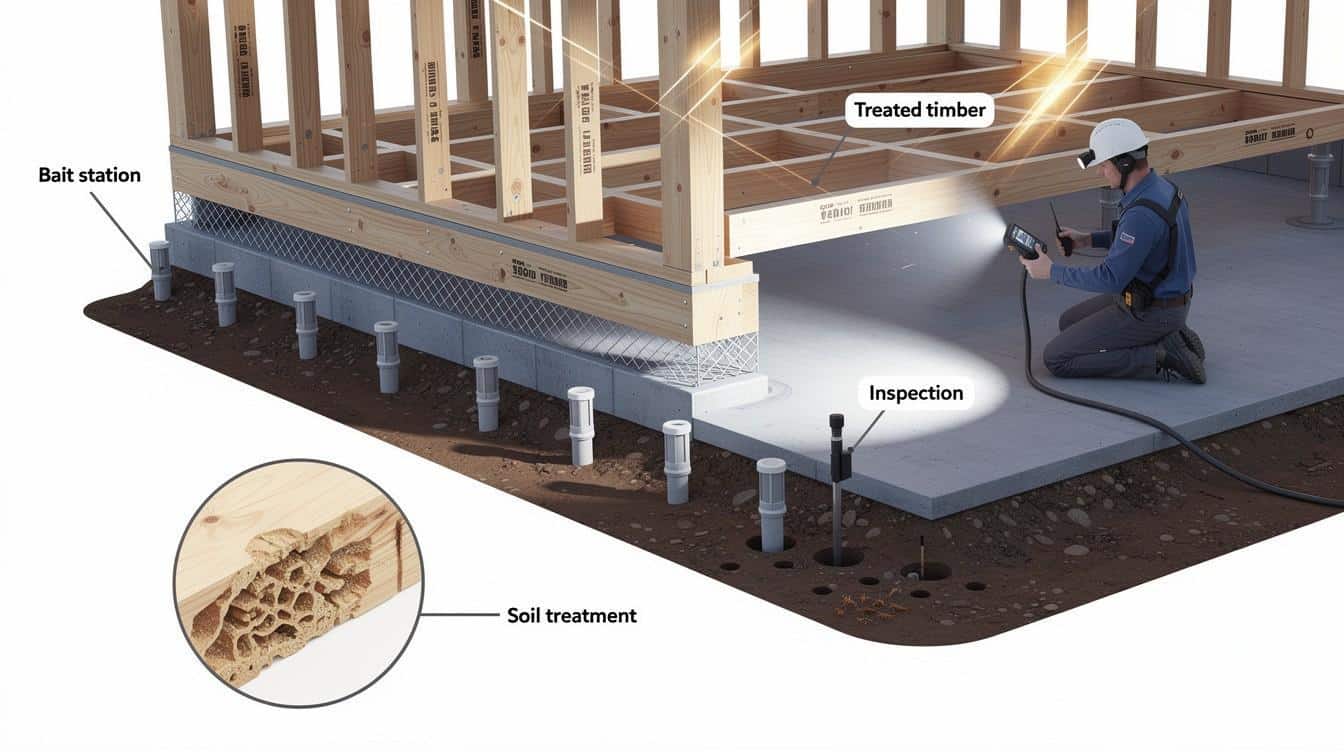
Professional pest inspections form the foundation of termite prevention, yet most Australian homeowners wait until damage appears before booking one. The National Pest Management Association recommends annual inspections in regions with high termite activity, and Australia’s humid subtropical climates across the Sunshine Coast and beyond demand this level of vigilance. A licensed technician inspects areas you cannot easily access-subfloor cavities, roof voids, behind wall linings, and around foundation perimeters-identifying mud tubes, hollow timber, and early-stage activity that homeowners consistently miss. These inspections typically cost between $200–$400 and take two to three hours, far less expensive than repairing structural damage that can run into tens of thousands of dollars. Schedule inspections at the start of warmer months when termite activity peaks, and maintain a record of findings to track whether activity increases or stabilises over time. If an inspection reveals active colonies, a licensed professional must apply chemical barriers or baiting systems before any timber removal occurs, preventing surviving termites from migrating to undamaged sections of your home.
Control Moisture to Eliminate Termite Habitat
Moisture control ranks as the single most effective prevention strategy because subterranean termites cannot survive in dry environments. Fix leaking pipes, roof gutters, and downspouts immediately-water pooling near foundations creates ideal conditions for termite colonies to establish themselves. Direct gutters and downspipes at least 1.5 metres away from your home’s perimeter, and ensure soil slopes away from foundations rather than towards them. Maintain proper ventilation and keep subfloor areas clear to reduce humidity, which encourages termite activity. Keep mulch and garden beds at least 15 centimetres away from external walls and avoid thick mulch beds that trap moisture against timber siding.
Install Physical Barriers and Treated Timber
For new construction or renovations, use H4-treated pine for outdoor timber posts and chemically treated structural lumber throughout, which actively repels termites rather than simply slowing their feeding. Physical barriers installed during construction (stainless steel mesh systems, termite shields under suspended floors, and metal ant caps on timber stumps) block direct soil-to-timber contact where termites travel. These barriers cost approximately $1,000–$3,500 for a typical home but prevent infestations entirely when properly installed and maintained. Once you understand how to stop termites through inspections, moisture control, and physical barriers, the next step involves establishing long-term protection strategies that adapt to seasonal changes and environmental conditions around your property.

Building Long-Term Termite Defence
Annual Professional Treatments Stop Colonies from Returning
Treating termites as a one-time problem invites them back within months. Lasting protection requires a structured, ongoing commitment rather than hoping a single treatment solves everything permanently. Annual professional termite treatments form the backbone of this approach, not because termites disappear after one application but because colonies adapt and shift their feeding patterns constantly. Licensed pest controllers apply liquid termiticide barriers around your home’s perimeter and beneath the building, creating a chemical zone that termites cannot cross without dying. These barriers typically last 5 to 8 years depending on soil conditions and rainfall, but annual inspections catch gaps, soil disturbance from landscaping, or new entry points before termites exploit them. The cost of annual monitoring through baiting systems like Sentricon runs $400 to $800 yearly, far cheaper than repairing a load-bearing wall that a large colony can hollow out within months. Schedule treatments in autumn when termite activity begins ramping up for warmer months, not in spring when damage is already spreading through your timber.
Separate Soil from Timber Structures Permanently
Physical separation between soil and timber structures demands constant attention because landscaping changes and natural settling create new contact points annually. Keep mulch, garden beds, and soil at least 15 centimetres away from external walls and never allow timber fencing or stored wood to rest directly on earth. Use concrete footings, metal stirrups, or concrete pads beneath outdoor decking posts rather than burying timber directly in soil where termites tunnel freely. Inspect these barriers twice yearly to confirm soil hasn’t shifted back against timber, and add fresh concrete or metal barriers if contact has reestablished itself.
Maintain Gutters and Drainage Systems Quarterly
Your gutters and downspipes determine whether water pools near foundations or drains safely away, making drainage maintenance non-negotiable for long-term protection. Direct all downpipe discharge at least 1.5 metres from your home’s perimeter, and inspect gutters every three months to clear debris that blocks water flow. Clogged gutters cause water to spill over edges and saturate soil against your walls, creating exactly the moist conditions subterranean termites need to establish colonies. Check your roof after heavy rain to confirm water flows where it should, and repair any leaks in roofing or plumbing within days rather than weeks.

These actions require discipline but cost almost nothing compared to structural repairs from termite damage.
Final Thoughts
Termite prevention strategies work best when you combine early detection, professional support, and consistent maintenance rather than relying on any single approach. The warning signs we’ve covered-hollow-sounding timber, mud tubes, and discarded wings-demand immediate professional inspection because waiting costs thousands in repairs. A licensed pest controller identifies damage you cannot see and applies treatments that actually stop colonies from spreading, whereas DIY methods rarely eliminate established infestations.
Your responsibility as a homeowner involves three ongoing commitments. Schedule annual professional inspections during warmer months when termite activity peaks, catching problems before they compromise structural integrity. Control moisture by maintaining gutters, fixing leaks promptly, and keeping soil away from timber structures-this single action removes the conditions termites need to survive. Install physical barriers and use treated timber in renovations so new entry points don’t emerge as your home settles and landscaping changes over time.
Early detection saves money because a colony caught in its first year costs far less to treat than one that has tunnelled through load-bearing walls for two or three years. We at Home Owners Association understand that protecting your property requires reliable guidance and access to quality materials. Visit Home Owners Association to explore membership benefits and connect with resources that support your home protection goals.