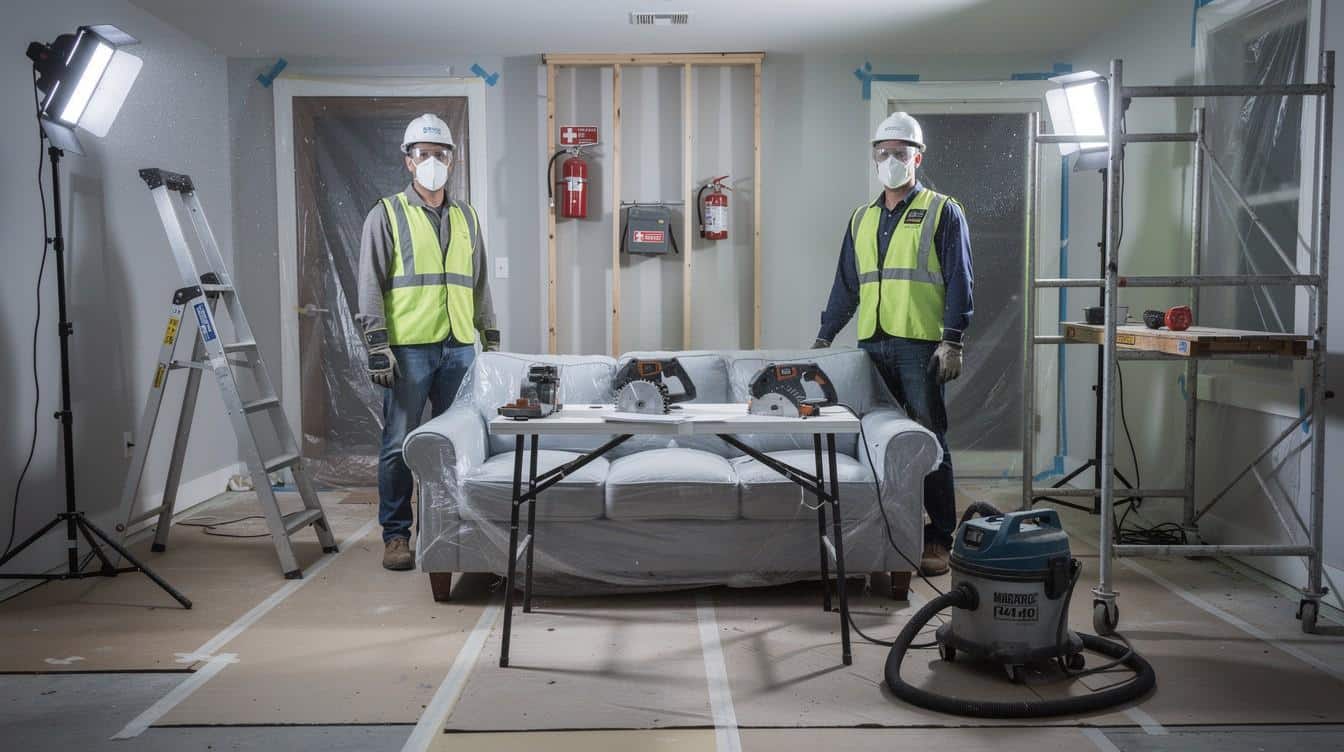
Home renovations bring excitement and improvement to your property, but they also introduce real risks to your team and household. At Home Owners Association, we’ve seen firsthand how preventable accidents derail projects and cause serious injuries.
This guide covers the renovation safety essentials you need to know before your next project starts. From identifying hazards to implementing protection measures, we’ll walk you through practical steps that keep everyone safe.
Common Renovation Hazards and Risks
Structural Dangers That Cause Serious Injuries
Renovation hazards fall into three categories that demand your immediate attention. Structural dangers pose the greatest risk-falls from scaffolding, ladders, and elevated work areas injure thousands of homeowners annually. According to data from the Australian Competition and Consumer Commission, approximately 66 per cent of annual injury claims occur in homes, with falls accounting for around 42 per cent of those injuries.

This isn’t theoretical. A fall from a second-storey window opening during renovation causes permanent disability or death. Unfit scaffolding, worn equipment, and poor lighting multiply these risks exponentially.
Electrical and Fire Hazards on Active Sites
Electrical hazards deserve equal respect because they remain invisible until they strike. Live wires behind walls, damaged power cords, and wet work environments create fire and electrocution hazards. Fire risks escalate dramatically during renovation because flammable materials accumulate on-site-paint thinners, adhesives, solvents-often stored carelessly near ignition sources like power tools and heaters. In 2024, the ACC reported approximately 19,500 DIY renovation injury claims costing roughly 41 million dollars in treatment and support. That figure alone should shift your thinking about safety as optional versus mandatory.
Silent Killers: Dust, Asbestos, and Toxic Materials
Dust, asbestos, and toxic materials present silent killers that develop into serious illness years after exposure. Homes built before 2000 likely contain asbestos in insulation, roofing, and floor tiles-disturbing these materials without professional removal releases microscopic fibres into the air that cause mesothelioma and lung disease. Health NZ advises treating all pre-1980s painted surfaces as lead-contaminated until testing proves otherwise. Lead paint removal by dry sanding or heat guns spreads lead dust throughout your home, affecting children’s neurological development at levels once considered safe. From March 2025, new paints must contain lead impurities at 90 parts per million or lower, but existing stock and old paint remain dangerous. Respirable crystalline silica from cutting concrete and brick affects construction workers, yet homeowners rarely use proper wet-cutting methods or extraction equipment.
Preventing Hazards Before Work Starts
A five-minute pre-task risk scan before any demolition identifies your top three hazards, verifies personal protective equipment readiness, confirms residual current device protection, checks ladder ratings, and confirms fire extinguishers and first aid kits are accessible. This single step prevents most serious incidents. Licensed electricians, plumbers, and gasfitters aren’t optional extras-they’re legal requirements in Australia that protect you from catastrophic failures. With these hazards identified and understood, the next step involves selecting the right protective equipment and establishing clear safety protocols that your team will follow throughout the project.
Essential Safety Equipment and Protective Gear
Respiratory Protection Matches Your Specific Hazard
Selecting protective equipment requires matching gear to hazards identified during your pre-task risk scan rather than buying the cheapest options or trusting generic safety gear. Personal protective equipment starts with respiratory protection-P2 or N95 masks handle general dust, but respirable crystalline silica from concrete cutting demands P2 respirators with proper fit-testing. Inhaling RCS can lead to silicosis, an incurable lung disease that can lead to disability and death, and RCS can also contribute to lung cancer. Disposable coveralls, nitrile gloves rated for your specific task, and eye protection aren’t optional extras-they’re the difference between minor exposure and permanent lung damage.

Lead Paint Removal Requires Wet Methods
For lead paint removal, wet scraping with HEPA extraction beats dry sanding every time because it captures particles before they become airborne. Health NZ guidance confirms this approach prevents lead dust from settling on surfaces where children play or eat. Treating all pre-1980s painted surfaces as lead-contaminated until testing proves otherwise protects your family from neurological damage that develops silently over years. From March 2025, new paints must contain lead impurities at 90 parts per million or lower, but existing stock and old paint remain dangerous.
Asbestos Demands Professional Removal
When asbestos testing returns positive, never attempt removal yourself unless it’s under 10 square metres of non-friable material, and even then, containment and disposal require specific protocols. Licensed asbestos removal procedures require removalists to follow strict safety procedures and may not be able to remove asbestos unless they have a licence to do so. Homes built before 2000 likely contain asbestos in insulation, roofing, and floor tiles, so testing by a licensed assessor becomes essential before any disturbance occurs.
Tools, Equipment, and Fire Safety Systems
Inspect scaffolding, ladders, and access equipment before each work day-worn rungs, bent frames, and unstable bases fail without warning. Residual current devices on power tools detect electrical faults and cut power in milliseconds, preventing electrocution; test yours weekly using the test button. HEPA vacuums capture hazardous particles that standard vacuums release back into air, making them essential rather than luxury items. Fire safety requires a compliant double-walled steel cabinet with 40 mm air gap and 150 mm sump for flammable storage, placed away from living spaces and ignition sources. Label shelves, maintain an inventory, and perform daily tidying to reduce fire risk.
First Aid and Emergency Response Readiness
First aid kits need more than band-aids-include eye wash stations, burn gel, and trauma dressings appropriate for renovation injuries. ABE fire extinguishers handle most renovation fires, but position them near high-risk zones and train your team on operation before emergencies strike. This preparation transforms safety from theoretical requirement into practical habit that protects everyone on site. With protective equipment in place and systems established, establishing clear safety protocols and communication channels ensures your team follows these protections consistently throughout the project.
Building Your Safety Foundation
Map Hazards and Secure Approvals
Start your renovation by completing a detailed concept hazard scan at least two weeks before work begins. Walk through your property room by room and document three critical hazards: structural risks like overhead work or unstable floors, hazardous materials such as asbestos or lead paint, and utility dangers including live electrical circuits or gas lines. This scan becomes the blueprint for every safety decision that follows.
Contact your local building authority to confirm which tasks require permits and inspections. In Australia, major structural changes, window relocations, and additions above 1.5 metres typically demand formal approval. Schedule a pre-application meeting with your building control authority before submitting permits; these conversations prevent costly rejections and clarify inspection requirements upfront.
Document Safety Systems and Contacts
Establish a written Safety Plan documenting your top three hazards, control measures for each, and emergency procedures. This one-page document costs nothing but saves lives because it forces you to think through problems systematically rather than improvising on the day. Create a contacts sheet listing your builder, licensed electrician, plumber, and gasfitter with their phone numbers and licence verification details.
Store Safety Data Sheets for all chemicals on-site and keep them accessible to anyone who might handle them. Notify your security provider immediately about the renovation so they can adapt your system for construction zones, adjust temporary access codes for contractors, and schedule check-ins during high-risk phases. Inform your home insurer about major renovations to maintain coverage and prevent claim denials if incidents occur.
Implement Daily Safety Routines
Schedule a five-minute safety huddle each morning where your builder or site supervisor reviews that day’s hazards, confirms all required PPE is present, and identifies any overnight changes.

Perform a weekly RCD test on all power tools using the test button, and replace worn cords immediately rather than waiting for failure. Coordinate loud demolition work to occur when occupants are away from the property, protecting hearing and reducing stress for nearby neighbours.
Implement a waste management schedule using appropriately sized skip bins. Schedule bin pickups aligned with project phases so waste doesn’t accumulate and create trip hazards. Restrict access to work zones using temporary fencing or locked doors, keeping children and pets in designated safe areas away from hazards.
Control Contamination and Track Progress
Establish a decontamination area near the main work exit where workers remove coveralls and respiratory protection before entering clean zones, preventing hazardous dust from spreading through your home. Maintain a renovation logbook documenting all pre-work testing results for lead and asbestos, building consent approvals, inspection dates, and any incidents or near-misses. This record protects your insurance claim and resale value because it proves you followed proper procedures.
Conduct weekly inspections of scaffolding, ladders, and electrical systems, photographing any damage and immediately removing unsafe equipment from service.
Final Thoughts
Renovation safety essentials rest on three core practices that protect your team and home. First, identify hazards before work starts through a concept scan and pre-task risk assessment. Second, equip your team with proper protective gear matched to specific hazards rather than generic equipment. Third, establish daily safety routines and document everything from test results to incident reports.
Professional guidance matters because renovation hazards shift constantly as work progresses. Your builder, licensed electrician, plumber, and gasfitter bring expertise that prevents catastrophic failures invisible to untrained eyes. They understand when building consent is required, how to handle asbestos safely, and why wet methods beat dry sanding for lead paint removal. Attempting complex tasks without licensed professionals creates liability that no homeowner should accept.
At Home Owners Association, we’ve supported homeowners with resources and expert advice that turn renovation projects into confident successes. Our members access trade pricing on materials, personalized guidance for decision-making, and educational resources covering safety alongside quality and budget. Visit Home Owners Association to explore membership benefits tailored to your renovation needs.