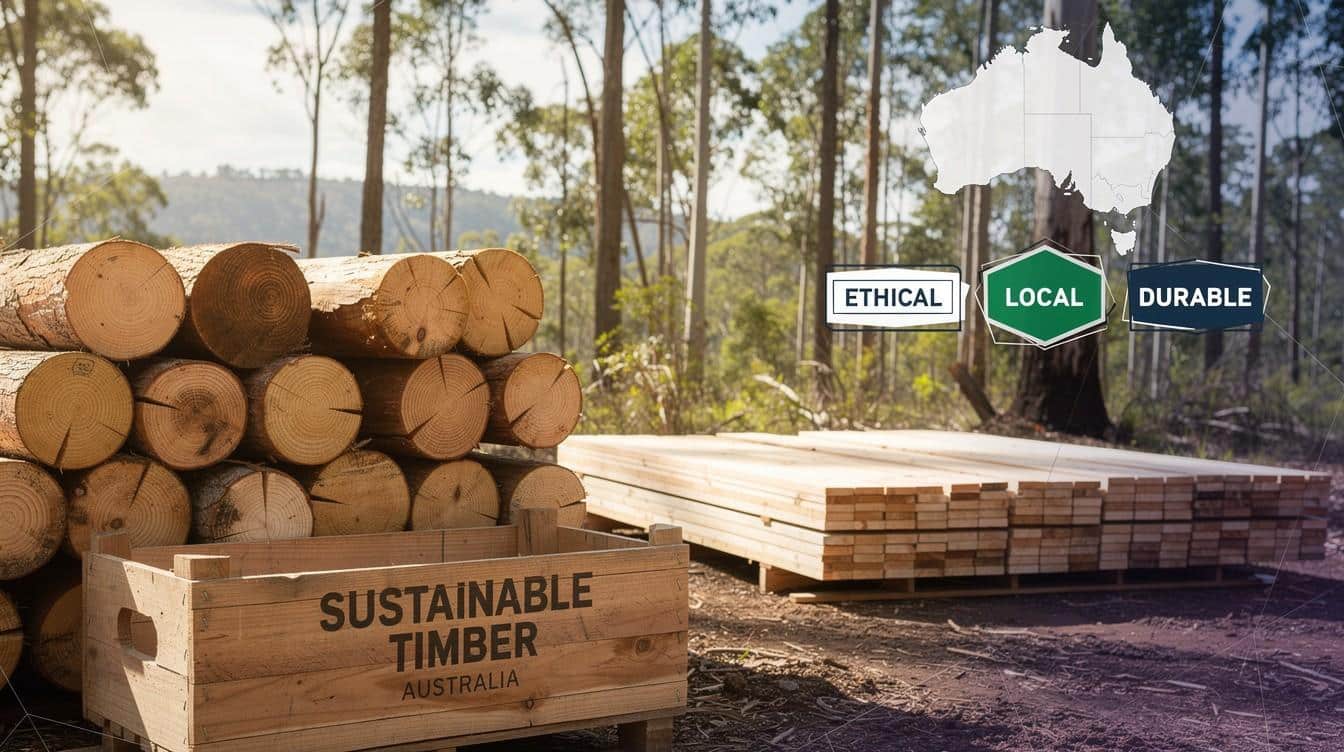
When you’re building or renovating your home, the timber you choose matters. At Home Owners Association, we believe sustainable timber sourcing in Australia isn’t just good for the environment-it’s smart for your wallet and your property’s future.
Certified sustainable timber lasts longer, costs less over time, and supports local forests. This guide shows you exactly how to find and use ethical timber for your next project.
Why Sustainable Timber Matters
Australia’s native forests cover 131.5 million hectares, yet only 0.05% of this area gets harvested annually. That selective approach works because 86% of native forest harvesting uses selective cutting methods that preserve biodiversity and allow forests to regenerate. When you choose sustainable timber from these responsibly managed forests, you support a system that actually functions. Harvested native forests in Australia provided a net carbon sink of 35.7 million tonnes of CO2 in 2021-about 8% of Australia’s total greenhouse gas emissions. This isn’t theoretical; wood products store carbon for decades while concrete and steel require far more energy to produce.

From 2008 to 2021, Australia’s native forest area actually increased by 2.8 million hectares, largely from regrowth on previously cleared agricultural land.
Durability That Lasts Decades
The durability advantage matters significantly. Species like Tallowwood, Blackbutt, Ironbark, and Spotted Gum offer Class 1 durability ratings, meaning they resist natural decay far better than softwoods. A Blackbutt deck or Spotted Gum flooring installed today could still perform well in 30 or 40 years with minimal maintenance, while lower-quality timber needs replacement within a decade. This longevity transforms how you think about timber investment.
Real Cost Benefits Over Time
Durable Australian hardwoods reduce replacement frequency dramatically. A Class 1 timber like Tallowwood costs more upfront but lasts significantly longer than Class 3 or Class 4 species like Oregon or Brushbox. Over 40 years, the Class 1 option becomes far cheaper because you avoid multiple replacement cycles and associated labour costs. Local suppliers also reduce transport emissions and often offer competitive pricing when you purchase direct.
Certification and Supply Chain Transparency
Asking your builder or supplier to source timber from certified operations like FSC or PEFC adds minimal cost but guarantees responsible forest management and worker protections across the supply chain. The Responsible Wood Certification Scheme (recognised by PEFC and operating as Australia’s official pathway) links local standards to global networks, so certified Australian timber carries weight internationally. Supporting local processing further cuts emissions and strengthens regional employment-timber processed in Kempsey, NSW or Tasmania stays within Australia’s supply chain rather than travelling overseas for milling.
This combination of durability, local sourcing, and verified certification makes sustainable timber the financially sensible choice for homeowners planning long-term renovations or builds. Now that you understand why sustainable timber matters, the next step involves knowing where to find it and how to verify that what you’re purchasing actually meets these standards.
Where to Find Certified Sustainable Timber in Australia
Australia’s certification landscape offers you two main pathways to verified sustainable timber: FSC Australia and the Responsible Wood Certification Scheme, which operates as PEFC’s official Australian representative. Both schemes maintain registries of certified suppliers and forest operations across the country, and you can cross-reference these directly on their websites before contacting any timber merchant. FSC certification covers forest management practices, worker rights, and community protections, while Responsible Wood aligns with international PEFC criteria but reflects Australian forestry conditions and state-based regulations. In practical terms, certified timber from either scheme guarantees selective harvesting practices, regeneration requirements, and third-party auditing. When you contact a supplier, ask specifically whether their timber carries FSC or Responsible Wood certification and request documentation proving chain-of-custody tracking from forest to your site. Suppliers who hesitate or cannot produce this paperwork signal that verification doesn’t exist, and you should move to another merchant.
Species Selection Matters More Than You Think
The right Australian hardwood species directly impacts long-term performance and replacement costs. Tallowwood, Blackbutt, Ironbark, Spotted Gum, and Forest Red Gum all achieve Class 1 durability ratings, making them the strongest choices for outdoor decking, cladding, or any exposed application where moisture and weathering present concerns. These species naturally resist decay without requiring heavy chemical treatments, so they align with sustainable practices while delivering decades of reliable performance. Blue Gum, Jarrah, and Karri sit at Class 2 durability and work well for interior flooring, furniture, or moderate-exposure applications where you can accept slightly shorter service life. Mountain Ash and Stringybark rate Class 3 durability and suit interior-only projects; using them outdoors means accepting higher maintenance demands and faster deterioration. The strength ratings vary widely across species (from F8 to F42 on the structural scale), so species selection affects both durability and load-bearing capacity. Local timber suppliers in regions like Kempsey, NSW, or Tasmania typically stock regionally appropriate species that perform well in their climate zones, reducing the trial-and-error that often happens when homeowners source timber from interstate. Ask your supplier which species they source locally and why those species suit your specific application and climate zone.
Verification Starts With Your Questions
The fastest way to verify authenticity involves asking direct questions that force suppliers to show their work. Request the forest operation name and location where the timber originated, not vague claims about sustainable sourcing. Cross-check this information against FSC’s supplier directory or Responsible Wood’s certified operations list online. Ask for the chain-of-custody documentation that tracks the timber from forest through milling to your builder’s site; this paper trail proves the wood didn’t mix with uncertified stock during processing. Suppliers who handle certified timber maintain this documentation as routine business practice, so their willingness to provide it signals legitimate operations. If a supplier quotes prices significantly below market rates for certified timber, that’s a red flag suggesting either uncertified material or misrepresentation. Certified sustainable timber carries a modest premium over conventional timber, reflecting the verification costs and responsible management practices.

Local processors reduce this premium because transport costs drop and supply chains shorten, making direct relationships with regional mills your best path to both affordability and transparency.
Building Your Sourcing Strategy
Once you identify certified suppliers in your region, establish a clear sourcing plan before your builder places orders. Provide your builder with a list of approved suppliers who can demonstrate FSC or Responsible Wood certification, and require them to source from these merchants rather than accepting timber from unknown origins. This approach prevents last-minute substitutions with uncertified material when budget pressures or supply delays hit. Request that your builder include certification documentation in the project file, creating a permanent record of what timber went into your home. This documentation matters if you ever sell the property, as buyers increasingly value homes built with verified sustainable materials. Timber sourced from certified operations and local processors strengthens your supply chain transparency while supporting Australian forestry jobs and reducing transport emissions. Your next step involves understanding the practical budget implications and how to work effectively with builders and suppliers who source this material.

Practical Tips for Sourcing Sustainable Timber
Understanding Real Pricing on Certified Timber
Certified sustainable timber carries a modest premium, typically 10-20% above conventional timber, reflecting third-party auditing costs and responsible management practices. This premium shrinks significantly when you source locally. A timber supplier in Kempsey, NSW, or Tasmania processing their own stock avoids interstate transport costs and often undercuts merchants importing certified material from across Australia. Contact three regional suppliers before accepting any quote, and you’ll notice local mills typically offer the best value on certified species suited to your climate zone.
Ask suppliers directly what they charge per cubic metre for Class 1 species like Tallowwood or Spotted Gum, then compare this against their uncertified alternatives. The gap narrows considerably once you factor in durability. Class 1 timber lasting 40 years costs far less per year than Class 3 material needing replacement in 12-15 years, even if the upfront price feels higher.
Securing Transparent Quotes from Your Builder
Request that your builder provide itemised quotes showing timber species, volume, certification type, and supplier name. This transparency prevents mid-project substitutions where budget pressures tempt builders to swap certified material for cheaper alternatives. Insist on written confirmation that all timber comes from Responsible Wood certified sources before signing any contract.
Most builders resist sourcing specifications because it complicates their supplier relationships and reduces their material markup flexibility. This resistance tells you something important: find builders who actively support sustainable sourcing rather than merely accepting it. Ask potential builders whether they maintain relationships with certified timber suppliers in your region and whether they’ve worked with these mills on previous projects. Their ability to name specific suppliers and describe past collaborations signals genuine experience rather than lip service.
Selecting Builders with Sustainable Timber Experience
Builders familiar with certified timber understand that these materials often perform better than cheaper alternatives, reducing callback issues and warranty claims. They also know that Responsible Wood certified timber appeals to buyers during property sales, adding measurable value. Request that your builder include timber sourcing requirements in their contract, specifying that all structural and visible timber must carry valid certification documentation.
Make this a contract obligation rather than a preference, and attach a price adjustment clause allowing the builder to pass through legitimate cost increases if certified alternatives cost more than their original estimate. This approach protects you from surprise substitutions while acknowledging real market conditions.
Collecting Documentation Throughout Your Project
Chain-of-custody documentation tracks timber from the forest operation through milling and delivery to your site. This paperwork matters more than many homeowners realise. Request that your builder collect this documentation throughout the project and file it in your project records. This creates a permanent home record valuable if you ever sell the property or need to verify what materials are embedded in your walls and decking.
When timber arrives at your site, the delivery docket should identify the species, the certified forest operation it came from, and the supplier’s name. Cross-reference this against Responsible Wood’s supplier directories to confirm legitimacy. Suppliers falsifying documentation face legal consequences, so this verification step actually deters fraud. If documentation doesn’t exist or seems vague, reject the delivery and contact your builder immediately.
Verifying Sourcing Integrity on Site
This firm stance signals that you take sourcing seriously and won’t accept substitutions. Reputable suppliers expect this scrutiny and provide clear documentation as routine business practice. After installation, request that your builder photograph timber installations with identifying markers showing species names and supplier details. These photos become your proof of sourcing integrity years later when you need to demonstrate what went into your home.
Final Thoughts
Sustainable timber sourcing Australia delivers measurable benefits that extend far beyond environmental responsibility. You gain timber that lasts decades longer than conventional alternatives, reducing replacement cycles and associated costs. You support forest management practices that actually increase native forest area rather than depleting it. You access supply chains with documented accountability, knowing exactly where your timber originated and how it was harvested.
The availability of certified sustainable timber across Australia has expanded significantly in recent years. FSC and Responsible Wood certified suppliers now operate in every state, with local mills in regions like Tasmania and NSW offering competitive pricing on Class 1 species suited to Australian conditions. This market shift reflects genuine demand from homeowners who increasingly value transparency and durability, and suppliers have responded by building certified supply chains that deliver both.
Contact certified suppliers in your region and request quotes for Class 1 species like Tallowwood or Spotted Gum, comparing these against uncertified alternatives over a 40-year lifespan rather than upfront cost alone. Provide your builder with a sourcing specification requiring FSC or Responsible Wood certification, and make this a contract obligation with documentation requirements. Our membership program provides trade pricing and expert guidance that help you navigate sustainable material sourcing with confidence, making your next project both practical and affordable.