Your heating and cooling bills don’t have to stay high. We at Home Owners Association know that insulation for energy savings is one of the fastest ways to lower your monthly costs.
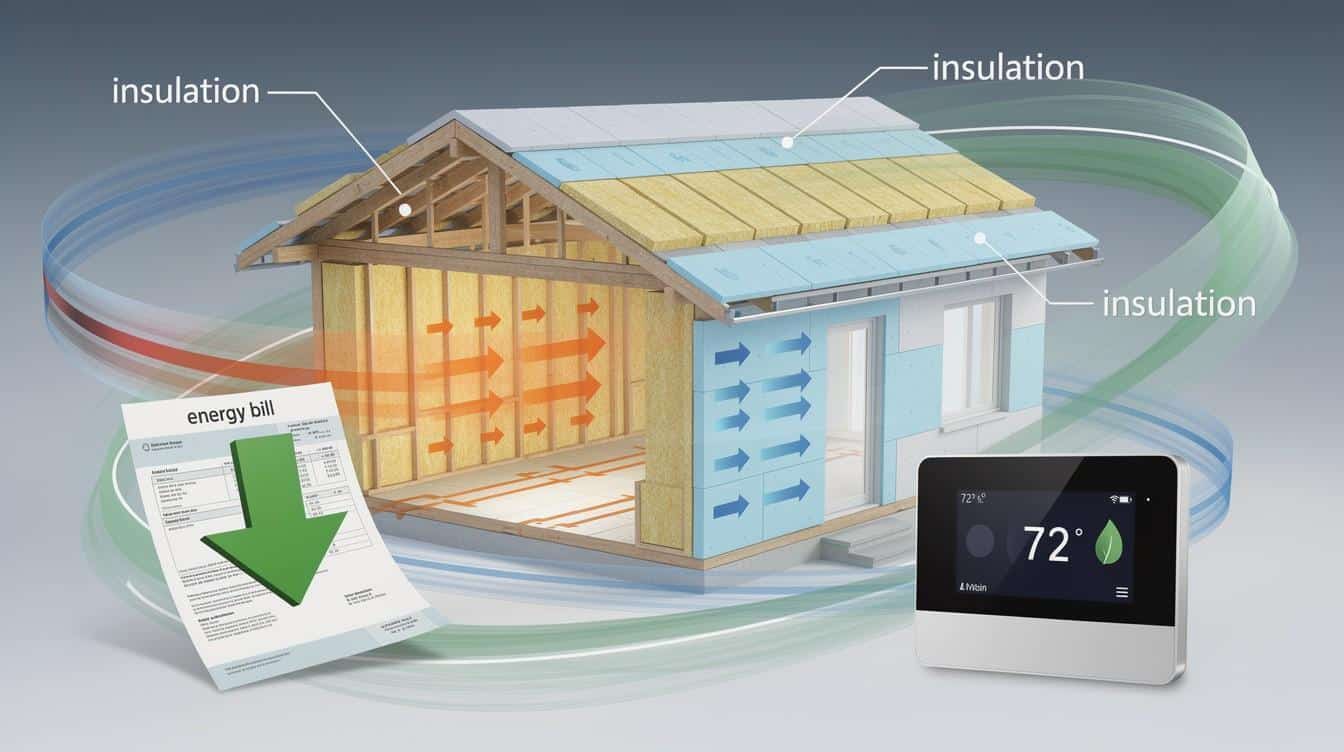
The right insulation in the right places can cut your energy bills by 15% to 20%. This guide shows you exactly where to insulate, which materials work best, and how much you’ll actually save.
Which Insulation Material Saves You the Most Money
Fibreglass Batts: The Budget-Friendly Foundation
Fibreglass batts remain the most affordable starting point, with R-values between R-13 and R-15 for standard 2×4 wall cavities. You’ll find them everywhere because contractors install them cheaply and they work well for most homes. However, fibreglass loses effectiveness over time as it settles, which means your actual R-value drops below what you paid for. Cellulose blown-in insulation performs better in this regard since it settles into a stable density that manufacturers calculate into their R-value claims.

Cellulose also uses recycled materials, so you don’t pay extra for environmental benefits-they come standard. The real advantage appears when you compare energy savings: homes upgraded with blown-in cellulose typically see 15% to 20% bill reductions, matching what we mentioned earlier about proper insulation placement.
Spray Foam and Rigid Foam: Performance Versus Cost
Spray foam insulation, particularly closed-cell varieties, achieves R-values around R-6 to R-7 per inch, which beats fibreglass and cellulose. Closed-cell foam also resists moisture and adds structural strength to walls. The catch is cost-spray foam runs two to three times more expensive than fibreglass or cellulose per square foot. For most homeowners, this premium doesn’t translate to proportionally higher savings. Rigid foam boards occupy a middle ground, offering R-values of R-4 to R-6.5 per inch and working especially well for basement walls and exterior applications where you need both insulation and moisture control. If you retrofit an existing home, rigid foam on exterior walls keeps the thermal mass inside your conditioned space, which helps stabilise indoor temperatures throughout the day.
Calculate Your Needs and Compare Quotes
Your climate zone determines which R-value you actually need. Colder regions demand higher R-values in attics and walls, while warmer climates perform well with moderate R-values. Calculate your insulation area first: measure your attic, wall cavities, and basement spaces, subtract windows and doors, and add 10% for waste. This tells you exactly how much material you need. Professional installers typically quote based on area coverage and target R-value, not material type, so comparing three quotes from different contractors often reveals price variations of 20% to 30% for identical work. Blown-in cellulose and fibreglass batts deliver the best return on investment for most Australian homes because their upfront cost stays low while energy savings run 15% to 20% annually. Spray foam makes sense only if you build new or complete major renovations where you can justify the premium for air-sealing benefits.
Once you’ve selected your insulation material and calculated your needs, the next critical decision involves identifying exactly where in your home to install it for maximum impact.
Where to Insulate First for Real Results
Start with your attic-this is non-negotiable if you want maximum savings. Up to a quarter of heat escapes through an uninsulated roof, which means your attic is where insulation delivers the biggest payoff. According to Sustainability Victoria, a fully insulated home can reduce heating and cooling costs by around 40 to 50%, and this reflects real homes, not theoretical projections. Most Australian homes have attic space, and upgrading it costs less than any other insulation project because access is straightforward and material costs run low.

Try an R-value of R3.5 to R6.0 depending on your climate zone-warmer regions need less, colder areas need more. If your attic already has insulation but it’s thin or compressed, topping it up to modern standards takes a weekend and delivers immediate results. Many homeowners skip this step thinking their existing insulation is adequate, then wonder why their bills stay high. Don’t make that mistake. Attic insulation is where you’ll recoup your investment fastest.
Wall Cavities Require Professional Assessment
Wall insulation is trickier because existing homes rarely allow easy access to wall cavities without major disruption. Blown-in cellulose or fibreglass works for retrofits, but it requires drilling holes and professional equipment. Before you spend money here, ask yourself whether your walls are truly uninsulated-many Australian homes built after 1990 have some batts already installed. If you’re renovating or building new, you should insulate walls during construction. Rigid foam on exterior walls performs exceptionally well for basement areas and below-grade spaces where moisture is a concern. Basement insulation matters more than most homeowners realise because cold concrete pulls warmth from your home year-round. You can prevent this heat loss and improve comfort in below-ground spaces through basement wall and rim joist insulation. Underfloor insulation in homes with suspended timber floors also cuts heating costs noticeably, especially in colder regions. These areas typically come second in priority after attic work because retrofitting them costs more and requires more skilled labour.
Pipes and Ductwork Stop Energy Waste Before It Starts
Uninsulated hot water pipes waste heat between your water heater and taps, and uninsulated ducts leak conditioned air into unconditioned spaces. Pipe insulation costs almost nothing-foam sleeves cost a few dollars per metre-yet many homeowners ignore it entirely. You should wrap hot water pipes with foam insulation, especially in unheated spaces like basements and crawlspaces. This simple step prevents heat loss and gets you hot water faster at your taps. Duct insulation matters equally, particularly if your ducted heating or cooling system runs through your attic or crawlspace. Leaky ducts force your system to work harder, wasting energy you’ve already paid for. Professional HVAC contractors use rigid fibre boards to insulate ducts and seal joints properly. If you’re not comfortable working with ducts yourself, this is worth hiring professionals for because poor sealing defeats the purpose. The Victorian Energy Upgrades programme offers discounts on insulation products including weather sealing, which helps you prioritise these improvements affordably.
Sequencing Your Insulation Work for Maximum Impact
You should start with your attic, assess your walls honestly, then tackle pipes and ducts. This sequence gives you the fastest return on every dollar spent. Your attic work delivers immediate results because heat loss through roofs represents the single largest energy drain in most homes.

Wall assessment prevents you from overspending on insulation that may already exist. Pipe and duct work costs little but prevents ongoing energy waste that compounds over months and years. Once you’ve identified where to insulate, the next step involves calculating exactly how much material you need and understanding what your actual savings will look like.
Calculate Your Insulation Investment and Real Savings
Match Your R-Value to Your Climate Zone
Your climate zone is the foundation for every insulation decision you make. Australia’s climate varies dramatically from tropical far north regions to alpine areas in Tasmania, and this directly determines your R-value requirements. The warmer your climate, the lower your R-value needs to be because you’re fighting heat gain rather than heat loss. Colder regions demand significantly higher R-values, especially in attics where heat naturally rises and escapes. Rather than guessing, measure your location’s heating and cooling degree days to understand your actual climate severity. A home in Melbourne requires different attic insulation than one in Brisbane, yet many homeowners apply one-size-fits-all logic. Start with your local council or state energy department resources that specify recommended R-values for your specific postcode. This takes fifteen minutes and prevents you from overspending on unnecessary R-value or underspending on inadequate protection.
Measure Your Space and Calculate Material Needs
Calculating your exact material needs removes the guesswork that leads to wasted money. Measure your attic floor area in square metres, your wall cavity area if you’re retrofitting, and any basement or underfloor spaces you plan to insulate. Subtract window and door openings from wall calculations. Add 10% for waste and cutting losses during installation. This gives you the precise square meterage needed. Now multiply your square meterage by the cost per square metre for your chosen material and installation method. Blown-in cellulose typically costs between 8 and 15 dollars per square metre installed, depending on your location and whether you hire professionals or rent equipment for DIY work. Fibreglass batts run cheaper at 5 to 10 dollars per square metre. Spray foam costs substantially more, ranging from 20 to 40 dollars per square metre.
Project Your Annual Savings and Payback Period
Once you have your total project cost, calculate your annual energy savings using this simple approach: multiply your annual heating and cooling costs by the percentage savings your insulation will deliver. A home spending 2,000 dollars annually on heating and cooling that achieves savings through insulation improvements saves money per year. Divide your project cost by this annual saving to find your payback period. Most attic and wall insulation projects pay for themselves within 5 to 8 years in Australian homes, meaning every year after that is pure savings. Tax credits for energy-efficient home improvements can shorten your payback period significantly by reducing upfront costs.
Compare Options Before You Commit
Compare your payback period across different insulation options because the cheapest material isn’t always the best investment. Fibreglass batts might cost less upfront, but blown-in cellulose’s superior settling characteristics and longer performance lifespan often deliver faster total savings despite slightly higher initial expense. A home in a cold climate might justify spray foam’s premium cost through superior air-sealing benefits, while a Brisbane property would waste money on that same premium. Your climate zone, existing insulation condition, and budget constraints all influence which option makes financial sense for your situation.
Final Thoughts
Insulation for energy savings works because it stops heat from escaping through your roof and walls, which is the root cause of high heating and cooling bills. You now understand which materials deliver the best return on investment, where to prioritise your spending, and how to calculate your actual payback period. The data is clear: homes that upgrade their insulation see 15% to 20% annual bill reductions, and most projects recoup their cost within 5 to 8 years.
Start with your attic because it delivers the fastest results and costs the least to upgrade. Measure your space, get three quotes from different contractors, and compare their pricing for identical R-value targets-this simple comparison often reveals 20% to 30% price variations. Contact Home Owners Association if you need professional guidance on which materials suit your home or want expert advice on energy efficiency projects.
Proper insulation increases your home’s comfort year-round by stabilising indoor temperatures and reducing drafts, while also boosting property resale value as energy-efficient homes become more desirable. You reduce your carbon footprint by cutting energy consumption, and insulation pays for itself while improving comfort and supporting environmental goals. Start your attic assessment this week to lower your bills permanently.