Home renovations often expose hidden electrical dangers that most homeowners don’t anticipate. Faulty wiring, overloaded circuits, and improper grounding cause thousands of injuries and fires annually in the United States.
At Home Owners Association, we believe electrical safety during home renovations isn’t optional-it’s non-negotiable. This guide walks you through the hazards, the safeguards, and the smart planning that keeps your family protected.
What Electrical Hazards Hide Behind Your Walls During Renovation
Renovation work tears open walls and exposes wiring that has sat undisturbed for decades. What you find is often shocking. Insulation breaks down over time, cables lose their protective coating, and circuits that were adequate in 1995 are completely overwhelmed by today’s appliances. Hidden wiring creates real shock, burn, and fire risks when walls open or fixtures move.

Demolition frequently reveals insulation breakdown or circuits never designed for modern electrical loads, dramatically increasing overload risk. Electrical faults significantly contribute to home fire statistics in Australia, which is why this matters more than aesthetics.
New Appliances Demand More Power Than Old Systems Provide
New appliances and lighting during renovations massively increase electrical load on existing circuits. If you add a kitchen upgrade with modern appliances or install multiple LED systems, your current distribution board might not handle the demand. That’s when circuit overload becomes a serious fire hazard. Many homeowners ignore flickering lights or frequent circuit breaker trips during renovation work, treating these as minor annoyances rather than warning signs that something is dangerously wrong. Your switchboard can only handle so much power at once-exceed that limit, and you risk fires that spread quickly through walls.
Moisture and Grounding Problems Turn Wet Areas Into Danger Zones
Water and electricity create a lethal combination, yet renovation work regularly exposes moisture around temporary electrical gear. Dust, moisture, and corrosive materials around power tools and temporary equipment raise shock and equipment failure risks. In wet areas like bathrooms, kitchens, and laundries, improper grounding or damaged moisture-rated fittings turn a renovation into a hazard zone. The Australian/New Zealand Wiring Rules 3000:2018 mandate that all domestic and residential final sub-circuits must have Residual Current Device protection, yet many older homes lack this essential safeguard. Earthing requirements also extend to outbuildings and damp conditions during renovation work.
Homes older than about 30 years often contain wiring that doesn’t meet current safety standards, and renovation work exposes these aging systems to additional stress. Watch for warning signs like burning smells, hot outlets, or sparks when you plug in devices during your project, and act immediately by calling a licensed electrician. These signs tell you that something has already failed-waiting only makes it worse.
Overhead and Underground Powerlines Pose Hidden Threats
Hazards arise from proximity to overhead or underground lines, and many homeowners fail to plan site layout early enough to maintain safe clearances. Renovation equipment, scaffolding, and temporary structures can inadvertently contact live powerlines. You must set and monitor safe distances according to local regulations and Codes of Practice before work begins. Never assume you know where underground lines run. Contact your local utility company before you dig or excavate. This single step prevents electrocution and equipment damage that can halt your entire project.
Understanding these hazards is the first step, but knowing how to protect yourself requires the right safety measures in place before work starts.
How to Protect Yourself During Electrical Renovation Work
Turn Off Power and Test Before You Touch Anything
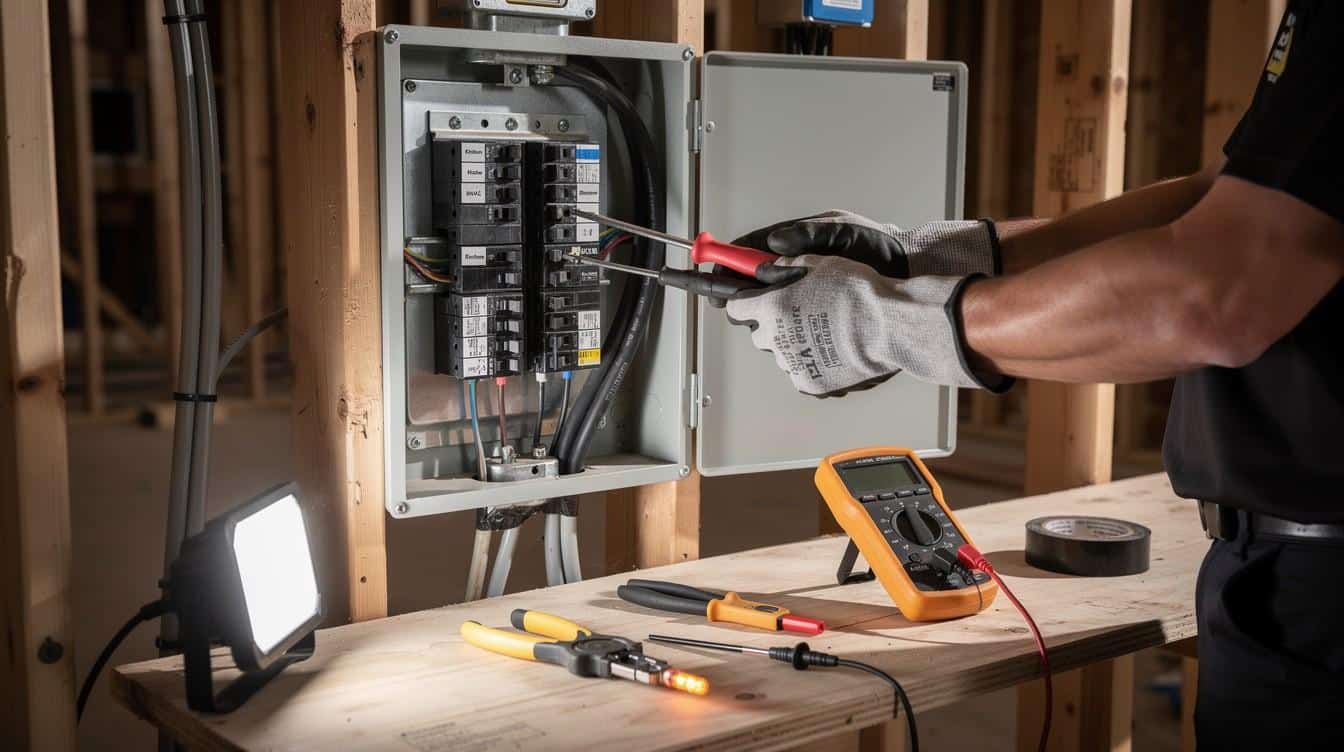
Power must be off before any work starts, and you cannot rely on assumptions. De-energise equipment before beginning work and test circuits with a proper multimeter to confirm de-energization. Many electricians have suffered injuries because they trusted someone else’s word that a circuit was safe. Use a qualified electrical tester, not a simple screwdriver or light bulb.
Immediately disconnect any visibly damaged items and remove them before continuing work. Regularly inspect and test all tools and temporary leads; replace damaged leads immediately, especially if they have been exposed to heat, vibration, or moisture. Use testing and tagging for all electrical equipment on site and maintain records to trace faults later. This is not optional busy work-it is the difference between a safe renovation and a preventable injury.

Install RCDs and Advanced Protection Devices
Install Residual Current Devices (RCDs) to cut power instantly on fault; this is a core safety measure endorsed by Australian Standards. The Australian/New Zealand Wiring Rules 3000:2018 mandate that RCDs with a maximum rated residual current of 30 mA are required for all final sub-circuits in domestic and residential installations. If your home lacks RCDs, upgrade them immediately before starting renovation work.
For households planning major upgrades, surge protection devices (SPDs) protect appliances and smart devices from surge events, including indirect lightning strikes. Arc Fault Detection Devices (AFDDs) detect arc faults in damaged or loose cabling and automatically cut power to prevent fires. In wet areas like bathrooms and kitchens, ensure all power points have RCD protection and use moisture-rated fittings to reduce shock risk significantly.
Hire Licensed Electricians for Complex Work
Licensed electricians must handle complex tasks because the risks of DIY electrical work far outweigh any cost savings. In Australia, many electrical tasks require licensed professionals to ensure safety and compliance, and attempting unlicensed work exposes you to fines and liability if something fails. Hire a licensed renovation electrician to supervise inspections, testing, repairs, and system upgrades throughout your project. Routine site inspections act like health check-ups to identify concerns before they become bigger problems.
Manage Electrical Load and Protect Your Circuits
Battery-powered tools reduce demand on household circuits during busy renovation phases, lowering the risk of overload-related trips. Manage electrical load by using correctly rated breakers, adding additional outlets where needed, and spreading load across circuits rather than stacking adapters. Never daisy-chain extension leads; use power boards with built-in overload protection sized for high-wattage loads instead. Frayed or damaged cords or plugs must be replaced immediately-avoid using cables that feel warm, show fraying, cracking, or discolouration.
These protective measures form the foundation of safe electrical work, but they only work when you plan your upgrades strategically from the start.
Getting Your Electrical System Ready for Upgrade
Before you start removing walls or connecting power tools, you need to know exactly what your home’s electrical system can handle. Most homes with a 40- or 63-amp switchboard running standard 240V appliances can successfully draw enough power for modern demands like EV chargers, heat pumps, or multiple air conditioning units. A licensed electrician can test your current capacity in under an hour and tell you whether your system needs expansion or complete replacement.
Assess Your Home’s Electrical Capacity
Homes older than 30 years almost always require upgrades because wiring insulation degrades and circuits were never designed for today’s appliance power consumption. If you see flickering lights during normal use or circuit breakers trip frequently without any renovation work happening, your electrical system is already struggling. Don’t wait for renovation to expose these problems-get a professional assessment before you plan anything.
The Australian/New Zealand Wiring Rules 3000:2018 set mandatory standards for all electrical installations, and your upgrade must comply with these rules from the moment work begins. A licensed electrician will identify whether your home needs a complete rewire, panel upgrade, or targeted circuit additions based on what you actually plan to install.
Calculate Total Load Demand for Your Upgrades
Planning your electrical upgrades means calculating total load demand for everything you want to add, not just what you think you might need. If you install an EV charger, that requires 40–50 amps on a dedicated circuit alone. Add a new kitchen with modern appliances, and you look at another 30–40 amps across multiple circuits.

Many homeowners underestimate future needs and end up with a system that maxes out within five years. The Building Commission NSW advisory notes emphasise proper planning for battery storage systems, solar layouts, and cable protection through metallic structures-all additions that demand careful load calculation upfront.
Upgrade Your Switchboard for Current and Future Demands
Start your renovation with a licensed electrician who can size circuits correctly, specify appropriate safety devices like RCDs and arc fault detection devices, and verify everything meets current standards. This approach costs more initially than DIY shortcuts, but it eliminates the risk of fires, shocks, and expensive rework that happens when systems fail under load.
Your switchboard upgrade isn’t just about adding capacity; it’s about future-proofing your home against the electrical demands you’ll face over the next 10–15 years. The investment protects your family and your property from the electrical hazards that emerge when systems operate beyond their design limits.
Final Thoughts
Electrical safety during home renovations requires three non-negotiable actions: turn off power before touching anything, hire licensed electricians for complex work, and plan your upgrades with professional guidance from the start. Flickering lights, hot outlets, and frequent circuit breaker trips are not minor inconveniences-they are warnings that your system is failing. Ignoring these signs during renovation work puts your family at immediate risk of shock, burns, and fires that spread through walls faster than you can react.
The hazards we’ve covered-outdated wiring, overloaded circuits, moisture exposure, and proximity to powerlines-are real and preventable. Compliance with the Australian/New Zealand Wiring Rules 3000:2018 and installation of RCDs, surge protection devices, and arc fault detection devices transforms a dangerous renovation into a safe one. Your switchboard upgrade isn’t an optional luxury; it’s the foundation that protects your home against electrical failures for the next 10–15 years.
Professional installation and compliance matter because they eliminate guesswork and protect your family throughout electrical safety home renovations. A licensed electrician assesses your current capacity, calculates total load demand for your new appliances and systems, and specifies the exact upgrades your home needs. Start with a licensed electrician, follow the safety measures outlined in this guide, and access expert advice through Home Owners Association to ensure your project meets the highest standards of quality and compliance.