Construction sites lose workers to falls and scaffold collapses every year. At Home Owners Association, we’ve seen firsthand how preventable these incidents are when proper scaffolding safety guidelines are followed.
This guide covers the hazards you’ll face, the practices that protect you, and the standards that keep everyone accountable. Your safety depends on knowing what to do before you step onto that platform.
What Makes Scaffolds Fail on Site
Falls from height remain the leading cause of workplace fatalities in construction, with workplace safety data showing significant incident rates. Most of these incidents trace back to three preventable failures: workers falling from poorly assembled platforms, scaffolds collapsing under load or corrosion, and objects dropping onto people below. The difference between a safe site and a tragedy often comes down to what happens in the first hours after scaffolding arrives.

Written Handover and Structural Verification
Many sites accept scaffolds without written handover confirmation, which means no one has formally verified the structure meets safety standards. This is a critical mistake. SafeWork NSW data shows that missing written confirmation alone can result in on-the-spot fines of around 900 dollars for individuals and 4,500 dollars for corporations. The reality is harsh: unlicensed workers frequently remove or alter scaffold components to speed up work, destroying the structural integrity that engineers designed into the system. If locking pins are missing or wedges aren’t properly engaged, the entire platform becomes unstable. Rusted components weaken the structure silently over weeks until failure happens without warning. Daily visual checks catch these problems early, but many sites skip them entirely.
Height and Fall Protection Gaps
Falls typically occur when workers stand on rails, access incomplete sections, or work without proper guardrails. OSHA standards require guardrails at six feet and above for ramps and walkways, yet some providers install them inconsistently, leaving workers exposed on mid-height platforms. The injury data from lifting and manual work shows back injuries account for 17 per cent of all incidents, but falls cause more severe outcomes. Falling objects create a second layer of danger that sites often overlook.

Debris, tools, and loose materials left on scaffolds during the workday create trip hazards that lead to falls, and anything dropped from height becomes a projectile.
Debris Control and Environmental Hazards
End-of-day cleanup must become non-negotiable on your site. Overhead protection like debris netting catches falling objects and protects pedestrians below, yet many sites skip this investment to save money. Weather compounds these risks significantly. Snow, ice, and high winds weaken scaffolds and increase slip hazards, yet work often continues without assessment. Suspending operations during lightning storms or winds above safe limits isn’t optional-it’s the only responsible choice. Power lines pose an additional hazard that kills workers every year. Scaffolds must stay at least 10 feet away from electrical lines, and if work requires closer proximity, OSHA requires shutting down and locking out the electrical line for the duration of the job. Understanding these environmental pressures sets the stage for the protective measures that actually work on site.
How to Inspect and Maintain Scaffolding Safely
Daily Visual Checks That Prevent Collapse
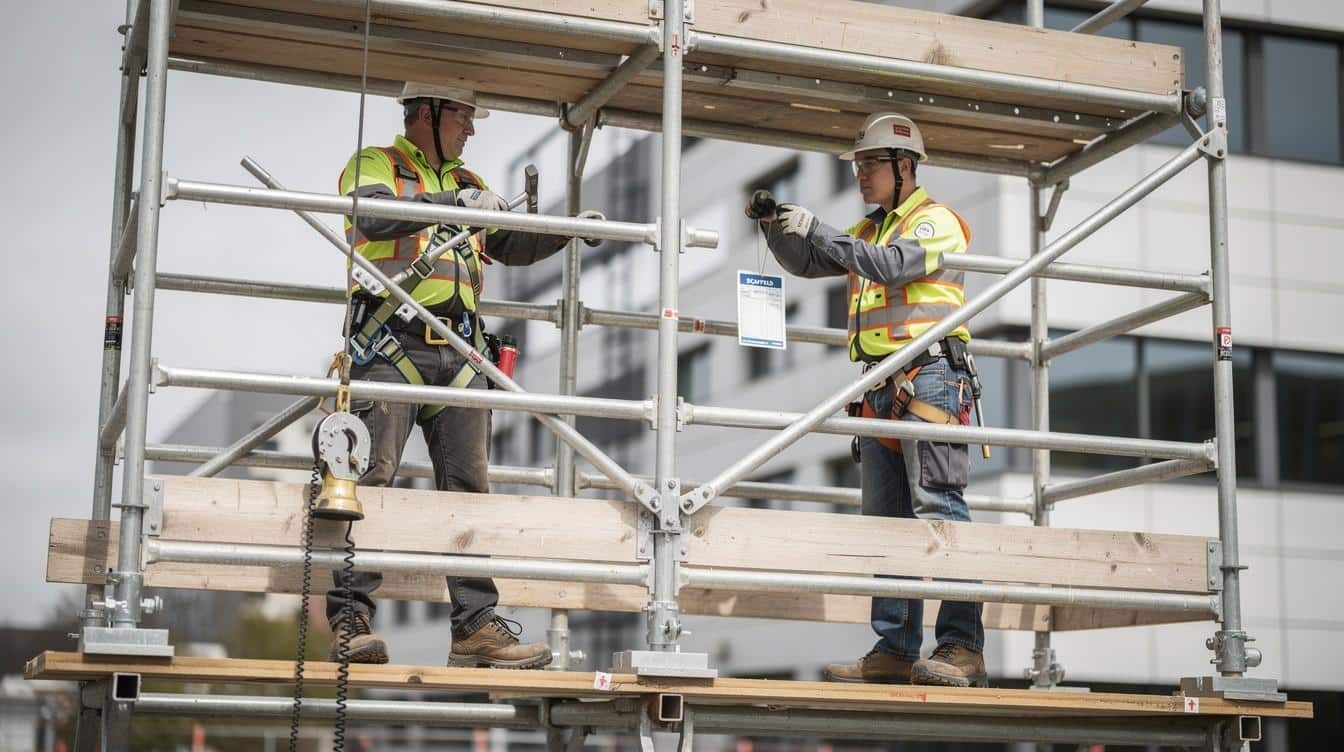
Inspection routines separate safe sites from dangerous ones, yet most projects treat them as afterthoughts rather than daily requirements. SafeWork NSW requires inspections at least every 30 days by a competent person, but this baseline misses the real protection: daily visual checks that catch deterioration before it becomes catastrophic. Start each morning by examining wedges and locking pins for engagement, verify mudsills are anchored with at least two nails, and confirm the structure remains plumb, level, and square. Cracked or deteriorated planks demand immediate replacement-not scheduled for later, not patched temporarily. Rusted components signal structural weakness that spreads silently through the entire system.
If you spot rust, remove and replace the affected parts on the same day. All scaffold planks require engaged locking devices; if the status is unclear, a trained erector must confirm secure engagement before work proceeds. Many sites accept scaffolds without written handover confirmation, creating liability gaps that result in fines around 900 dollars for individuals and 4,500 dollars for corporations according to SafeWork NSW data. Obtain that written confirmation in advance and attach it to your site records.
Weather Monitoring and Environmental Controls
Weather monitoring becomes part of your inspection protocol-snow and ice accumulation weaken structural integrity, and high winds increase collapse risk. Suspend operations when conditions exceed safe limits rather than pushing through and hoping for the best. Snow and ice require removal from all work surfaces to prevent slip hazards, and you must assess wind speeds before allowing workers onto elevated platforms. Lightning storms demand immediate work suspension; no deadline justifies the risk of electrical strike on metal scaffolding.
Personal Protective Equipment Selection and Compliance
Personal protective equipment protects workers only when you select it correctly and enforce consistent use, which means your site needs a clear PPE protocol that removes guesswork. Hard hats protect against falling objects, but impact-absorbing gloves, edge protection, and appropriate eyewear address specific hazards on your scaffold. Hearing protection matters too if cutting or power tools operate nearby-noise exposure exceeding safe standards causes permanent damage that no amount of after-work recovery reverses. Provide workers with a range of hearing protection options and audiometric testing to monitor exposure.
Training Requirements and Competency Standards
Training requirements under Australian WHS standards demand that workers on scaffolding hold valid high-risk-work licences for falls greater than 4 metres, with three competency levels available: basic, intermediate, and advanced. General construction induction (White Card) applies to all workers on site. Site inductions must cover scaffold safety explicitly, including prohibitions against accessing incomplete sections and preventing unlicensed alterations. Daily toolbox talks reinforcing these standards take 10 minutes and dramatically reduce incident rates by keeping safety front-of-mind. Younger workers especially need hands-on training in equipment selection and safe use practices, since inexperience combined with physical demands creates compounded risk.
Competent persons designated to oversee scaffolding safety must verify that all workers understand their responsibilities and that no unauthorised alterations occur during the project. This oversight prevents the silent failures that lead to collapse or falls. Your next step involves understanding the regulatory framework that governs these inspections and who bears responsibility when standards slip.
Regulatory Requirements That Protect Your Site
Australian Work Health and Safety legislation creates a framework that applies to every scaffold on site, and understanding who holds responsibility prevents costly fines and preventable incidents. The model WHS Act requires you to identify hazards, assess risks, control risks, and review those controls regularly-this isn’t optional compliance, it’s your legal foundation. If scaffold work presents a risk of falling more than 2 metres, it becomes high-risk construction work that demands a Safe Work Method Statement (SWMS). If the platform involves a fall greater than 4 metres, a high-risk work licence becomes mandatory, with three competency levels available: basic, intermediate, and advanced.
SafeWork NSW enforces these standards aggressively. On-the-spot fines reach around 900 dollars for individuals and 4,500 dollars for corporations when written handover confirmation is missing, scaffold safety risks remain unrepaired, or unauthorised access to incomplete sections occurs. Additional fines apply for carrying out scaffold work without a valid high-risk-work licence or allowing unlicensed persons to alter scaffolds.

Your site manager bears primary duty of care to verify that erection, alteration, and dismantling are performed by workers holding valid licences-you can verify licence validity through official channels. This isn’t a paperwork exercise; it’s the difference between operating legally and facing enforcement action.
Inspection Frequency and Competent Person Requirements
SafeWork NSW requires inspections at least every 30 days by a competent person, but this baseline inspection misses the daily protection that actually prevents failures. A competent person must possess the knowledge, training, and experience to identify scaffold hazards and assess whether controls work effectively. Written handover confirmation must arrive before workers access the scaffold, and you need that document attached to your site records.
Daily visual checks catch deterioration before 30 days pass and monthly inspections fail to detect it. Cracked planks, rusted components, and disengaged locking devices represent structural weaknesses that spread silently. Your inspection protocol must include daily examination of wedges and locking pins, verification that mudsills are anchored with at least two nails, and confirmation that the structure remains plumb, level, and square. When you spot damage, replace the affected components on the same day rather than scheduling repairs for later.
Site Inductions and Worker Communication
Site inductions and toolbox talks must cover scaffold safety explicitly, addressing the prohibition against accessing incomplete sections and preventing unlicensed alterations. These daily reinforcements take 10 minutes and keep safety front-of-mind when fatigue and schedule pressure tempt workers to skip steps. Workers on scaffolds identify hazards that office planners miss, and their input directly shapes the controls that protect them.
Coordination Across Contractors and Duty Holders
Principal contractors and site managers hold primary duty of care to consult with workers who carry out scaffold work and those likely to be affected by safety matters. Duty holders must also cooperate and coordinate activities with other contractors on site to manage scaffold-related hazards across the full project. Your site manager communicates with electrical contractors about power line clearance, coordinates with mechanical teams about load limits, and establishes clear protocols for material delivery and debris removal.
Unlicensed Alterations and Worker Accountability
Unlicensed workers must never remove scaffold components or alter the structure; these actions destroy the engineering integrity that protects everyone on site. If you discover unauthorised alterations, stop work immediately and bring in a competent person to verify the structure remains safe before workers return. Workers themselves hold responsibility for following site inductions, wearing required PPE, reporting hazards they observe, and refusing unsafe work.
This shared accountability creates the culture where incidents don’t happen because everyone understands their role. The Code of Practice: Construction Work and the Safe Work Method Statement information sheet provide the detailed requirements for high-risk scaffold tasks, and consulting these resources before your project starts prevents the gaps that regulators identify during inspections.
Final Thoughts
Scaffolding safety guidelines work only when every person on your site treats them as non-negotiable. Falls, collapses, and falling objects don’t happen because regulations exist-they happen because someone skipped an inspection, allowed unlicensed alterations, or ignored weather warnings. The standards we’ve covered aren’t bureaucratic obstacles; they’re the difference between workers going home safely and families receiving devastating news.
Your site’s safety depends on three interconnected elements. Daily visual checks must become routine, not occasional, since wedges, locking pins, rusted components, and structural alignment don’t fix themselves. Training must be continuous and specific-a White Card induction at project start isn’t enough when workers face new hazards daily, and toolbox talks take 10 minutes to keep safety front-of-mind when fatigue and schedule pressure tempt shortcuts. Accountability must flow from site managers through every worker, so when someone discovers an unsafe condition, they report it immediately, and when unlicensed workers attempt alterations, they’re stopped before damage occurs.
Creating a safety-first culture means your site manager actively verifies licences, obtains written handover confirmation, and coordinates with all contractors about power lines, load limits, and debris removal. Workers understand they can refuse unsafe work without penalty, and you suspend operations during lightning storms and high winds rather than pushing through. Home Owners Association supports Melbourne homeowners and property managers with resources and expert guidance for every project, and our members access trade pricing, professional advice, and educational support to ensure projects meet the highest standards.