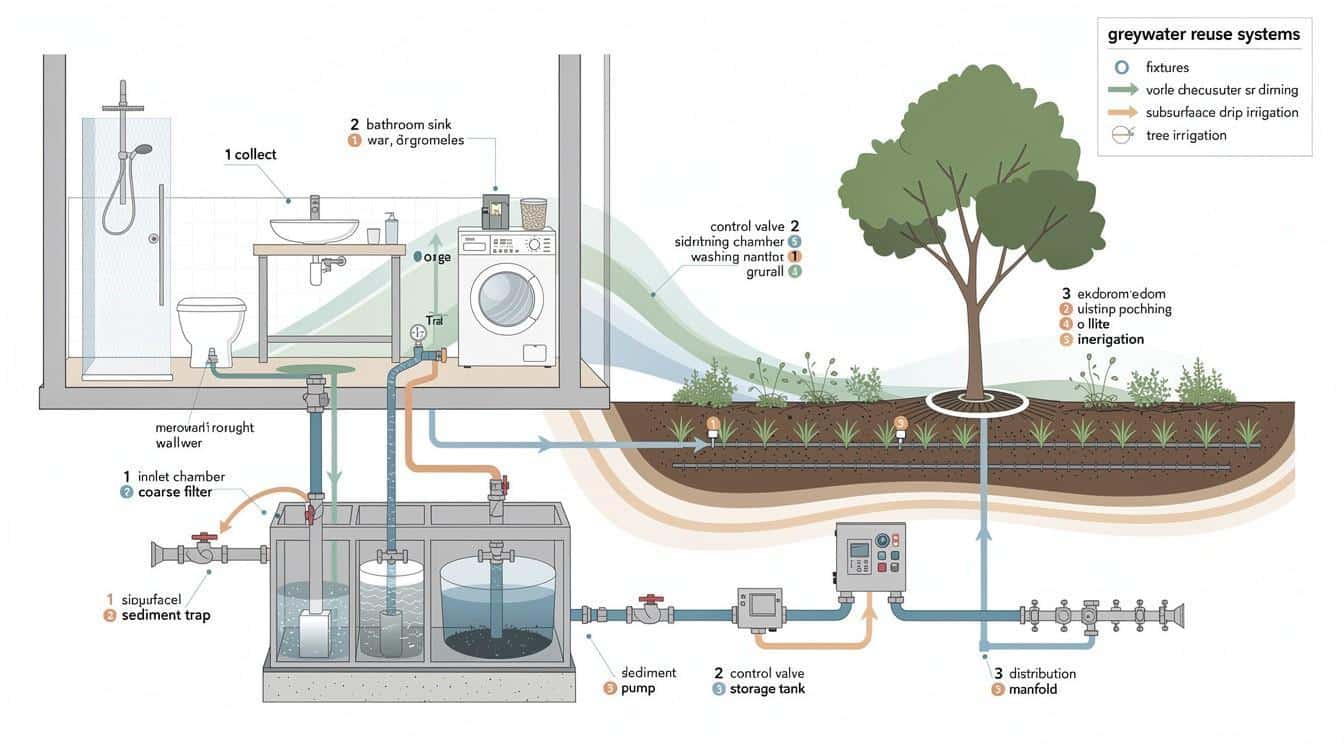
Most Australian homes waste thousands of litres of water annually through drains. Greywater reuse systems capture water from showers, baths, and washing machines-water that’s perfectly suitable for gardens and toilets.
We at Home Owners Association believe this is one of the smartest investments you can make for both your wallet and the environment. This guide walks you through everything you need to know, from system types to installation and maintenance.
Where Does Greywater Come From and What Can You Actually Do With It
Identifying Greywater Sources in Your Home
Greywater originates from four main household sources: bathroom showers and baths, bathroom sinks, washing machines, and dishwashers. The critical point is what greywater excludes-toilet waste, which is classified as blackwater and requires completely different handling. This distinction matters because greywater contains manageable contaminants like soap residue, dirt, and hair, whereas blackwater carries pathogens that demand treatment before any reuse. In Australian homes, bathroom and laundry water represents the largest volume of reusable greywater, typically accounting for 50 to 80 per cent of household wastewater. Kitchen sink water presents a problem due to fats, grease, and food particles that clog irrigation systems, which is why most systems exclude it entirely. If water drains from your shower, bath, or washing machine, it’s greywater you can recycle. If it comes from your toilet, it isn’t.
The Water and Money You’ll Actually Save
Australian homes waste roughly 24 per cent of their water supply through inefficient practices, and greywater reuse directly addresses this waste. Research shows that households recycling greywater reduces tap water consumption by 16 to 45 per cent depending on system type and usage patterns. For a typical Australian family, this translates to savings of 50 to 100 kilolitres annually, which lowers water bills by several hundred dollars each year in most regions. Beyond immediate cost reduction, greywater systems reduce strain on municipal water infrastructure during drought periods, which Australia experiences regularly. The environmental benefit extends to waterways-keeping greywater out of stormwater systems and treatment plants prevents nutrient pollution in rivers, lakes, and estuaries. You remove pollutants from the water cycle before they damage ecosystems. This is why greywater reuse has become essential in water-stressed regions across Australia, not optional.
How Australian Regulations Shape Your Installation
Water restrictions in Australian states have intensified over the past decade as climate patterns shift and populations grow. Many councils now impose limits on lawn watering, car washing, and garden irrigation during dry seasons, making greywater systems practically mandatory for maintaining any garden. Western Australia’s Code of Practice for the Reuse of Greywater, updated in 2010 and enforced by the Department of Health, sets specific standards for system design and disposal. The code mandates that greywater from diversion devices must use subsurface irrigation only-no surface spraying allowed-to minimise health risks. Victoria’s Environmental Protection Authority and other state regulators similarly require approved systems and proper permits before installation. Non-compliance carries fines and system removal orders. The trend across Australia is clear: regulations are becoming more prescriptive, not more relaxed.

Installing a compliant system now protects you from future restrictions and ensures your investment remains legal as standards evolve. Understanding these regulatory requirements forms the foundation for selecting the right system type for your property.
Installing and Maintaining a Greywater System
Selecting the Right System for Your Property
Choosing the right greywater system depends entirely on your property layout, budget, and water sources available. The laundry-to-landscape system remains the most practical starting point for Australian homeowners because it’s low-cost, requires minimal installation, and avoids pumps that fail and consume energy. This system diverts discharge from your washing machine directly through simple tubing to landscape irrigation. If your yard slopes downhill from your house, gravity does all the work-no electricity needed.
For homes where gravity won’t work or you need broader plant coverage, a surge tank system becomes necessary. A surge tank stabilises water flow and reduces turbulence, allowing solids to settle before water reaches your garden. This approach handles peak flows from showers and baths more effectively than basic diversion systems.
Understanding Regulatory Requirements for Your Installation
Western Australia’s Code of Practice requires that all systems use subsurface irrigation, meaning water must infiltrate into soil rather than spray across surfaces. This requirement exists because surface irrigation creates health risks and violates regulations across most Australian states. Never install surface spraying unless your local council explicitly permits it in writing-fines and removal orders follow non-compliance.
Testing Your Soil and Positioning Your System
Installation itself demands attention to three critical details that most homeowners overlook. First, test your soil percolation rate before finalising your design; this determines how quickly water infiltrates and whether mosquitoes will breed in standing water. Dig a hole 30 centimetres deep in your irrigation area, fill it with water, and measure how long it takes to drain. Soil that drains in under 2 hours is ideal; slower-draining soil requires wider disposal areas or mulch basins to prevent pooling.
Second, position your surge tank or settling tank on level ground with proper overflow directed to your sewer or septic system-overflow must never drain to stormwater systems or waterways. Third, use 1-inch tubing from your greywater source with 1/2-inch outlets to specific plants rather than spraying randomly; this concentrates water where trees and shrubs actually need it and prevents oversaturation. Install a three-way valve immediately after your water source so you can switch between greywater and sewer systems for flexibility and safety during maintenance.
Maintaining Your System for Long-Term Performance
Maintenance is straightforward but non-negotiable: never store untreated greywater longer than 24 hours because bacteria multiply and odours develop rapidly. Empty your settling tank annually by siphoning accumulated sediment, a 30-minute job using basic equipment. Use only low-phosphorus detergents and avoid bleach-heavy cleaners because salts and chemicals accumulate in soil and damage plants over time.
Monitor your garden monthly for signs of stress-yellowing leaves or poor growth indicates chemical buildup, which requires flushing your irrigation lines or adjusting detergent choices. This maintenance takes roughly two hours annually and prevents costly system failures. Once your system operates smoothly, attention shifts to avoiding the mistakes that compromise performance and safety across Australian properties.
Common Mistakes That Compromise Greywater Systems
The gap between installing a greywater system and running one successfully is where most Australian homeowners stumble. Three failure patterns repeat across properties: systems undersized for actual household flow, installations that violate local codes, and neglected water quality that damages soil and plants. Understanding these mistakes protects your investment and ensures your system delivers the water savings you expect.
Undersizing Your System for Real Household Demand
Undersizing happens because homeowners calculate based on peak usage rather than average daily flow. A family of four generates roughly 200 to 250 litres of greywater daily from showers and laundry, yet many systems are designed for 100 to 150 litres. This undersizing causes overflow to bypass your irrigation system and drain to sewer during normal use, defeating the entire purpose. Your surge tank should hold at least 20 to 30 per cent of your daily greywater volume to handle morning shower peaks without overflow. Western Australia’s Department of Health requires disposal areas to be sized according to AS/NZS 1547:2012 standards based on your specific soil percolation rate, yet most DIY installations ignore these calculations entirely.
Testing Soil Before Installation Begins
Skipping soil testing costs nothing upfront but guarantees pooling water, mosquito breeding, and system failure within months. Test your percolation rate before finalising any design. Dig a hole 30 centimetres deep in your irrigation area, fill it with water, and measure how long it takes to drain. If water drains slower than 2 hours, your disposal area must be significantly larger or you need mulch basins to slow infiltration. This simple test takes 30 minutes and prevents months of wasted water and failed plants.
Complying With Local Regulations and Permits
Regulatory non-compliance is equally destructive. Surface irrigation violates codes across every Australian state, yet homeowners install above-ground sprayers because they’re cheaper and easier. One council inspection and you face removal costs exceeding installation expenses, plus fines. Your local council’s written approval must precede any installation. Western Australia’s Department of Health Environmental Health Directorate can be contacted at 9222 2000 or ehinfo@health.wa.gov.au to verify approved systems and current standards. Subsurface irrigation remains the only legally compliant approach across Australian jurisdictions.
Monitoring Water Quality and Detergent Choices
Water quality monitoring separates successful systems from failing ones. Using standard bleach-heavy cleaners and high-phosphorus detergents accumulates salts in soil that burn plant roots and create visible yellowing within one growing season. Switch to low-phosphorus products immediately, or your garden becomes a salt-laden dead zone that takes years to recover. Store greywater no longer than 24 hours because bacterial populations explode after this threshold, creating odour and rendering water unsafe for any use. Check your garden monthly for stress signs. Healthy plants receiving greywater show normal growth; stressed plants indicate chemical or microbial problems requiring detergent changes or line flushing. Annual maintenance involves emptying your settling tank by siphoning accumulated sediment-a 30-minute job using basic equipment.
Recognising System Failure Before Damage Occurs
These three mistakes-undersizing, ignoring regulations, and neglecting water quality-account for roughly 80 per cent of greywater system failures across Australian properties. Avoiding them requires testing soil, obtaining written council approval, and committing to monthly monitoring and annual maintenance. Yellow leaves, slow plant growth, or persistent odours signal that your system needs adjustment. Address these warning signs immediately rather than waiting for complete system failure.
Final Thoughts
Greywater reuse systems deliver measurable results for Australian homeowners willing to invest time in proper installation and maintenance. A household reducing water consumption by 16 to 45 per cent saves hundreds of dollars annually while removing thousands of litres from stormwater systems that would otherwise pollute waterways. These aren’t theoretical benefits-they’re concrete outcomes you’ll see on your water bill and in your garden’s health within the first growing season.
The three critical decisions you face are straightforward: select a system matching your property’s slope and budget, obtain written council approval before installation, and commit to monthly monitoring and annual maintenance. A laundry-to-landscape system costs under $500 and requires no pumps or complex equipment, while a surge tank system adds flexibility for homes without downhill drainage. Both approaches work when you design them according to soil percolation rates and local regulations, though skipping soil testing or ignoring subsurface irrigation requirements guarantees failure and potential fines.
Long-term success depends on using low-phosphorus detergents, never storing greywater beyond 24 hours, and watching your plants for stress signals (yellow leaves or slow growth indicate chemical accumulation requiring immediate detergent changes). Contact your local council for written approval of your chosen system type and obtain soil percolation test results for your property. We at Home Owners Association support Australian homeowners through every stage of water efficiency projects, and you can explore membership benefits and resources tailored to your greywater reuse systems project.