Prefab home extensions are transforming how homeowners add space to their properties. They’re faster, more affordable, and require far less on-site disruption than traditional construction methods.
At Home Owners Association, we’ve seen firsthand how this approach works for families looking to expand without the headaches of conventional building. This guide walks you through everything you need to know, from planning to installation.
What Prefab Extensions Actually Are
Prefab home extensions are factory-built structures that arrive at your site largely complete, then connect to your existing home. Unlike traditional construction where everything happens on-site with weather delays and uncertainty, prefab modules are manufactured in controlled factory conditions before arriving at your property. The Australian Building Codes Board has recently published guidance on Modern Methods of Construction, recognising prefab as a legitimate pathway that delivers higher quality buildings and increased productivity. What matters most is this: the factory environment means precision manufacturing, consistent quality, and dramatically fewer variables than site-built work.
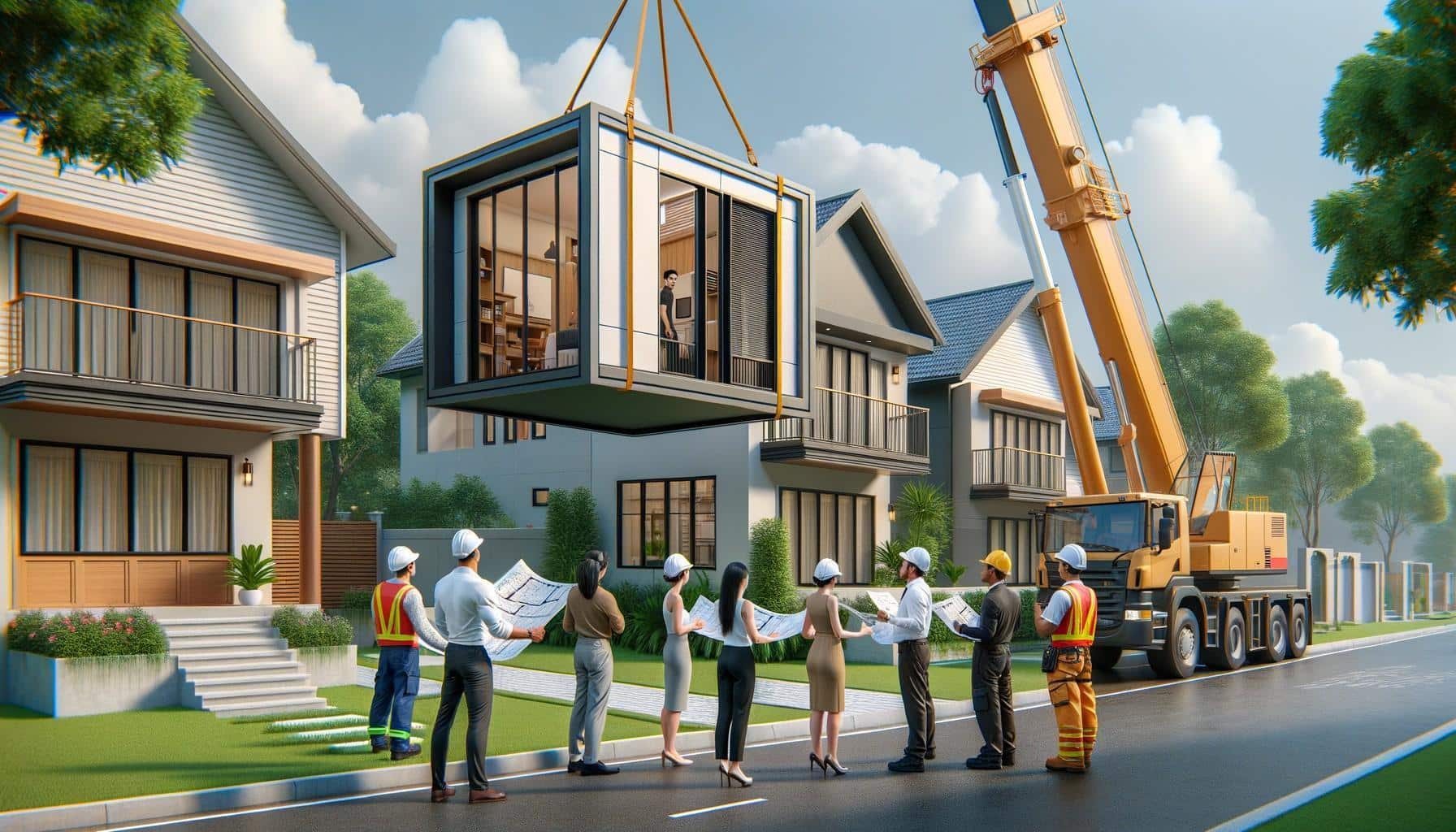
When modules arrive, assembly typically takes around one week with minimal heavy machinery needed. Most residential extensions don’t require cranes, which keeps costs down and site disruption minimal. The Productivity Commission estimates that prefabricated and modular construction can reduce home costs by up to 20% compared to traditional methods, while construction timelines shrink by up to 50%. These are real productivity gains from controlled manufacturing processes where workers aren’t battling weather, material delays, or site logistics daily.

Why the Timeline Difference Matters So Much
Traditional extensions in Australia often take 4–6 months or longer, with site-built projects frequently running over budget. CoreLogic data shows roughly 50% of renovations in Australia exceed their initial budget, largely due to unforeseen site conditions, material price swings, and weather interruptions. Prefab changes this equation entirely.
Off-site factory production runs parallel to your site preparation, so while your foundation is being prepared over 2–3 weeks, your extension is already being manufactured. Once the foundation is ready and site access is confirmed-with at least 3.5 metres width and 4.2 metres clearance for module delivery-assembly happens fast. Total on-site presence typically spans around four weeks from foundation prep to final handover, including finishing touches.
This speed matters beyond convenience: shorter timelines mean less exposure to price fluctuations, fewer opportunities for scope creep, and faster return to normal living. For families needing extra space urgently, whether for a home office, granny flat, or additional bedroom, this compressed timeline is genuinely transformative.
The Cost Picture That Actually Makes Sense
Prefab extensions cost approximately 2,000 to 4,000 AUD per square metre, making a typical 30-square-metre addition around 120,000 AUD. A smaller 20-square-metre extension generally runs between 40,000 and 80,000 AUD depending on finishes and inclusions. What separates prefab pricing from traditional building is transparency and certainty.
Established modular providers typically quote fixed pricing bands-for instance, 27,655 to 44,520 AUD plus GST for 10–20 square metre spaces, with bathrooms adding roughly 13,500 AUD and kitchenette additions about 7,000 AUD beyond base price. These upfront figures matter because hidden costs plague traditional builds; prefab suppliers operate on transparent, itemized pricing because factory production costs are predictable.
Modular extensions compared to traditional expansions offer faster completion, fewer site disruptions, and predictable energy efficiency features. High-quality insulation in prefab modules can cut heating and cooling costs by roughly 45% or more, while double-glazed windows reduce heat loss by about 30% versus single-glazed options. If you integrate solar panels with battery storage from the outset, long-term energy savings compound further, adding genuine value beyond the initial purchase price.
What Happens Next in Your Planning Journey
Understanding how prefab extensions work sets the foundation for your next decision: assessing your specific space, budget, and which supplier can deliver what you actually need.
Planning Your Space and Budget
Measure Your Space and Map Underground Utilities
Accurate measurements before you contact a prefab supplier save time and money. Measure your available space precisely-not just the floor area, but ceiling heights, roof pitch, and how the extension connects to your existing structure. Underground utilities demand attention; map water, gas, electricity, and sewerage lines before you commit to a location. A detailed site assessment catches problems early: soil conditions determine foundation type, sloping sites require raised foundations instead of concrete slabs, and flood-prone areas demand different engineering entirely. These details cost nothing to identify upfront but thousands to fix mid-project.
Budget Beyond the Extension Cost
Establish your genuine budget by looking beyond the extension price itself. Foundation preparation typically takes 2–3 weeks and costs vary by site complexity. Site access constraints are real obstacles-your modules need a clear delivery route with at least 3.5 metres width and 4.2 metres clearance. If overhead branches or power lines block access, rerouting adds significant expense. Melbourne and other Australian regions often require planning permits, so factor in that timeline and any associated fees.

Some designs qualify for planning exemptions depending on location, but verify this early with your local council rather than assuming.
Select a Supplier With Transparent Pricing and Credentials
Choosing a supplier demands scrutiny beyond price alone. Established providers operate transparently with fixed pricing: Bribuild’s standard 30-square-metre lockup extension starts at 39,990 AUD plus GST, while Greenspan delivers Australian-made modules with a ten-year structural warranty and decades of family business credibility. Ask suppliers for detailed specifications in writing-insulation R-values, window frame materials, roofing systems, and structural certifications. Cheap materials save upfront but inflate long-term costs through poor energy performance and maintenance headaches.
Demand that suppliers handle planning and building permits as part of their service; reputable operators include both, reducing your paperwork burden. Verify warranty terms in writing; ten-year structural warranties are standard among quality manufacturers. Check response times on business days; four-hour response commitments indicate professional support.

Finally, ask for references from completed projects in your area-real homeowners reveal what suppliers actually deliver versus marketing promises.
Prioritise Customisation and Future-Proof Design
Quality providers offer flexibility on size, panel counts, window and door placement, and finishes without forcing you into rigid pre-designed boxes. Future-proof your extension with modular designs featuring structured cabling and extra data conduits for smart home functionality and EV charging compatibility-retrofitting these later costs far more. Request detailed specifications on insulation performance, window glazing options, and material durability so you understand long-term energy costs and maintenance requirements.
With your space measured, budget confirmed, and supplier shortlisted, the next critical step is understanding exactly what happens during site preparation and assembly.
Installation and Construction Process
Site Preparation Sets the Foundation for Success
Your prefab extension requires precision at every stage, starting long before modules arrive on site. The foundation work determines whether your new space sits level, drains properly, and connects seamlessly to your existing structure. Most site preparation takes 2 to 3 weeks and involves clearing the space, assessing soil conditions, and preparing the correct foundation type for your specific site.
If your ground is relatively flat and well-draining, a concrete slab works efficiently. For sloping properties or areas prone to flooding, raised foundations using piers become necessary instead. Before any excavation begins, you must commission a detailed site assessment that maps underground utilities-water, gas, electricity, and sewerage lines. Missing this step creates genuine hazards and can delay projects by weeks if workers strike a live power line or burst a water main mid-excavation.
Soil testing determines load-bearing capacity and informs foundation depth requirements. Your prefab supplier should coordinate directly with the foundation contractor using certified engineering drawings, ensuring dimensions and connection points match exactly. During these 2 to 3 weeks, your extension is simultaneously manufactured in the factory, so delays in site prep directly compress your assembly window and finishing timeline.
Module Delivery Demands Careful Logistics Planning
Confirm your site has at least 3.5 metres width and 4.2 metres clearance for the delivery route-measure twice and prune overhead branches or arrange power line relocations if necessary, as rerouting adds substantial costs. Most residential prefab extensions assemble within one week without requiring cranes, which keeps costs down and reduces neighbourhood disruption.
Your supplier’s team positions modules into place, connects utilities to water, gas, and electricity, seals all joints and weatherproofing, and integrates the new structure with your existing home’s roof line and wall finishes. Quality control happens throughout assembly, not just at the end. Suppliers should conduct systematic checks at foundation connection, module positioning, utility hookups, and weatherproofing stages rather than waiting until everything is complete.
Finishing Work and Final Inspections Complete the Project
Once assembly finishes, finishing work-interior painting, flooring installation, fixture placement, and final inspections-typically requires another 2 to 3 weeks. Building inspectors must certify that the extension meets the National Construction Code, electrical work meets safety standards, and plumbing connections function correctly.
Request a detailed inspection report in writing, not just a verbal sign-off. This documentation protects you if issues emerge later and proves compliance to your insurer and future buyers. Total on-site presence from foundation prep through final handover spans approximately four weeks, making the entire process genuinely faster than traditional construction while maintaining rigorous quality standards throughout.
Final Thoughts
Prefab home extensions deliver what traditional building struggles to provide: certainty, speed, and transparent costs. Factory-built modules arrive at your site largely complete, assemble within weeks, and integrate seamlessly with your existing home while cutting construction timelines by up to 50% compared to site-built work. The Productivity Commission’s estimate that prefabricated construction reduces costs by up to 20% reflects real savings from controlled manufacturing, not theoretical projections.
The financial case extends beyond the initial purchase price. High-quality insulation cuts heating and cooling costs by 45% or more, double-glazed windows reduce heat loss by roughly 30%, and solar integration compounds savings over decades. A 30-square-metre extension costing around 120,000 AUD generates genuine return on investment through lower energy bills, increased property value, and avoided moving costs that typically include agent commissions, stamp duty, and legal fees. CoreLogic data confirms Australians hold properties longer and prefer extensions to relocating, making this investment increasingly sensible.
Contact suppliers with transparent pricing and ten-year structural warranties if you’ve measured your space, mapped underground utilities, and identified your budget range. Request detailed specifications in writing, verify their handling of planning and building permits, and ask for references from completed projects nearby. We at Home Owners Association provide expert guidance and resources tailored to Melbourne homeowners, helping you make informed decisions before committing to any project.