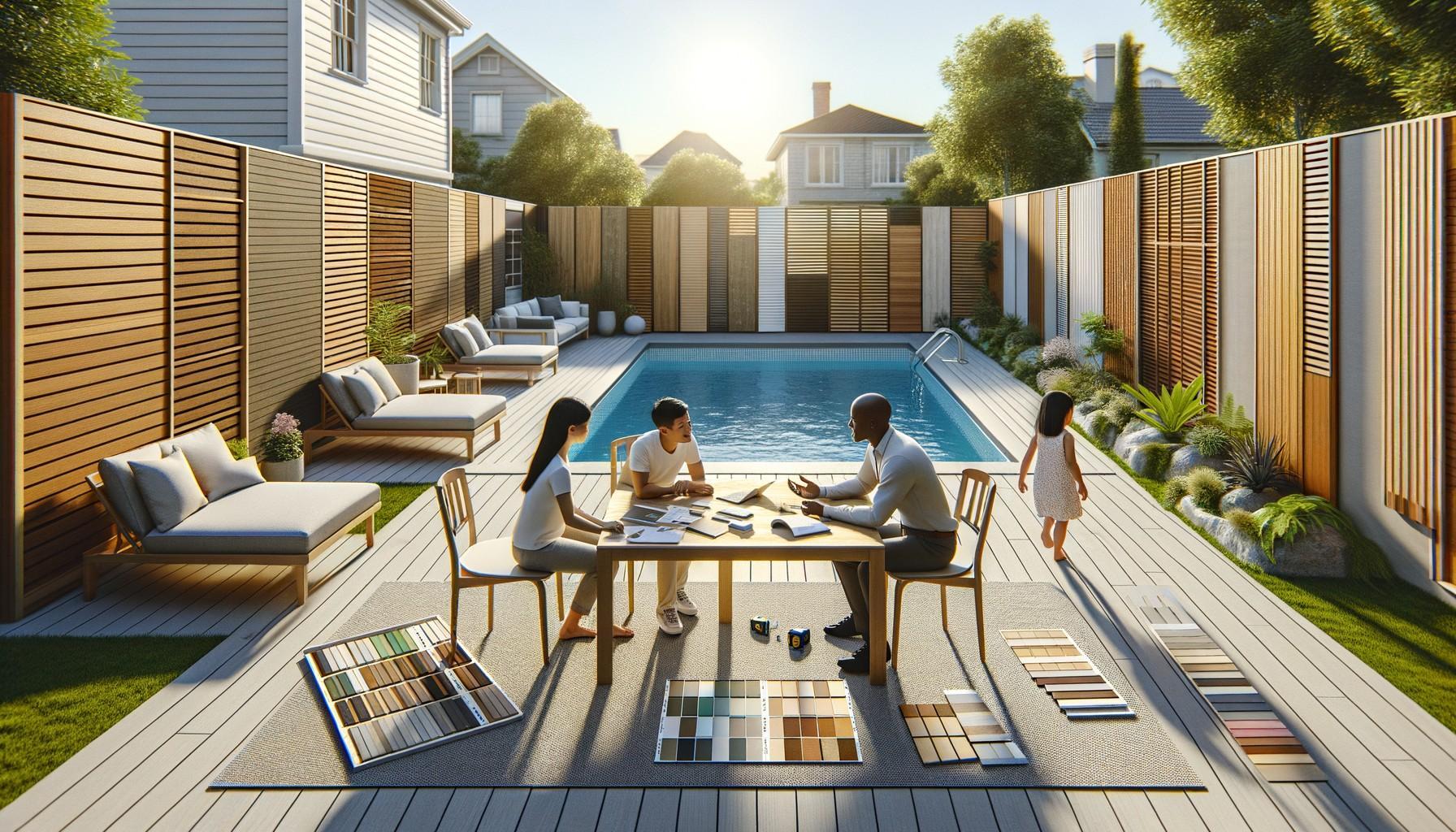
A timber pool fence combines safety, style, and durability for your backyard. At Home Owners Association, we’ve seen homeowners struggle to navigate the many timber pool fence ideas available, from classic vertical slats to modern horizontal designs.
The right choice depends on your local safety regulations, climate conditions, and maintenance capacity. This guide walks you through the styles, compliance requirements, and installation steps to help you make an informed decision.
What Timber Fence Styles Work Best for Pools?
Vertical Slat Fences: The Modern Standard
Vertical slat timber fences dominate modern pool design for solid reasons. This style uses closely spaced vertical boards that create a clean, contemporary look while meeting Australian Standard AS1926.2007 requirements. The vertical orientation sheds water effectively, reducing rot risk compared to horizontal designs. Vertical slats also allow you to adjust spacing-tighter spacing increases privacy, while wider gaps maintain airflow around the pool area. The self-closing gate mechanism works seamlessly with vertical designs, and the 1200 mm height requirement translates directly into standard timber lengths, minimising waste and installation costs. Architects like Clare Cousins have championed this approach for modern homes because it pairs functionality with aesthetic appeal. The downside is maintenance: timber requires reapplication of stain or sealant every one to two years to prevent weathering and mould growth.
Horizontal Board Fences: Aesthetic Challenges
Horizontal board fences offer a different aesthetic but create practical challenges for pool areas. While they suit contemporary architecture and create visual rhythm, they trap water and debris between boards, accelerating decay. Horizontal designs also complicate gate installation since self-closing mechanisms work more reliably with vertical structures. If you choose horizontal boards, you’ll spend more on maintenance-clean twice yearly and reseal every 1-2 years to preserve the timber. Decorative lattice and panel options sound appealing but present compliance risks: lattice can create climbable surfaces within 900 mm of the barrier, violating safety standards.
Battens and Curved Designs: Solving Slope Problems
Panel designs work only when individual panels are solid and self-supporting; perforated or slatted panels cost between $100–$200 per metre and require the same rigorous maintenance as solid timber. The practical choice for most Australian homeowners is vertical slats. This style balances compliance, durability, and maintenance burden. Batten-style variations use timber battens to allow natural airflow and work on sloped terrain-a genuine advantage if your pool sits on uneven ground. Timber battens traverse slopes while maintaining the required 1200 mm barrier height, turning a compliance challenge into a design feature. Curved or wavy timber designs soften harsh lines and integrate landscaping seamlessly, but these require skilled installation and higher upfront costs.
Compliance Before You Build
Whatever style you select, consult a licensed pool safety inspector before installation to confirm your design meets local regulations. This step prevents costly mistakes and ensures your fence protects your family while meeting Australian standards. The inspector will verify that your chosen design (whether vertical slats, battens, or curved panels) complies with height requirements, gate mechanisms, and climbable object restrictions. Once you’ve selected a compliant design, the next critical decision involves understanding the durability and weather resistance factors that determine how long your timber fence actually lasts in Australia’s varied climates.
Key Factors That Determine Your Timber Pool Fence Success
Compliance Standards Form Your Foundation
Australian Standard AS1926.2007 sets non-negotiable requirements for every timber pool fence you build. The barrier must reach exactly 1200 mm from ground to top, gates must self-close and self-latch from all points, and you cannot have climbable objects within 900 mm of the fence. These aren’t suggestions-a licensed pool safety inspector will verify every detail, and non-compliance forces you to complete costly repairs within three months. Your design choice (vertical slats, battens, or curved panels) must satisfy these requirements before you purchase a single board.

Skipping this verification step creates expensive problems later.
Climate and Material Durability Shape Long-Term Costs
Timber’s vulnerability in Australia’s climate determines whether your fence lasts ten years or five. Vertical slat designs shed water effectively, but horizontal boards trap moisture between slats and accelerate rot in humid regions. If you live in Queensland, New South Wales, or other high-humidity areas, you must reseal your timber fence regularly-not three or five years. Wood that receives direct afternoon sun deteriorates faster than shaded installations; if your pool faces west, plan for more aggressive maintenance cycles. Neglecting this schedule costs you thousands in premature replacement.
Composite fencing costs significantly more upfront (typically $100–$200 per metre compared to timber), but composite requires minimal upkeep and lasts several decades, making it genuinely cost-effective over twenty years. Glass frameless fencing runs $600–$1000 per metre and demands monthly cleaning to prevent hard water stains, though durability rivals composite materials. Aluminium tubular fencing averages $75–$85 per metre with minimal maintenance-it offers the practical middle ground between timber’s upkeep demands and glass’s premium pricing.
Installation Quality Determines Real Value
Installation quality impacts long-term costs far more than material choice alone. Hiring a qualified installer ensures posts sit firmly anchored and panels remain level; DIY mistakes often cost double the original installation price in corrections. Posts must anchor securely in the ground, and loose boards signal structural failure within months. Terrain matters substantially: flat sites cost around $2000 for a standard installation, while sloped, rocky, or densely vegetated sites add 20–30% to labour costs because battens and stepped designs require skilled work. Professional inspection before installation prevents the expensive scenario where you build a non-compliant fence and must rebuild it entirely.

Maintenance Schedules Separate Timber Winners From Failures
Timber maintenance isn’t optional if you want your fence lasting ten-plus years. You must clean timber fences twice yearly, inspect hinges and latches monthly, and tighten fasteners regularly. Metal components corrode quickly in coastal areas; apply rust-inhibiting primer every few years. Timber battens allow natural airflow around the pool and solve slope compliance challenges elegantly, but they demand the same rigorous maintenance schedule as solid designs. The harsh truth is this: timber pool fences suit homeowners willing to commit to regular maintenance. If you cannot perform seasonal inspections and maintenance, aluminium or composite materials offer better value despite higher initial costs.
Where Timber Actually Excels
Sloped terrain actually favours timber battens because they traverse natural grade changes while maintaining compliance-this is where timber shines as a design solution, not a budget compromise. Battens create visual rhythm while solving practical installation challenges on uneven ground. This advantage matters significantly if your pool sits on a slope, as it transforms a compliance obstacle into an architectural feature. Understanding these material and installation realities positions you to make the right choice for your specific situation. The next step involves finding qualified installers who understand these compliance requirements and can execute the design you’ve selected.
Installation and Professional Support for Timber Pool Fences
Qualified Installers Make the Difference
Professional installation separates timber pool fences that last a decade from those that fail within five years. A qualified installer understands that posts must anchor firmly in compacted soil or concrete footings, panels must sit perfectly level, and gate mechanisms must function flawlessly from day one. Terrain complexity drives installation costs significantly-flat sites typically cost around $2,000 for a standard timber fence installation, while sloped or rocky ground adds 20–30% to labour expenses because battens must step to maintain the required 1200 mm barrier height. Dense vegetation requires site preparation work that inexperienced installers often underestimate, inflating costs mid-project.
Before hiring, ask installers whether they’ve completed pool fence work in your specific council area and request references from recent projects. Licensed pool safety inspectors must verify compliance after installation, so confirm your installer understands this requirement and will coordinate the inspection. DIY installation might save money upfront, but mistakes in post anchoring or gate installation typically cost double the original labour price to correct, making professional installation the financially sound choice.
Material Selection and Hardware Specifications
Material selection determines maintenance burden more than any other factor. Timber species matter-hardwoods like spotted gum or ironbark resist decay longer than softwoods, though they cost more upfront. Vertical slat designs shed water effectively and resist rot better than horizontal alternatives. Hinges and latches corrode rapidly in coastal environments, so specify stainless steel hardware if you live near the ocean. This single decision can extend your fence’s lifespan by years in salt-air locations.
Seasonal Maintenance Tasks That Protect Your Investment
Maintenance schedules demand discipline to protect your timber investment. Clean timber twice yearly, inspect hinges and fasteners monthly, and reapply sealant or stain every one to two years depending on your climate. Coastal properties need more aggressive schedules because salt air accelerates corrosion and wood deterioration. Spring demands deep cleaning and resealing of any chipped paint or weathered timber.

Summer requires testing gate self-closure and lubricating hinges with silicone spray. Autumn means clearing debris around the fence base and inspecting hardware for rust. Winter demands rust inhibitor application to metal components.
Evaluating Whether Timber Suits Your Commitment Level
This maintenance reality shapes whether timber genuinely suits your situation. If you cannot commit to these seasonal tasks, aluminium or composite materials offer genuine value despite higher initial costs, requiring only occasional cleaning and minimal structural maintenance. Timber pool fences suit homeowners willing to invest time and effort into regular upkeep. Aluminium tubular fencing averages $75–$85 per metre with minimal maintenance, offering the practical middle ground between timber’s demands and premium material pricing. Composite fencing costs significantly more upfront (typically $100–$200 per metre compared to timber), but composite requires minimal upkeep and lasts several decades, making it genuinely cost-effective over twenty years.
Final Thoughts
Vertical slat timber pool fence ideas remain the most practical choice for Australian homeowners because they balance compliance, durability, and manageable maintenance demands. This style meets Australian Standard AS1926.2007 requirements directly, sheds water effectively to prevent rot, and works seamlessly with self-closing gate mechanisms. Batten-style designs solve genuine problems on sloped terrain, transforming compliance challenges into architectural features that integrate naturally with landscaping.
Your final decision hinges on honest assessment of your maintenance commitment. Timber requires cleaning twice yearly, sealant reapplication every one to two years, and monthly hardware inspections-if you cannot sustain this schedule, aluminium tubular fencing at $75–$85 per metre or composite materials offer superior long-term value despite higher upfront costs. Professional installation matters more than material choice alone, as qualified installers ensure posts anchor firmly and gates function flawlessly from day one.
Before purchasing materials, consult a licensed pool safety inspector to verify your chosen design meets local regulations, and obtain quotes from multiple installers experienced in your council area. We at Home Owners Association support Melbourne homeowners throughout renovation projects with expert guidance and resources that help you connect with trusted professionals who understand local compliance requirements for your timber pool fence project. Visit Home Owners Association to explore membership benefits and find qualified installers in your area.