Australian builders face mounting pressure to meet stricter energy codes while managing construction costs. We at Home Owners Association believe sustainable building practices in Australia aren’t just environmental responsibility-they’re smart business that cuts long-term expenses.
This guide covers the practical steps local builders can take right now: energy efficiency standards, water conservation, and government incentives that put money back in your pocket.
Meeting Australia’s Energy Efficiency Standards
Australia’s National Construction Code now mandates a 7-star energy rating for new homes under NatHERS, a significant jump from previous requirements. This shift reflects the government’s commitment to net-zero emissions by 2050, and builders who understand these standards gain a competitive edge. The built environment accounts for around 25% of Australia’s emissions, so meeting these codes isn’t optional-it’s the direction the entire industry is moving. Local builders who master energy efficiency standards today position themselves ahead of tightening regulations tomorrow. The NCC 2022 updates are just the beginning; state-based requirements like Victoria’s Environmentally Sustainable Design standards and NSW BASIX add additional layers of complexity that demand practical knowledge.
Thermal Performance Drives Real Results
Thermal performance determines where energy efficiency becomes measurable. Proper insulation, glazing, and airtightness work together to reduce heating and cooling loads dramatically. External shading delivers an easy win that costs far less than retrofitting later-overhangs or external blinds prevent summer heat gain without expensive mechanical cooling upgrades. Thermal mass, achieved through concrete slabs or masonry walls, stabilises indoor temperatures naturally and reduces peak energy demand. Moisture management proves equally critical; poor moisture control leads to mould, structural damage, and indoor air quality issues that cost homeowners thousands in remediation. Weather Resistant Barriers and airtight junctions prevent moisture infiltration, while mechanical ventilation with heat recovery maintains fresh air without losing conditioned air.

These improvements directly lower energy bills and improve home durability, which translates to higher property values and stronger buyer appeal.
From Codes to Cost Savings
Meeting the 7-star NatHERS rating typically costs 2-5% more upfront than building to older standards, but energy savings recover that investment within 5-10 years. A home that achieves the new standards uses significantly less energy for heating, cooling, and hot water-the three largest energy consumers in Australian homes. LED lighting, high-performance insulation, and optimised HVAC systems compound these savings year after year. Solar PV costs have dropped about 80% since 2008, making it a cost-effective addition that accelerates payback periods. Pairing solar with battery storage increases energy resilience and attracts premium prices from buyers prioritising energy independence. Builders who communicate these long-term savings to clients-with actual numbers based on energy modelling-differentiate themselves from competitors still building to minimum standards. Energy modelling software provides clients with transparent projections of annual energy consumption and costs, building confidence in the investment.
Water Efficiency Completes the Picture
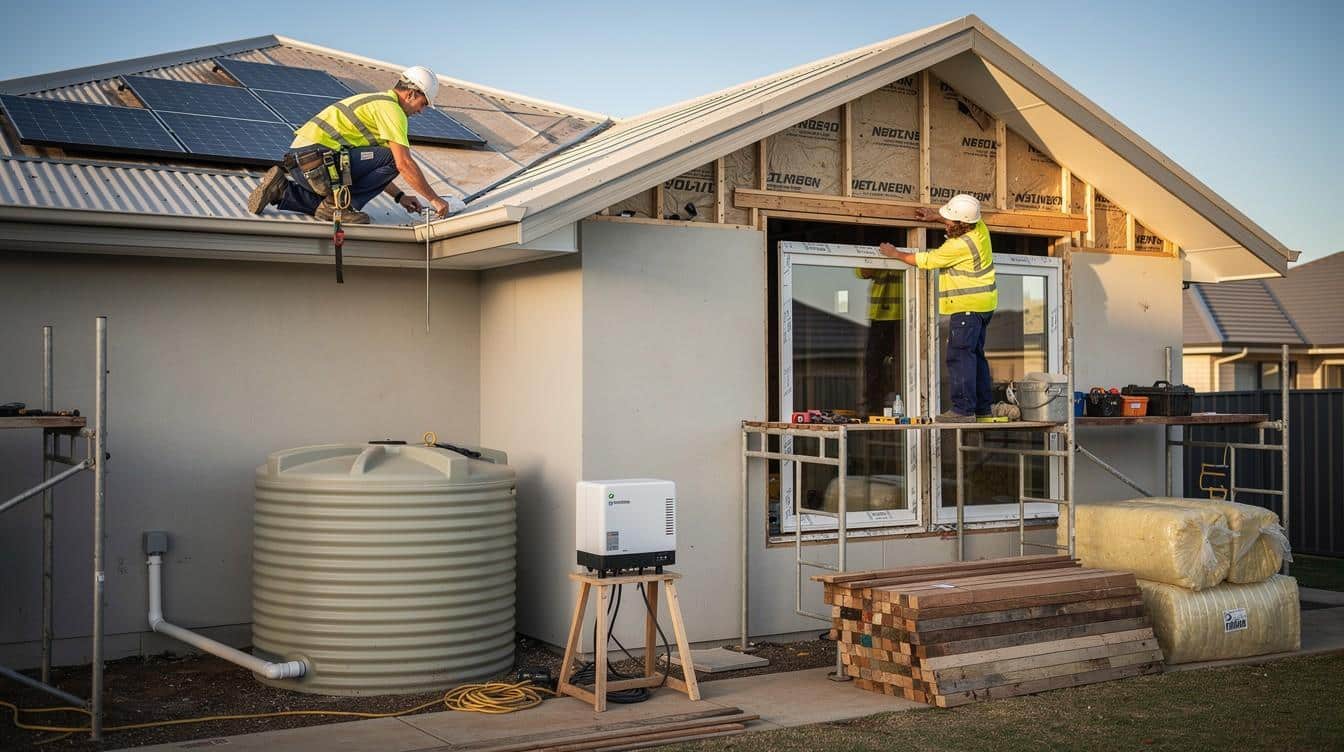
Energy efficiency standards represent only half the sustainability equation. Water conservation strategies work alongside thermal performance to reduce operating costs and meet broader environmental targets. Rainwater harvesting systems, low-flow fixtures, and smart metering address the second major utility expense in Australian homes, creating additional value that appeals to cost-conscious buyers and aligns with state water regulations across the country.
Water and Materials: Where Real Savings Happen
Rainwater Harvesting and Low-Flow Fixtures Cut Water Bills Fast
About 40% of a typical Australian household’s water use occurs outdoors, making rainwater harvesting and smart water fixtures the fastest way to cut utility bills without sacrificing comfort. Rainwater tanks sized for toilet and laundry use eliminate reliance on mains water for these high-volume applications, reducing annual household water consumption by thousands of litres.

Low-flow showerheads rated at 6 litres per minute will save 105 kL and $315 each year on water bills. A family of four using low-flow showerheads reduces hot water demand by 30-40%, which compounds savings when paired with efficient hot water systems. Indigenous plantings combined with sub-surface drip irrigation slash outdoor water use further, particularly critical as water restrictions tighten across Australian states. Builders who install these systems upfront attract buyers prioritising resilience and lower operating costs, especially in water-stressed regions.
Recycled Materials Deliver Carbon Savings and Cost Advantages
Recycled and locally sourced materials drive down embodied carbon while strengthening local supply chains and often reducing transport costs. Hempcrete, produced from hemp fibre and lime, absorbs more CO2 during its lifecycle than it emits-making it genuinely carbon-negative rather than merely low-carbon. Recycled concrete from local facilities replaces virgin aggregate in driveways and paving at lower cost while diverting waste from landfill. Recycled timber flooring and framing deliver durability and natural insulation without deforestation; reclaimed timber costs less than premium hardwoods while offering character buyers actively seek. Recycled steel reinforcement and structural elements use 95% less energy than virgin production and resist termites and corrosion in Australian climates. Concrete containing supplementary cementitious materials like fly ash or slag reduces carbon footprint while maintaining full structural strength at comparable pricing. Engineered wood products such as CLT and LVL enable faster prefabrication, cutting onsite waste and labour costs simultaneously.
Trade Pricing Turns Sustainable Materials Into Competitive Advantage
The upfront cost difference between standard and sustainable materials typically ranges from zero to 3%, yet the resale value premium for homes built with certified sustainable materials reaches 5-10%, creating genuine profit opportunity for builders who market these choices effectively to cost-conscious buyers. Members of Home Owners Association access trade pricing on these sustainable materials through our network, translating direct savings into competitive quotes that don’t compromise margins. This pricing advantage positions local builders to offer sustainable homes at prices that match or undercut conventional construction, while capturing the premium buyers willingly pay for energy-efficient, durable properties. Government incentives and certification programs amplify these financial benefits further, rewarding builders and homeowners who commit to sustainable practices.
Money Back: Government Support and Green Certifications
Australia’s government now backs sustainable building with real financial incentives, and builders who understand where to find them gain immediate advantage over competitors still ignoring these programs. From January 2025, Australia mandates sustainability reporting across sectors, signalling that green building is no longer optional-it’s regulatory direction. The federal government supports energy-efficient upgrades through various rebate schemes that vary by state, and these programs accelerate homeowner investment in solar, batteries, heat pumps, and insulation.
Federal and State Rebate Pathways
Victoria’s energy efficiency programs, NSW BASIX credits, and Queensland’s Climate Action Plan incentives create direct pathways for cost recovery that builders should communicate to clients during the design phase. Solar PV installation remains the fastest rebate pathway; since prices dropped 80% since 2008, solar now costs far less than most homeowners expect, and coupling it with battery storage qualifies for additional incentives in several states. Heat pump hot water systems deliver energy savings while qualifying for rebates in most jurisdictions. Insulation upgrades and window replacements often attract state-level support, particularly in regions with strict thermal performance targets. Builders who model these incentives into project costs show clients transparent payback periods-typically 5-7 years for solar, 4-6 years for heat pumps-which transforms sustainable upgrades from perceived expense into genuine investment.

Green Star Certification Attracts Premium Pricing
Green Star certification from the Green Building Council of Australia sets the standard for healthy, resilient, positive buildings and places, and certified projects consistently command 5-10% price premiums while attracting institutional investors and tenants prioritising ESG credentials. Certification requires independent third-party verification, which costs builders upfront but delivers credible proof of performance that banks and financiers now demand for green lending programs. The 1 Bligh Street fitout project demonstrates practical implementation under Green Star’s newer tools, showing that certification works across diverse project types. Builders who engage an Accredited Green Star Professional early in design capture maximum value and avoid costly redesigns later; the Green Building Council of Australia provides directories of qualified professionals and member networks nationwide.
Parallel Certification Routes for Larger Projects
Infrastructure Sustainability rating schemes offer parallel certification pathways for larger projects, particularly those involving whole-life carbon assessment and resilience planning. These frameworks complement Green Star and provide additional credibility for institutional buyers and financiers evaluating long-term performance. Builders working on infrastructure or multi-unit developments should explore both pathways to maximise market positioning and access to green finance. Trade pricing on certified sustainable materials translates material cost savings directly into competitive quotes that don’t sacrifice margins. These pricing advantages position local builders to offer certified sustainable homes at prices matching conventional construction while capturing the premium buyers willingly pay for independently verified performance.
Final Thoughts
Sustainable building practices in Australia work because they align financial incentives with environmental responsibility. Local builders who implement energy efficiency standards, water conservation, and certified materials capture profitability rather than sacrifice it. The 7-star NatHERS requirement, rainwater harvesting systems, and recycled materials command premium pricing while reducing long-term operating costs for homeowners.
Three concrete steps launch your transition to sustainable building. First, contact an Accredited Green Star Professional early in design to map certification pathways and avoid costly redesigns. Second, model energy and water savings into client quotes using actual NatHERS projections and local utility rates-transparency builds confidence and justifies upfront investment. Third, source materials through verified sustainable suppliers who offer trade pricing that keeps your margins intact while delivering cost advantages to clients.
The regulatory direction is clear: from January 2025, sustainability reporting becomes mandatory across sectors, and state-based requirements continue tightening. Government rebates for solar, heat pumps, and insulation create immediate payback pathways that accelerate client investment decisions. Home Owners Association provides trade pricing on sustainable materials, expert guidance, and educational resources that translate directly into competitive advantage and project success for builders committed to sustainable building practices Australia.