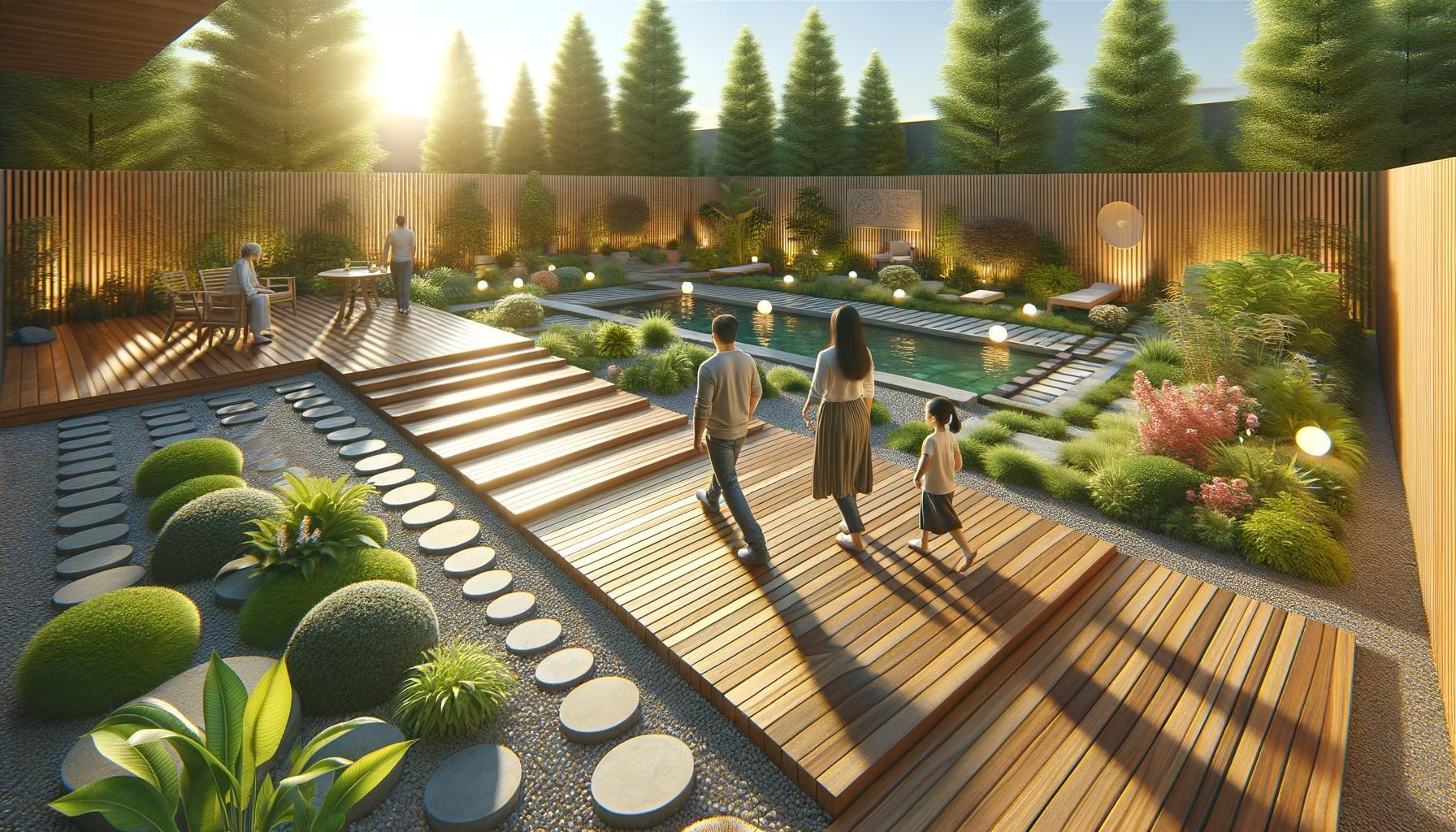
A timber pathway transforms your garden from a basic outdoor space into a functional and attractive area. We at Home Owners Association know that the right timber pathway ideas can add real value to your property while improving how you move through your garden.
Whether you’re working with a tight budget or planning a premium installation, timber offers flexibility that other materials simply can’t match. This guide covers everything from design styles to installation techniques and cost-effective material choices.
Which Timber Pathway Style Suits Your Garden Best
Rustic Log Pathways for Natural Gardens
Rustic log pathways work exceptionally well if your garden features natural plantings, woodland elements, or a cottage æsthetic. Logs sliced evenly and treated with wood preservative create an organic appearance that blends seamlessly into established gardens. The key is selecting rot-resistant timber-hardwoods like bangkirai last significantly longer than softwoods, often 10 to 15 years outdoors compared to 3 to 5 years for untreated pine.
If you source logs locally, check that they’ve been properly seasoned and treated; green wood warps and rots quickly. Installation involves laying logs on a gravel base with proper drainage underneath to prevent water pooling, which accelerates decay. This style suits gardeners willing to commit to annual maintenance, including sealing and sanding to maintain appearance and structural integrity.
Sleeper Pathways for Contemporary Gardens
Sleeper pathways have become the practical choice for contemporary gardens because they’re modular, durable, and straightforward to install. Railway sleepers or hardwood sleepers can be arranged in straight lines, curves, or winding patterns depending on your garden layout-a significant advantage over fixed designs. Most sleepers measure around 200mm wide by 100mm deep, making them stable underfoot and less prone to movement than thinner timber options.
The modular approach means you can start with a short pathway and extend it later without redesigning the entire route. Composite timber sleepers eliminate wood rot, termite damage, and splinters while maintaining the timber æsthetic; these typically come with a 25-year warranty. Installation on a compacted gravel base takes a weekend for most homeowners, and the slip-resistant surface performs well in wet Australian conditions.

Decking-Style Timber Paths for Modern Homes
Decking-style timber paths deliver a polished, premium appearance that complements modern homes with clean architectural lines. Standard deck boards laid horizontally or lengthwise create visual interest-horizontal boards visually widen narrow gardens, while lengthwise boards lengthen tight spaces. This style suits high-traffic areas near entertaining spaces or as connectors between the house and garden zones.
Quality deck boards from hardwood or treated softwood, installed with hidden fastening systems, prevent visible screws and reduce maintenance concerns. The finished look feels intentional and designed rather than improvised, which appeals to homeowners upgrading their outdoor spaces for resale value.
Foundation and Drainage Requirements
All three styles share a common requirement: proper substrate preparation with compacted gravel or sand, a weed barrier to prevent growth beneath the timber, and strategic slope to shed water away from the pathway. The choice ultimately depends on your garden’s existing character, the climate in your region, and how much maintenance you’re prepared to undertake annually. Once you’ve selected your preferred style, the next step involves understanding how to prepare your site and install the timber correctly to maximise durability and performance.
Installing Timber Pathways That Last
Preparing Your Foundation Correctly
Proper foundation work separates pathways that last a decade from those that fail within three years. Start by marking your pathway route and remove grass and topsoil to a depth of 100–150mm, then compact the exposed earth firmly with a hand tamper or plate compactor. Lay a weed barrier fabric across the entire base to stop grass and weeds from pushing through and destabilising your timber. Next, add 50–75mm of compacted gravel or crushed rock as your drainage layer-this is non-negotiable in Australian climates where water pooling causes rapid timber decay.
The gravel layer must slope slightly away from any structures, dropping about 5–10mm per metre to shed water effectively. If your garden sits on clay soil that holds water, increase your gravel depth to 100mm and consider adding drainage pipes running perpendicular to your pathway to channel water away.

Skipping proper drainage is the single biggest mistake homeowners make, and it will destroy even premium hardwood timber within five years.
Fastening and Spacing for Durability
Secure timber properly and prevent rot through attention to fastening, spacing, and protective treatments that most DIYers overlook. For sleeper pathways, use stainless steel fasteners or hot-dipped galvanised screws rather than standard steel, which rusts and stains timber over time-this costs slightly more upfront but eliminates ongoing maintenance headaches. Leave 2–3mm gaps between boards or sleepers to allow for timber movement as moisture and temperature fluctuate; composite timber expands about 1.1mm per metre when heated, so proper gaps prevent buckling and board creep.
Treat all cut ends and fastener holes with wood preservative immediately after installation, as these exposed areas are vulnerable entry points for rot and termites. Apply a quality exterior sealer to all timber surfaces within the first month of installation, then reapply every 18–24 months depending on your local climate-homes in high-rainfall regions need more frequent sealing than those in drier areas.
Protective Treatments and Ongoing Inspection
Hardwoods like bangkirai perform better than softwoods without treatment, but even hardwoods benefit from sealing to extend their their lifespan from 10–15 years to 15–20 years. Inspect your pathway annually for soft spots, discolouration, or loose fixings, and address problems immediately rather than waiting until structural failure forces complete replacement. Your annual inspection routine takes just an hour and prevents costly repairs down the track, making it the most cost-effective investment you can make in your timber pathway’s longevity.
Choosing Timber and Managing Your Budget
Understanding the True Cost of Different Timber Types
Hardwood sleepers cost between $15 and $25 per linear metre, while treated softwood runs $8 to $12, and composite timber sleepers sit at $30 to $40 per linear metre. For a 20-metre pathway, hardwood adds up to $300 to $500 in materials alone, softwood costs $160 to $240, and composite reaches $600 to $800. The upfront cost difference feels significant, but hardwood lasts 15 to 20 years outdoors with minimal intervention, softwood manages 5 to 10 years before requiring replacement, and composite timber delivers up to 50 years with virtually no maintenance.

When you calculate the cost per year of usable life, composite timber and hardwood actually cost less over two decades than repeatedly replacing budget softwood. Softwood makes sense only if you test a pathway design before committing to a permanent installation or if you replace a section that failed.
Finding Quality Materials at Trade Prices
Sourcing materials at trade prices matters more than choosing the cheapest option upfront. Contact your local timber supplier and ask specifically about trade accounts for homeowners, or verify whether your membership qualifies you for preferential pricing on quality materials. Avoid online marketplaces that advertise rock-bottom prices on hardwood sleepers, as these often ship from overseas and arrive with moisture content problems that cause warping within months.
Local suppliers allow you to inspect timber for defects, confirm proper seasoning, and access ongoing support if problems arise after installation. Reclaimed hardwood from salvage yards costs $5 to $10 per linear metre and delivers character that new timber can’t match, though you’ll spend extra time treating and inspecting each piece for hidden damage.
Evaluating Composite Timber Options
Composite timber from established manufacturers comes with genuine warranties and predictable performance, eliminating guesswork about durability. These products (typically featuring protective capping systems) resist rot, termites, and splinters while maintaining the timber æsthetic. For a 20-metre pathway, spending an extra $100 to $150 on quality hardwood or composite timber instead of budget softwood guarantees you won’t face replacement costs within a decade, making the investment straightforward from a financial perspective.
Final Thoughts
A timber pathway transforms how you experience your garden daily, and the right timber pathway ideas elevate both functionality and curb appeal. Hardwood and composite options cost more initially but deliver genuine value over 15 to 20 years, while budget softwood requires replacement within a decade. When you calculate the true cost per year of usable life, quality materials prove more economical than repeatedly replacing cheaper alternatives.
Proper installation and maintenance matter equally-a well-prepared foundation and annual inspections prevent costly failures and extend your pathway’s lifespan significantly. Start by deciding which style suits your garden’s character and your maintenance commitment, then source materials from reputable local suppliers rather than chasing rock-bottom prices online (which often leads to warping and disappointment). Invest time in proper foundation work and fastening, as these fundamentals determine whether your pathway lasts five years or twenty.
Home Owners Association members gain access to trade pricing on quality timber and materials, making premium options more affordable than you’d expect. Our members also receive expert guidance to turn timber pathway ideas into reality with confidence, whether you’re planning your first pathway or expanding an existing one.