Selecting the right timber for your Australian home is one of the most important decisions you’ll make during construction or renovation. Poor choices lead to rot, termite damage, and costly repairs within years.
We at Home Owners Association have put together timber quality recommendations that cut through the confusion. This guide shows you exactly which species work best in your climate, what grading systems mean, and how to spot quality wood before you buy.
Australian Timber Grading Systems Explained
Understanding F-Grades and Structural Classifications
Australia uses two primary grading systems that determine timber quality and suitability for different applications. In Australia, visually stress-graded structural timber is sold by F-grade, with F5 through F34 denoting increasing load-bearing capacity. For non-structural applications, the visual grading system focuses on defects like knots, splits, and discolouration rather than strength. You need to understand which system applies to your project because structural framing demands F-grade timber, while decorative cladding or interior trim can use visually graded material at lower cost. The difference matters significantly-using appearance-grade timber for load-bearing walls creates safety risks and voids warranties.

Durability Classes and Climate Suitability
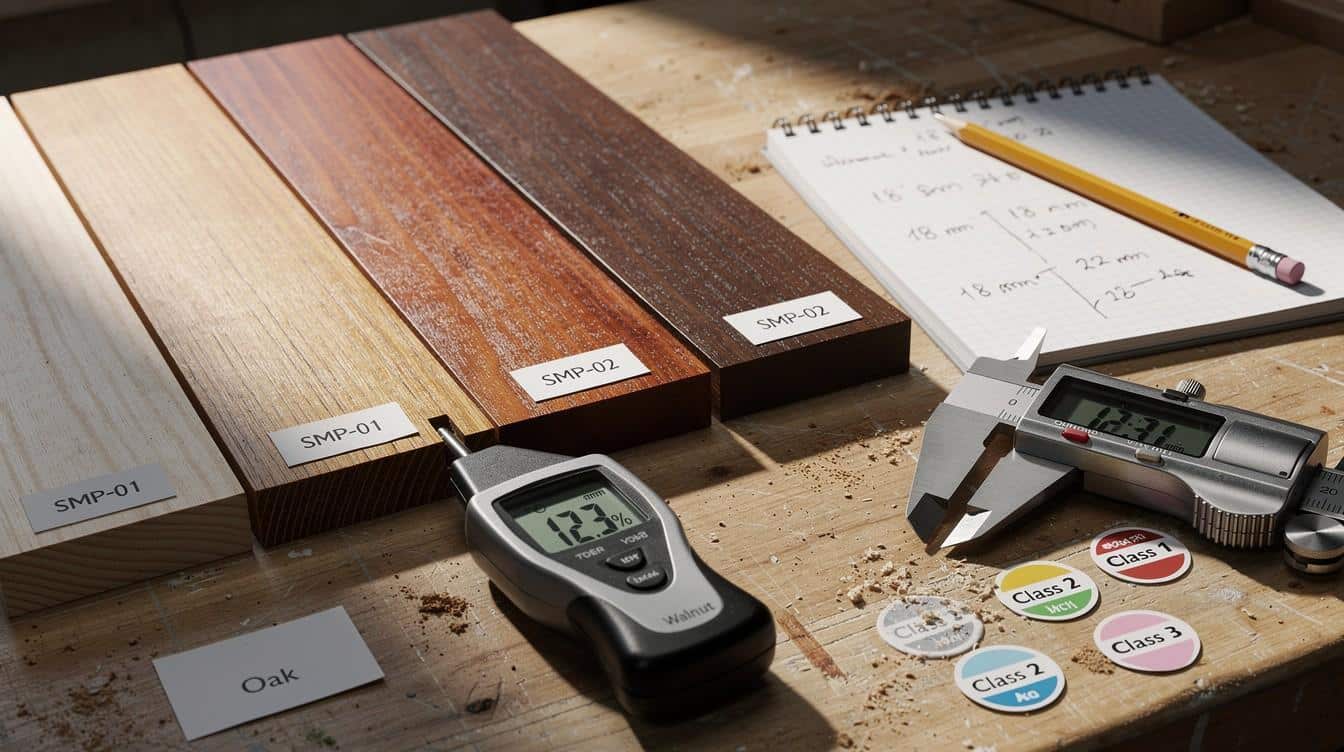
Durability classes represent how long timber lasts when exposed to moisture and termite activity, and this directly impacts your repair costs over time. AS 5604 defines four durability classes, each with a service life expectation under two conditions: above-ground and in-ground use. Hardwoods like spotted gum and ironbark naturally achieve Class 1 or 2 durability without treatment, while softwoods like pine require chemical treatment to reach Class 2. Your location determines which class you need-coastal and tropical regions demand Class 1 or 2 timber due to termite pressure and moisture, whereas inland areas may accept Class 3 for non-critical applications.
Certification Marks and Quality Verification
Certification marks from the Australian Timber Quality Assurance Scheme or equivalent bodies guarantee that timber meets stated durability and grade standards. Look for these marks on supplier documentation before purchase, as they confirm the timber has undergone independent testing and complies with Australian standards. Reputable suppliers provide grading certificates with every batch, and requesting these documents as part of your purchasing process verifies you’re getting exactly what you’ve specified for your project. With the right grading information in hand, you’re ready to identify which timber species actually perform in your specific climate zone.
Best Timber Species for Australian Climates
Hardwoods That Withstand Moisture and Termites
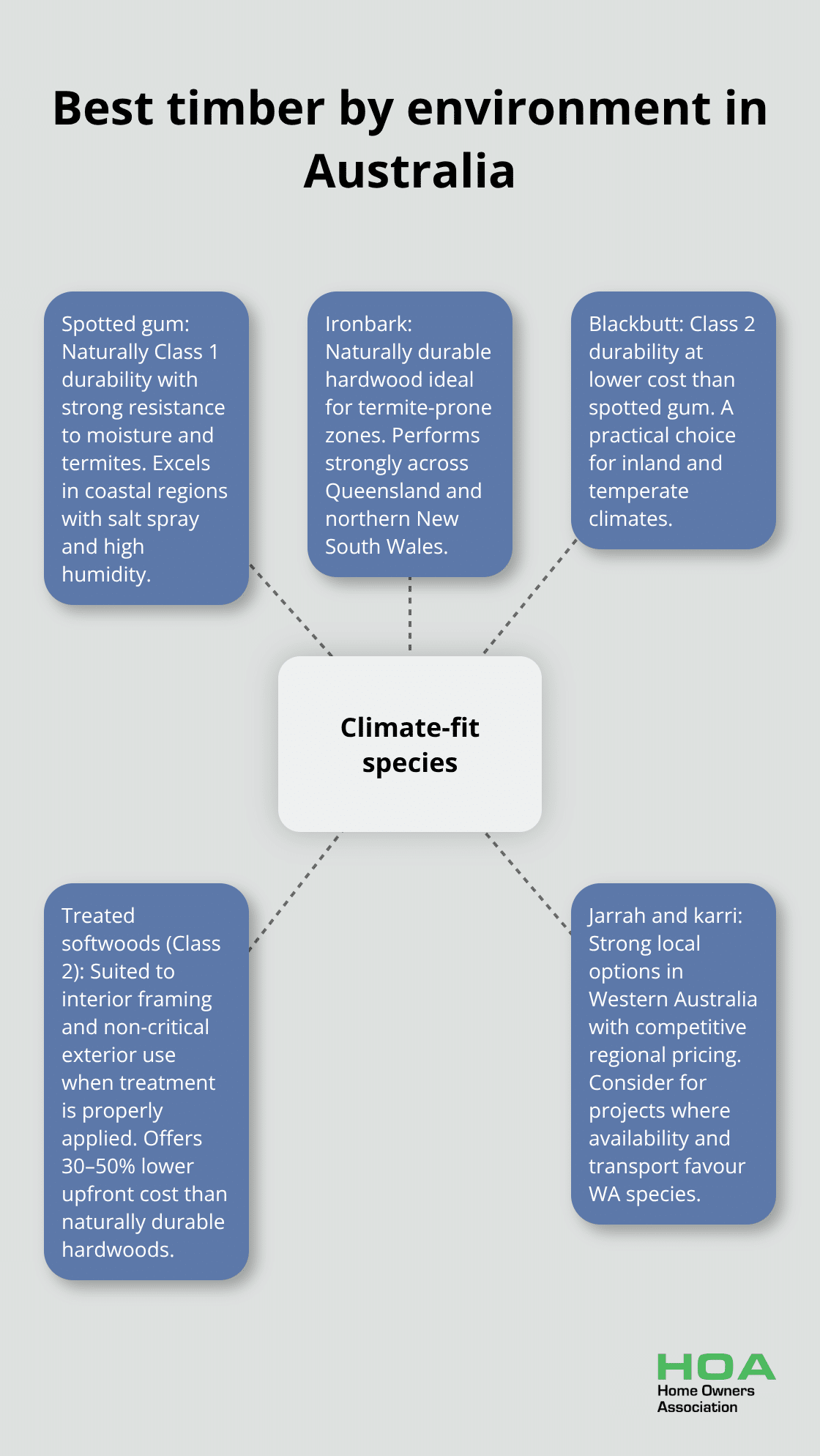
Spotted gum and ironbark dominate Australian construction for good reason-both achieve Class 1 durability naturally without chemical treatment, meaning they resist termites and moisture for 25+ years above ground and 12+ years in-ground contact. Spotted gum delivers superior performance in coastal regions where salt spray and humidity create hostile conditions, while ironbark excels in termite-prone areas across Queensland and northern New South Wales. These hardwoods cost 40–60% more than treated softwoods, but the extended lifespan and reduced maintenance justify the investment for structural framing, decking, and cladding. Blackbutt offers a middle ground-Class 2 durability at lower cost than spotted gum, with excellent performance in inland and temperate zones. Messmate and stringybark provide acceptable alternatives in lower-risk applications, though both require careful site assessment before selection.
Avoid plantation hardwoods like plantation pine for structural use in high-moisture zones; they demand treatment to Class 2 and still underperform compared to naturally durable species.
Softwoods for Interior and Exterior Applications
Radiata pine and softwood species treated to Class 2 handle interior framing and non-critical external applications effectively across most Australian regions, costing 30–50% less than naturally durable hardwoods. Treatment processes like alkaline copper quaternary provide genuine protection when applied correctly, but treatment quality varies significantly between suppliers. Coastal properties and tropical climates should avoid untreated softwoods entirely-the repair costs from rot and termite damage within 5–10 years eliminate any savings from lower purchase price.
Regional Timber Availability and Local Options
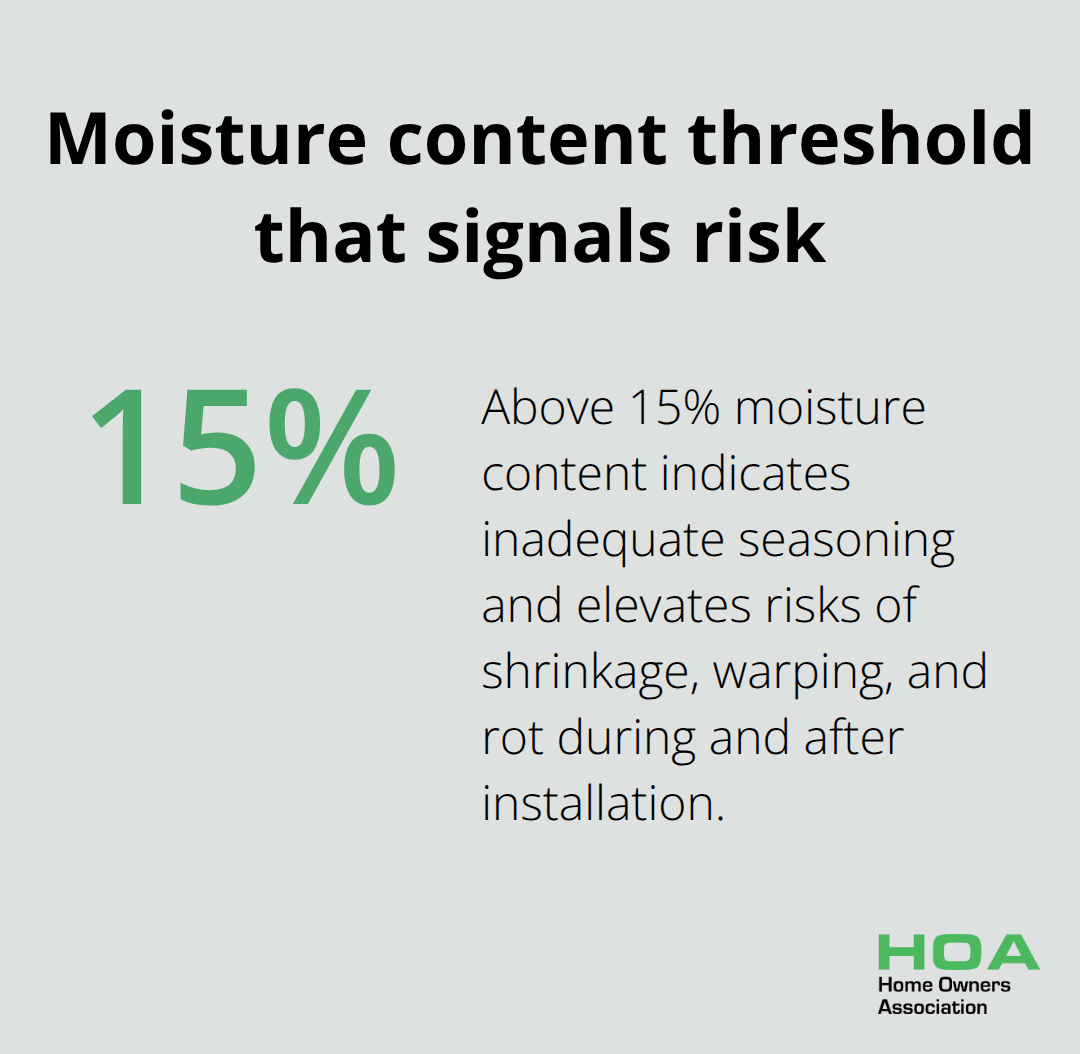
Regional timber availability matters practically; western Australian properties benefit from jarrah and karri availability at competitive local pricing, while Victorian and New South Wales homes typically access treated pine and spotted gum more economically. Tasmania and cooler regions tolerate lower durability classes due to reduced termite pressure, making Class 3 treated timber acceptable for weatherboard and non-structural cladding. Request moisture content testing before purchase-timber exceeding 15% moisture content indicates inadequate seasoning and creates rot risk regardless of species or treatment grade. Members of the Home Owners Association access trade pricing on quality timber materials, which helps offset the premium costs of naturally durable species and ensures you source materials from reputable suppliers who provide proper documentation and testing results.
How to Spot Quality Timber Before You Buy
Inspect for Visible Defects and Damage
Walk the supplier’s stack and look for visible checks-radial splits running from the centre outward that indicate uneven drying. Deep checks compromise structural integrity regardless of species or grade, so reject timber showing splits wider than 3mm or longer than half the board width. Knots matter less for appearance-grade material but become critical for structural framing; loose knots fall out within months, while tight knots are acceptable if they don’t exceed one-third of the board width.
Cup and bow-where boards curve or twist-create installation headaches and waste material, so sight down the length of each piece. Staining or discolouration signals moisture problems or fungal activity; reject any timber showing dark patches or green tints, which indicate mould growth that treatment won’t reverse.
Test Moisture Content Before Purchase
Ask suppliers for moisture content readings on site using a handheld meter; timber above 15% moisture content hasn’t seasoned properly and will shrink, warp, and rot faster than dry stock. Most quality suppliers test batches and provide certificates showing moisture content between 12–18%, which is the safe zone for Australian conditions. Timber that fails this test creates problems during installation and accelerates decay regardless of durability class.
Verify Documentation and Grading Certificates
Reputable suppliers distinguish themselves through documentation and transparency rather than price alone. Request grading certificates, durability classification paperwork, and treatment records before placing orders; suppliers who hesitate or claim certificates aren’t available are cutting corners. Compare quotes from at least three suppliers, but base decisions on documented quality rather than the lowest price-a 10% price difference disappears quickly when you replace rotted framing five years later.
Assess Supplier Practices and Yard Conditions
Visit supplier yards in person rather than ordering sight-unseen; this takes time but catches issues like inadequate stacking, exposure to weather, or mixing of different grades that create problems during installation. Proper storage protects timber from rain and direct sun exposure, which indicates a supplier who maintains quality standards throughout their operation. Suppliers who stack timber on bare ground or leave it exposed to weather demonstrate poor practices that compromise material quality before delivery.
Members of the Home Owners Association access trade pricing on quality timber materials, which helps offset premium costs and connects you with suppliers who provide proper documentation and testing results.
Final Thoughts
Choosing durable timber for your Australian home requires three practical decisions: understanding which grading system applies to your project, selecting species suited to your climate zone, and verifying quality before purchase. The timber quality recommendations we’ve covered-from F-grades and durability classes to moisture content testing and supplier verification-eliminate guesswork and protect your investment. Spotted gum and ironbark deliver genuine durability in high-risk environments, while treated softwoods work effectively for interior applications and lower-moisture zones.
Your next step involves connecting with suppliers who provide grading certificates and moisture content documentation. Visit yards in person, compare quotes from multiple sources, and base decisions on documented quality rather than price alone. Request treatment records and durability classifications before ordering, then inspect delivered timber against the defect standards outlined in this guide.
We at Home Owners Association support homeowners throughout their building and renovation projects. Members access trade pricing on quality timber materials and construction supplies, which significantly reduces the premium costs of naturally durable species like spotted gum and ironbark. Visit Home Owners Association to explore membership benefits and connect with suppliers who meet our standards for documentation and material quality.