Renovation projects in Australia often take longer than homeowners expect. Weather delays, permit hold-ups, and supply chain issues can derail even the best-laid plans.
We at Home Owners Association have helped thousands of members navigate renovation project timeline tips to keep their projects on track. This guide shows you how to plan realistically, manage your schedule effectively, and handle the unexpected.
Planning Your Renovation Timeline
Get Your Scope Right Before You Start
List every single task your renovation involves, then add 20 per cent more time to your estimate. Most Australian homeowners underestimate timelines by this margin, according to industry feedback from builders across major cities.

Write down specific materials you need-not just paint and timber, but exact quantities, colours, and specifications. Contact suppliers now to check stock levels and lead times. Materials like custom cabinetry, tiles, and fixtures often have 6-12 week lead times in Australia, and delays here will cascade through your entire project.
Get three quotes from different suppliers for major items. Prices vary significantly, but more importantly, delivery timeframes differ wildly. One supplier might have bathroom tiles in stock while another needs eight weeks. Ask each supplier directly about current stock status rather than relying on website information. Many suppliers have quietly extended their lead times without updating their sites. Once you know what you’re buying and when it arrives, you can actually build a realistic timeline instead of guessing.
Account for Australian Weather Patterns
Wet seasons, extreme heat, and unpredictable storms halt renovation work regularly. In tropical regions during November through April, heavy rainfall closes sites frequently. In other parts of Australia, temperatures above 35 degrees Celsius force outdoor work to stop completely. Concrete won’t cure properly in extreme heat, painters won’t work in high humidity, and roofers won’t go up when it’s too hot.
Try scheduling your major outdoor tasks-roofing, external painting, landscaping-for April through September when weather is most predictable. If your project runs through summer or wet season, add two to three weeks of buffer time. Spring and early autumn offer the best conditions, which is why most builders book heavily during these periods. You’ll face longer waits for trades if you insist on scheduling during peak season, so factor that into your timeline too. Winter in southern states brings its own challenges with shorter daylight hours limiting work time. Trades work fewer hours when it gets dark at 5 PM, so tasks take longer to complete.
Build in Strategic Buffer Time
Add 15-25 per cent buffer time to your total project duration. This isn’t pessimism-it’s realistic planning. Unexpected structural issues emerge during demolition. Electricians discover outdated wiring that needs complete replacement. Plumbers find corroded pipes. These discoveries add weeks, not days.
Set aside a contingency fund as well as contingency time. Most builders recommend 10-15 per cent extra budget, but this figure often proves insufficient in practice. Allocate this buffer strategically rather than spreading it evenly across every week. Instead, concentrate it around high-risk phases like structural work, foundation repairs, and utility upgrades (these areas generate the most surprises). Communicate this buffer to your family and stakeholders early. If your timeline is 20 weeks plus 4 weeks buffer, set expectations at 24 weeks. This prevents frustration when real-world delays happen. When the project finishes early, everyone celebrates. When it runs to your realistic timeline, you’ve met expectations rather than missed them.
With your scope locked in, weather patterns mapped, and buffer time allocated, you’re ready to move into the next critical phase: coordinating the actual trades and suppliers who will execute your plan.
Managing Your Renovation Schedule
Lock in Trades Six Weeks Ahead
Contact qualified electricians, plumbers, and carpenters at least six weeks before you need them on-site. Most trades in Australia book two to three months ahead, particularly during spring and early autumn when demand peaks. Present them with your realistic timeline, not your optimistic one. Explain the 20 per cent buffer you’ve built in and emphasize that accuracy matters more than speed. Request written confirmation of their availability for specific dates rather than accepting verbal agreements. Many trades manage multiple projects simultaneously and will abandon yours if a more lucrative opportunity appears unless you’ve secured a formal booking.
Ask each trade what they require before arriving-site access, parking, power supply, completed prior work-and confirm you can provide it. A plumber who arrives and cannot access the water main wastes an entire day and reschedules weeks later. Request a contact person for each trade who will confirm arrival times 48 hours before the scheduled date. This single practice eliminates countless morning surprises. Coordinate material deliveries to arrive two to three days before the relevant trades start, not the day before. Weather delays, traffic, or supplier errors happen constantly.
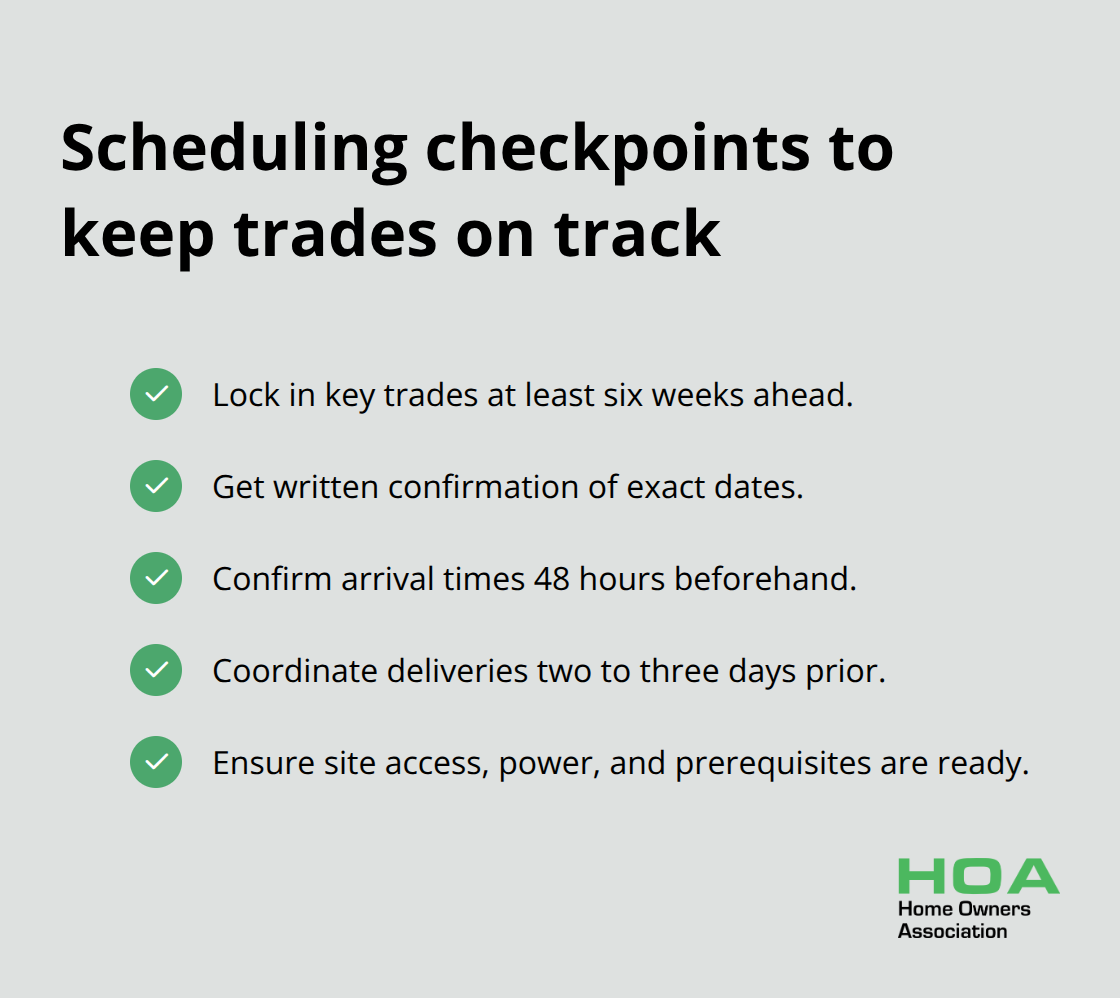
Materials that sit on-site waiting for trades risk weather damage or theft, while trades that arrive without materials waste time and kill momentum.
Track Progress Weekly Against Your Plan
Record what you complete each week, what takes longer than expected, and why. After three weeks of tracking, patterns emerge-perhaps electrical work consistently runs 15 per cent over estimate, or weather impacts your outdoor schedule more severely than anticipated. Adjust your remaining timeline based on real data, not assumptions. Share this weekly progress report with your family and key stakeholders every Friday afternoon. Include what happens next week, any risks you’ve identified, and whether you’re tracking ahead or behind schedule.
Transparency prevents frustration and manages expectations continuously. If you’re falling behind, discuss solutions immediately rather than hoping to catch up later. Sometimes you can add extra trades to compress the timeline; sometimes you must accept the delay and communicate revised completion dates. When issues arise-a trade gets sick, materials don’t arrive, weather closes the site-communicate the impact within 24 hours. Homeowners who hear about delays from their builder immediately feel more confident than those who discover problems later.
Establish One Clear Communication Channel
Maintain a single point of contact between yourself and the project manager or lead builder. Multiple communication channels create confusion, missed messages, and conflicting instructions. Weekly check-in calls work better than email chains for complex decisions. Document decisions and agreements in writing afterward, even if briefly, so everyone shares the same understanding. This discipline prevents disputes about what was actually agreed upon when memories fade weeks into a multi-month project.
With your trades locked in, your progress tracked, and your communication channels clear, you’re ready to address what actually derails most renovations: the delays that slip through even the best planning.
Common Renovation Delays and How to Avoid Them
Permit Approvals Create the Biggest Timeline Threats
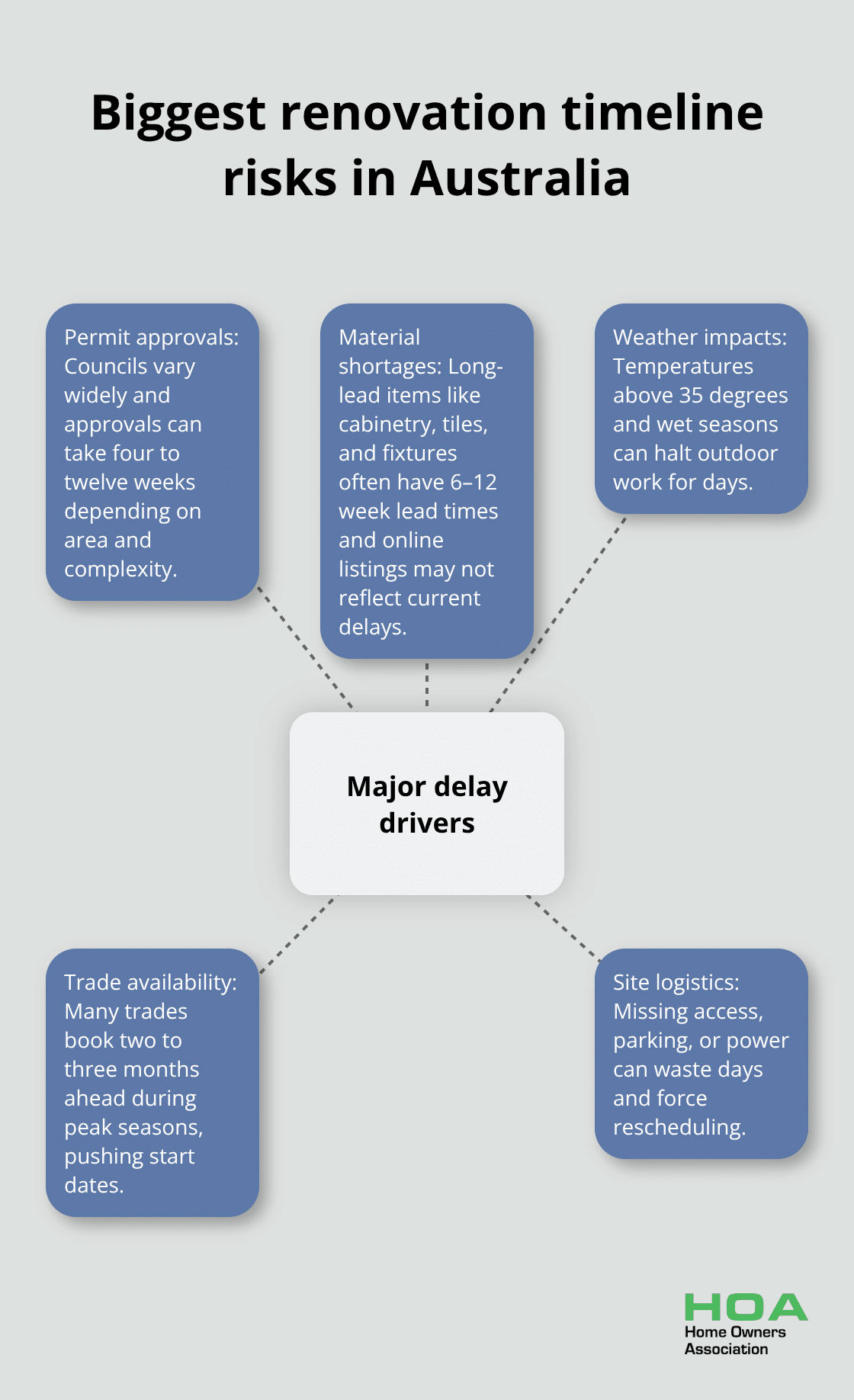
Permit delays destroy more timelines than weather or materials ever will. Australian councils process renovation permits at wildly different speeds depending on your location and project complexity. A simple kitchen renovation in one council area takes four weeks for approval; an identical project in another area takes twelve weeks.
Contact your local council now, not when you’re ready to start, and ask specifically how long they currently take to process your permit type. Don’t accept vague answers like “usually four to six weeks”-ask for their actual current processing times based on recent applications.
Many councils have backlogs that aren’t advertised on their websites. Call the building department directly and speak to someone who processes applications daily. They’ll tell you the truth about wait times. Submit your application the moment your plans are ready, even if construction won’t start for two months. Every week you delay submission pushes your start date back. Hire an experienced building certifier or draftsperson familiar with your specific council’s requirements-they know exactly what information each council demands and can submit applications that avoid rejection for missing details. Rejected applications restart the entire approval clock.
Get your permit sorted before you commit to trade availability, not after, because permit delays will force you to reschedule trades anyway.
Material Shortages Extend Timelines Significantly
Australian suppliers still face inconsistent stock levels across tiles, fixtures, cabinetry, and structural materials. Order long-lead items the moment your design is final-don’t wait until construction actually starts. Contact suppliers directly about current stock status rather than checking websites; many have quietly extended lead times without updating online information.
Request written confirmation of delivery dates, not estimates. If a supplier cannot guarantee a specific delivery week, find another supplier. Weather disruptions at ports and manufacturing delays in Asia continue affecting Australian supply chains, so add extra contingency time around material-dependent work phases. Some trades will refuse to start work without materials on-site, while others will start and stop repeatedly as items arrive piecemeal, which stretches your timeline significantly. Ask each trade during your initial booking whether they require materials present before starting or whether they can work in stages.
Coordinate deliveries so materials arrive two to three days before the relevant trade begins work. Materials sitting on-site for weeks risk weather damage, theft, or damage from other trades.
Weather Setbacks Stop Outdoor Work Regularly
Weather-related setbacks during outdoor work phases are inevitable in Australia. Winter darkness in southern states means trades work shorter hours and complete fewer tasks daily. Summer heat above thirty-five degrees stops concrete curing, painting, and roofing work entirely. Tropical wet seasons from November through April generate frequent rainfall that closes sites for days at a time.
Try scheduling outdoor work for April through September when conditions are most predictable and add two to three weeks of buffer time if your project runs through summer or wet season. Communicate weather impacts to stakeholders within twenty-four hours when sites close unexpectedly so revised timelines stay realistic and everyone understands the delay wasn’t poor planning but genuine weather disruption.
Final Thoughts
Successful renovation project timeline tips rest on three core practices: plan realistically by adding 20 per cent to your estimates, lock in trades and materials six weeks ahead, and communicate progress weekly with your team. Weather delays, permit hold-ups, and supply chain disruptions will happen regardless of how well you plan, but realistic timelines with built-in buffer time absorb these setbacks without derailing your project entirely.
Homeowners who contact councils early, confirm material delivery dates in writing, and coordinate trades systematically experience far fewer surprises than those who hope for the best and plan for the optimistic scenario. The difference between renovations that finish on schedule and those that drag on for months comes down to preparation and transparency. When delays occur, you communicate them immediately rather than hoping to catch up later.
Visit Home Owners Association to explore membership benefits, access expert resources, and connect with trades who understand realistic timelines. Our members benefit from trade pricing discounts and expert guidance on project coordination strategies. Your next renovation can finish on schedule when you plan properly from the start.