Termites cost Australian homeowners over $780 million annually in property damage, yet most infestations go undetected until significant harm occurs. We at Home Owners Association believe that termite prevention strategies in Australia should start with understanding the real risks to your timber structures.
This guide covers practical detection methods, proven prevention tactics, and when to call in professionals. You’ll learn exactly how to protect your property before termites become a costly problem.
Early Detection and Inspection Methods
Catching termites before they wreak havoc on your home requires knowing what to look for and how often to look. Most Australian homeowners wait until visible damage appears, but termites work silently inside timber for months or even years. We at Home Owners Association recommend inspecting timber structures at least once every 12 months for most homes, with more frequent inspections for high-risk properties. Focus on foundation timbers, window frames, door frames, and any wood that contacts soil or comes within 300mm of it.
Visual Inspection Techniques
Look for mud tubes running up external walls-these are termite highways and indicate active infestation. Hollow-sounding timber when tapped, tiny holes in wood surfaces, and visible worker termites are unmistakable warning signs. Sagging floors or doors that suddenly stick signal structural damage from termite activity. The key is consistency; a regular inspection routine catches problems at their earliest stages when treatment costs far less and damage remains minimal.

What Professional Inspectors Detect
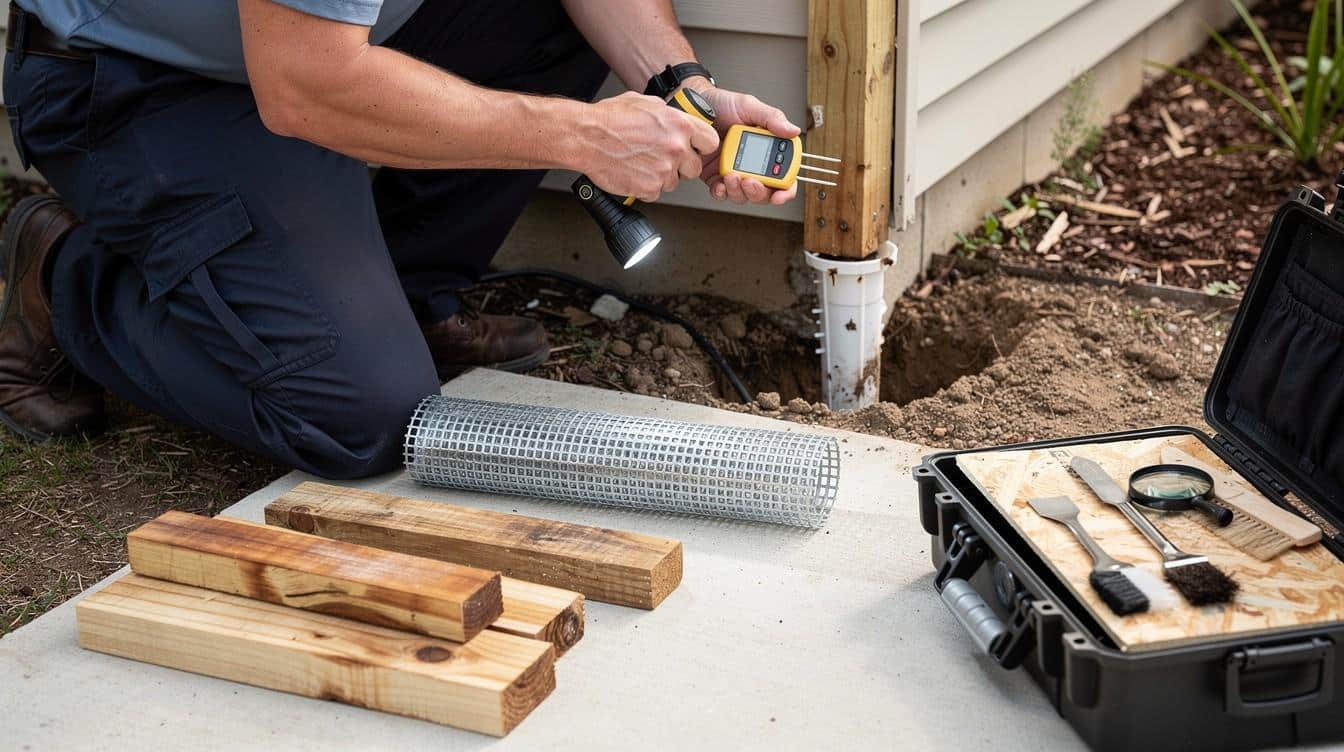
Professional pest inspectors use thermal imaging cameras and moisture meters to detect termite activity hidden inside walls and under floors where your eyes cannot reach. These tools reveal temperature variations caused by termite galleries and moisture levels that attract colonies. A qualified inspector will check subfloor areas, roof voids, external timbers, and internal structural elements systematically.
Licensed professionals follow strict protocols when they assess your property. Expect a thorough inspection to cost between $300 and $600, but this investment identifies infestations that could otherwise cost $5,000 to $50,000 in repairs. Professional inspections also provide documentation valuable for insurance claims and property sales (and give you peace of mind about your structural integrity).
Why Professional Assessment Matters
Licensed inspectors can recommend specific treatment options suited to your home’s construction type and local termite species. They identify risks that remain invisible to untrained eyes and provide the documentation you need if you ever sell your property. This foundation of professional knowledge positions you to make informed decisions about which prevention strategies work best for your situation.
Effective Prevention Strategies for Australian Homes
Building termite resistance into your home requires three interconnected strategies that work together to make your property uninviting to colonies. Physical barriers and chemical treatments form the first line of defence, moisture control eliminates what termites need to survive, and maintaining proper distance between soil and timber removes their access routes.
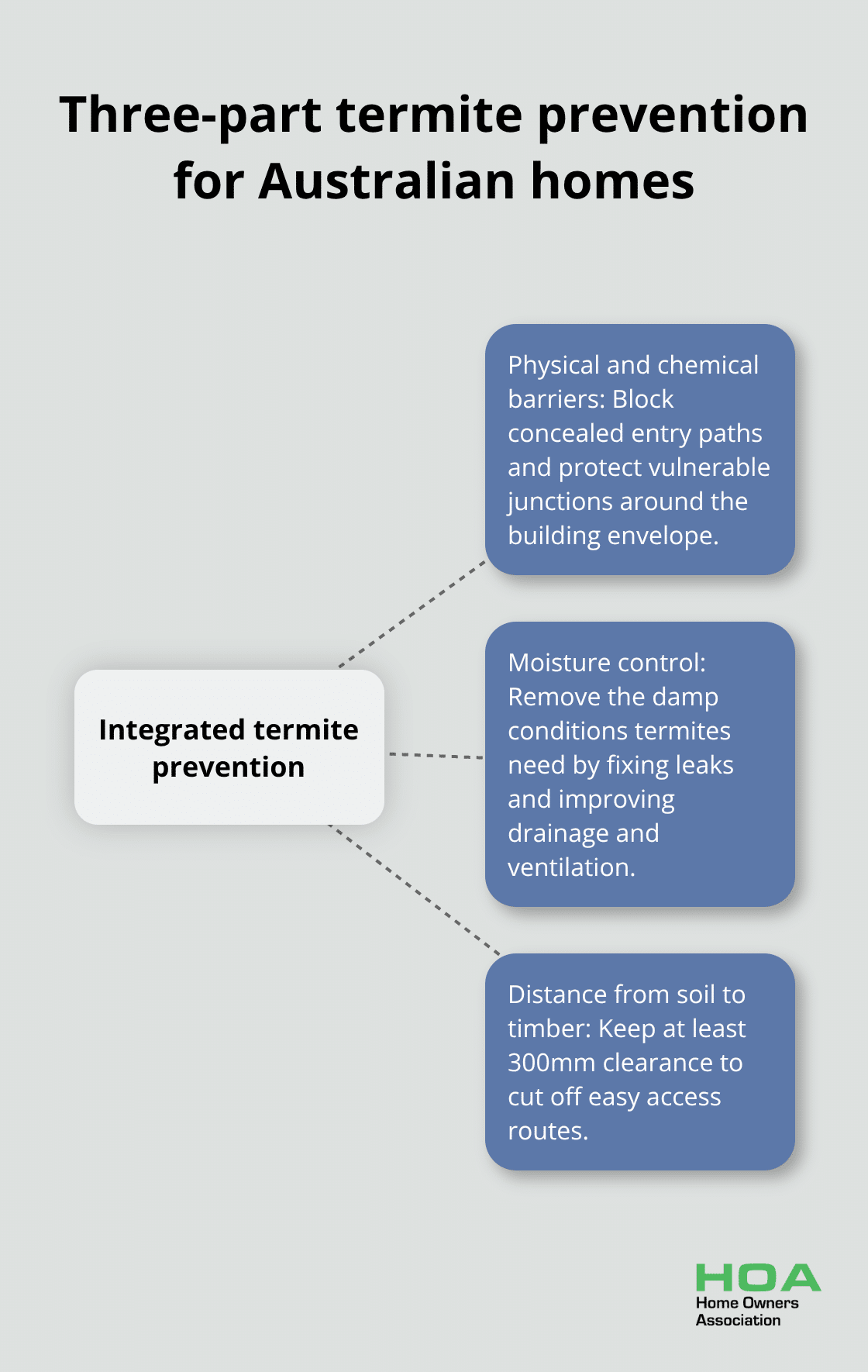
These aren’t optional extras-they’re the foundation of effective termite prevention in Australian homes.
Installing Barriers That Actually Work
Physical termite barriers installed during construction or renovation prevent termites from reaching timber undetected. Metal mesh barriers with openings smaller than 1mm block termite passage while allowing water drainage, and they last the life of the building when properly installed. Chemical barriers using liquid termiticides create a toxic zone around timber and soil contact points; products containing fipronil remain effective for 5 to 8 years depending on soil conditions and rainfall.
Treat the soil around your home’s perimeter to a depth of 300mm and width of 1 metre, which costs between $1,500 and $3,500 for an average home but prevents infestations that could exceed $30,000 in repairs. Reticulation systems that deliver termiticide through underground pipes offer long-term protection and allow retreatment without excavation, making them worth considering for high-risk properties in areas with known termite activity.
Controlling Moisture to Eliminate Termite Habitat
Termites need moisture to survive; without it, colonies cannot establish or thrive. Fix leaking gutters, downpipes, and taps immediately because water pooling around foundations attracts termites within weeks. Improve subfloor ventilation by clearing debris and ensuring air flows freely-inadequate ventilation traps moisture that makes your home a termite magnet. Grade your soil so water slopes away from the house rather than accumulating against walls, and consider installing a French drain if water consistently pools near the foundation.
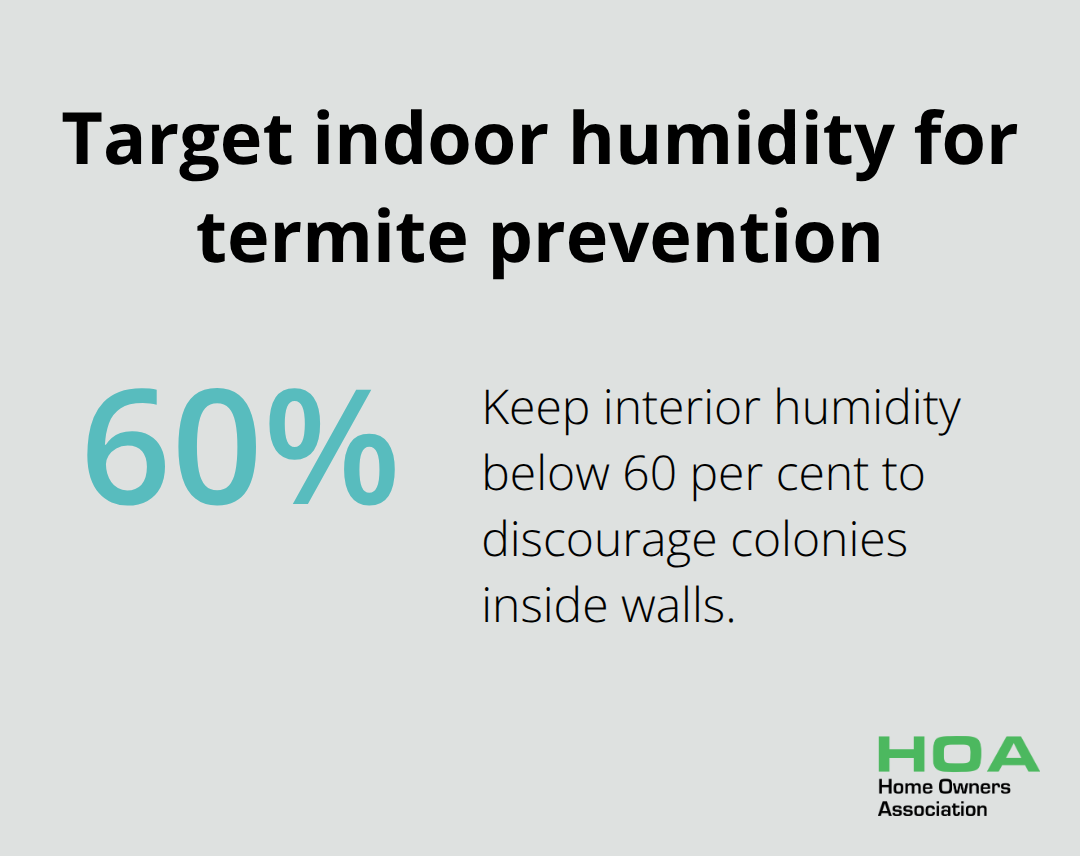
Reduce interior humidity below 60 per cent using exhaust fans in bathrooms and kitchens; moisture readings above this level create ideal conditions for termite colonies to establish themselves inside walls. Inspect and repair any cracked concrete slabs or damaged rendering on external walls because termites exploit these entry points and the moisture they trap.
Maintaining Distance Between Soil and Timber
Maintaining distance between soil and timber is non-negotiable; all timber must sit at least 300mm above ground level. Remove garden beds and mulch piled against the house, and trim vegetation touching external walls. Stack firewood away from the house on metal racks rather than soil, and never allow timber fencing to contact soil directly-use concrete footings instead. These moisture and distance controls cost little to implement but save thousands in termite damage.
With your home’s physical defences and moisture management in place, the next step involves understanding what happens when professional intervention becomes necessary and how to choose the right treatment approach for your specific situation.
Professional Termite Treatment and Management Options
Once your home has physical barriers and moisture controls in place, professional termite treatment becomes necessary when signs of activity appear or your annual inspection reveals risk factors that demand intervention. Licensed pest control operators in Australia use two primary methods: liquid barrier treatments applied to soil and timber, and baiting systems that eliminate colonies at their source.
Liquid Treatments and Baiting Systems
Liquid treatments containing fipronil or imidacloprid create a continuous toxic zone around your property’s perimeter, with costs starting from $3,000 depending on your home’s size and soil conditions. Baiting systems work differently-they use slow-acting toxins that foraging termites carry back to their nest, killing the entire colony rather than just surface workers. This approach costs between $2,000 and $5,000 initially but eliminates the problem at its root, making it the preferred option when colonies are already established. The Australian Pest Control Association recommends baiting for active infestations because it addresses the queen and reproductive caste, preventing reinfestation from the same nest.
What Professional Operators Provide
Professional pest control operators should provide written specifications detailing which products they use, application rates, and expected protection duration before work begins. Reputable companies offer warranties ranging from 5 to 12 years, with longer warranties typically tied to annual monitoring visits that cost $200 to $400 per inspection. These monitoring appointments involve checking bait stations, inspecting timber for new activity, and reapplying treatments if necessary-this ongoing vigilance catches any resurgence before damage accumulates.
Evaluating Treatment Costs Against Damage Risk
The cost-benefit calculation is straightforward: spending $3,500 on professional treatment plus $300 annually for monitoring costs far less than the $15,000 to $40,000 average repair bill for structural damage from uncontrolled infestations. Licensed operators in your state must comply with local pesticide regulations and carry professional indemnity insurance, so verify credentials through your state’s pest control registration authority before hiring. Treatment effectiveness depends entirely on thorough application and proper follow-up, which is why choosing an established operator with verifiable customer reviews matters more than selecting the cheapest quote available.
Final Thoughts
Termite prevention strategies in Australia work best when you combine regular inspections, physical barriers, moisture control, and professional support into a coordinated approach. Your annual visual checks catch early warning signs, but professional inspections using thermal imaging and moisture meters detect hidden activity that costs thousands to repair once discovered. Installing physical barriers, treating soil around your perimeter, and maintaining proper distance between timber and soil create multiple layers of defence that termites struggle to penetrate.
Moisture control requires ongoing attention to gutters, drainage, and ventilation rather than a one-time fix. Professional monitoring systems with annual inspections cost between $200 and $400 per year but identify problems before they become structural emergencies. Licensed pest control operators provide warranties backing their work, giving you documented proof of treatment that matters when selling your property or filing insurance claims.
Your home represents your largest financial investment, and termite damage erodes that value rapidly. The $780 million in annual damage across Australia demonstrates how quickly infestations spiral when left unaddressed. We at Home Owners Association encourage members to schedule professional inspections immediately if you haven’t had one in the past 12 months, and members benefit from expert guidance on pest control services and building materials needed for prevention work.