Water damage costs Australian homeowners an average of $10,000 to $50,000 per incident, making waterproofing a serious investment in your property’s future. We at Home Owners Association know that selecting the right waterproofing system can be overwhelming with so many options available.
This guide walks you through the main waterproofing options Australia offers, from liquid membranes to sheet systems and cement-based coatings. You’ll learn what factors matter most for your specific situation and how to move forward with confidence.
Waterproofing Systems for Australian Conditions
Liquid Applied Membranes: Seamless Protection
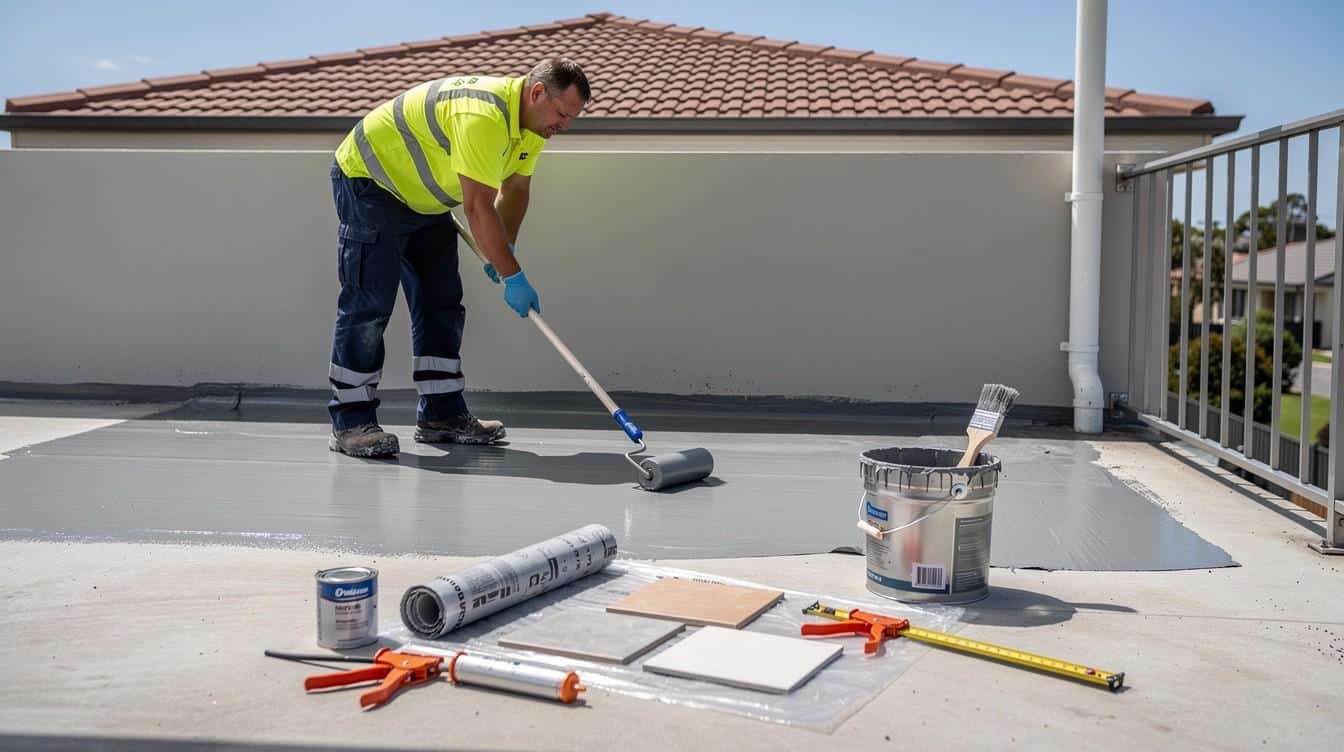
Liquid applied membranes are better for complex or uneven surfaces, adapting well to surface irregularities without seams or weak points. These spray-on or brush-applied coatings create a continuous protective layer that matters when you’re dealing with concrete cracks, uneven surfaces, or complex roof geometries. Installation costs range from $25 to $50 per square metre, positioning them as moderately priced compared to alternatives.
The real advantage emerges in wet climates-coastal regions and areas with heavy rainfall benefit significantly because the seamless nature eliminates water entry points. Coastal properties in Sydney, Brisbane, and Melbourne handle humidity fluctuations without cracking when protected by liquid membranes. Application takes 2 to 5 days depending on surface preparation, and most products cure within 7 to 14 days before weather exposure becomes safe. They work particularly well on terraces, balconies, and internal wet areas where flexibility matters most.
Proper surface cleaning and priming determine success with liquid systems-homeowners often underestimate this critical preparation phase. Skipping these steps leads to adhesion failures and premature breakdown of the protective layer.
Sheet Membranes: Long-Term Durability
Sheet membranes typically last 10 to 15 years, though application quality and product type significantly influence actual lifespan. These pre-manufactured rolls get mechanically fixed or torch-applied to substrates, creating a durable barrier that Australian builders prefer for basements and foundations. Installation costs range from $35 to $70 per square metre, but the extended lifespan justifies the expense for permanent structures.
Sheet systems excel in high-traffic areas and locations experiencing significant temperature swings because the material resists UV degradation better than liquid coatings. Intense sun exposure in Adelaide and Perth degrades softer membranes faster, making sheet systems the superior choice for these regions. The installation process demands skilled labour-poor application leads to wrinkles, folds, or incomplete sealing at overlaps, which compromises the entire system.
Cement-Based Coatings: A False Economy
Cement-based coatings represent the budget option at $10 to $25 per square metre, but they constitute a false economy for serious waterproofing. They crack as substrates shift, they deteriorate under constant moisture exposure, and they require reapplication every 5 to 10 years. Homeowners often select cement coatings for cosmetic protection rather than structural waterproofing, which remains their only legitimate application.
The choice between these three systems depends on your specific location, surface type, and budget constraints. Understanding what each system delivers helps you avoid costly mistakes and select protection that actually matches your home’s needs.
Factors That Determine Your Waterproofing Choice
Climate Shapes System Selection
Australia’s climate varies dramatically across regions, and this geographic reality shapes which waterproofing system actually works for your home. Coastal areas like Sydney and Brisbane experience salt-laden humidity that degrades cheaper cement coatings within 3 to 5 years, making liquid or sheet membranes essential investments. Inland regions with intense UV exposure in Perth and Adelaide see different failure patterns-sheet membranes resist sun damage better than liquid coatings, which can become brittle after 8 to 10 years under constant heat. Tropical North Queensland properties face cyclone-force winds and torrential rainfall that demand mechanical fixing or torch-applied systems rather than spray-on solutions, since wind can compromise incomplete liquid membrane curing.
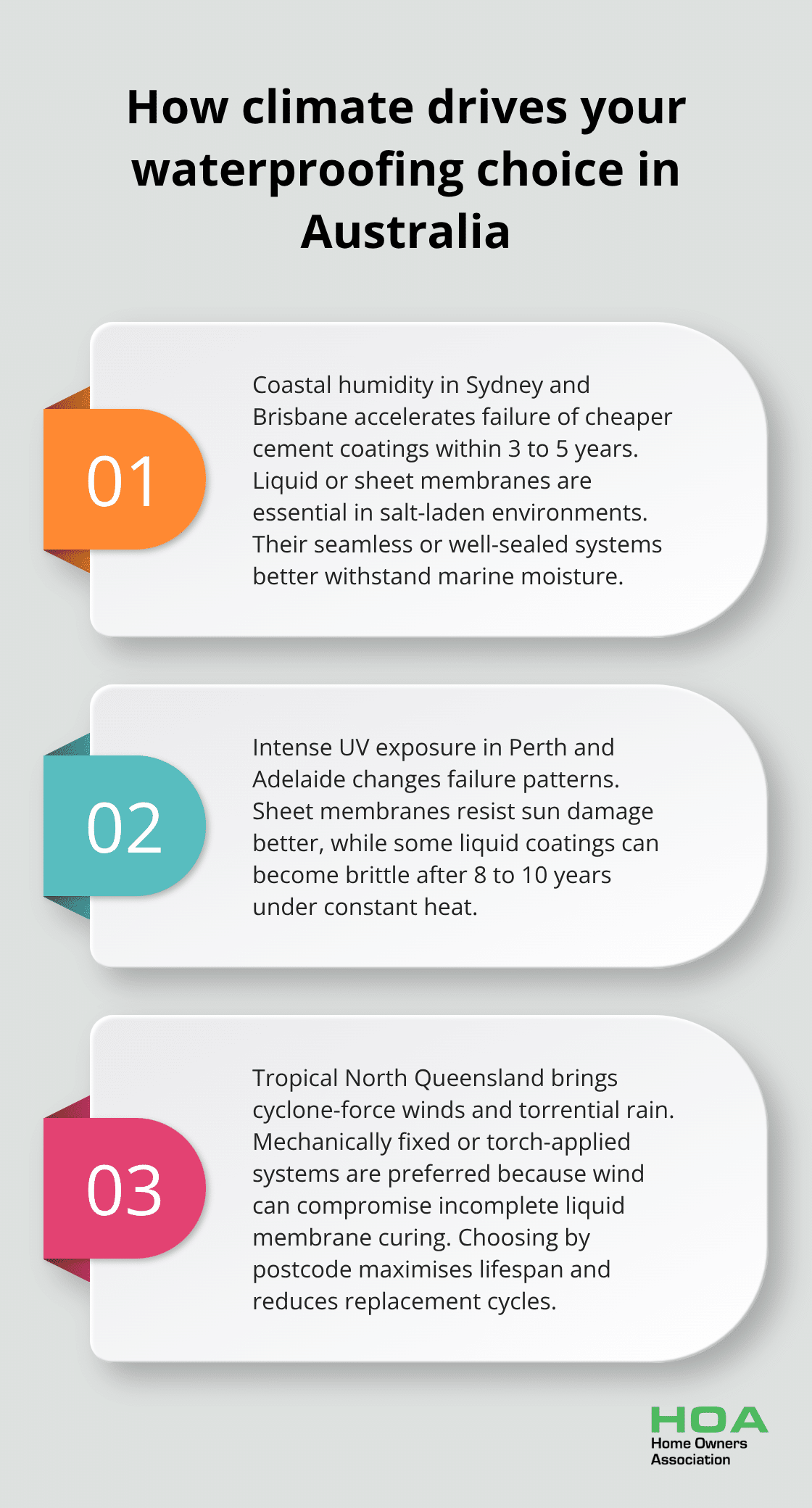
Your specific postcode determines which system survives longest, and selecting the wrong option means expensive replacement cycles rather than decade-spanning protection.
Surface Type Demands Different Approaches
The surface you protect matters as much as the climate. Concrete foundations and basements tolerate sheet membranes well, but complex roof geometries with multiple angles, valleys, and penetrations require liquid membranes that flow into irregular spaces without seams. Bathroom and wet area renovations require different thinking-tile adhesion works better over liquid membranes than sheet systems, and moisture vapour transmission matters more than sheer durability in these enclosed spaces.
True Cost Extends Beyond Installation Price
Installation costs tell only part of the financial story. A $40 per square metre liquid membrane applied incorrectly fails within 2 years, while a $60 per square metre sheet system installed by qualified professionals lasts 15 years, making the true cost-per-year dramatically different. Licensed waterproofing contractors in your region understand your specific climate challenges and which systems perform reliably in your area-their local expertise outweighs national price comparisons.
Getting Professional Quotes Matters
You should obtain quotes from multiple licensed waterproofing contractors rather than comparing national averages. Local specialists identify which systems handle your specific conditions and provide realistic timelines for installation and curing. This regional approach prevents costly mistakes and protects your investment against climate-specific failure patterns.
The next chapter examines the specific applications where waterproofing systems prove most valuable for Australian homeowners, from basements to bathrooms and everything in between.
Where Waterproofing Matters Most in Your Home
Basement and Foundation Protection
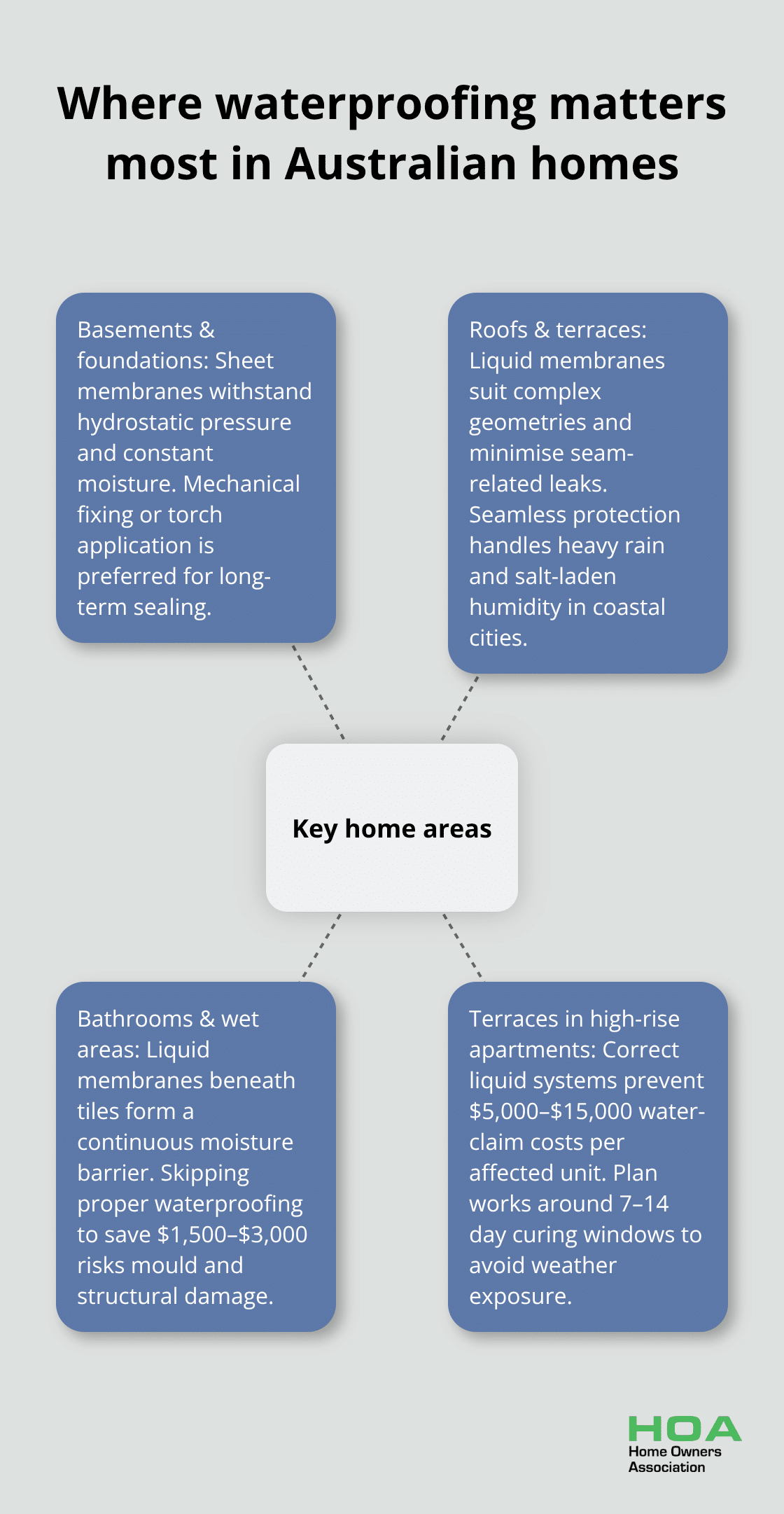
Basement and foundation protection represents the highest-stakes waterproofing application for Australian homeowners. Sheet membranes dominate basement applications because they withstand hydrostatic pressure from surrounding soil and resist the constant moisture exposure that degrades other systems. Installation demands mechanical fixing or torch application rather than spray methods, since water pressure from below can compromise adhesion over time.
Your foundation’s structural integrity depends on selecting the right membrane type for your soil composition and water table depth. Sandy soils in Perth drain differently than clay-heavy soils in Melbourne, affecting which waterproofing system performs reliably. Licensed contractors assess your specific subsurface conditions before recommending systems, and this geological assessment matters far more than national pricing trends.
Roof and Terrace Waterproofing
Roofs and terraces require different thinking entirely because they face weather exposure rather than hydrostatic pressure. Liquid membranes excel here, particularly on complex geometries with multiple roof angles, valleys, and penetrations where sheet systems create overlapping seams that eventually leak. Brisbane and Sydney properties experience intense rainfall and salt-laden humidity that demands seamless protection, and liquid membranes deliver this without vulnerable overlap points.
Terrace waterproofing in high-rise apartments across Melbourne and Sydney represents a common failure point. Improper waterproofing leads to water damage in units below, creating liability issues for building owners. Installation costs range from $30 to $55 per square metre for liquid systems on terraces, and this investment prevents water claims that typically run $5,000 to $15,000 per affected unit. Curing time matters on terraces since weather exposure during the 7 to 14 day cure period compromises membrane performance. Schedule installation during dry seasons in your region to prevent costly rework.
Bathroom and Wet Area Solutions
Bathroom and wet area waterproofing demands liquid membranes applied beneath tile work, creating a continuous moisture barrier that protects substructure from slow water penetration that eventually rots timber framing. Standard bathroom renovations in Australian homes require waterproofing on shower walls, bathroom floors, and laundry areas, yet many homeowners skip this step to save $1,500 to $3,000 during renovation budgets.
This false economy leads to mould growth, structural damage, and renovation costs exceeding $8,000 within 5 to 10 years. Liquid membranes work best in these enclosed spaces because they accommodate tile adhesive application without compromising the moisture barrier, and they handle vapour transmission differently than sheet systems. Your waterproofing contractor should specify moisture-rated membranes suitable for bathroom applications rather than generic systems designed for external exposure.
Final Thoughts
Liquid applied membranes work best for complex surfaces and wet climates, sheet membranes deliver durability in high-traffic areas and intense sun exposure, and cement-based coatings serve only as temporary cosmetic solutions. Your climate zone, surface type, and long-term budget determine which waterproofing system actually performs in your specific situation rather than national averages or generic recommendations. The waterproofing options Australia offers vary significantly by region, with coastal properties needing different protection than inland homes and tropical areas facing entirely different challenges than temperate zones.
Licensed local contractors understand your specific climate patterns, soil conditions, and structural requirements in ways that national pricing guides cannot match. They identify which systems handle your region’s humidity, temperature swings, and weather patterns reliably and provide realistic timelines for installation and curing. Contact multiple contractors with detailed information about your property’s location, surface type, and specific protection needs, then request warranty coverage details and confirm that they hold appropriate licensing for waterproofing work in your state.
We at Home Owners Association support homeowners through every renovation and maintenance decision, and members access trade pricing on waterproofing materials and expert guidance to meet quality standards. Explore the benefits of Home Owners Association membership to maximise your savings and access personalised advice from professionals who understand your region’s specific conditions.