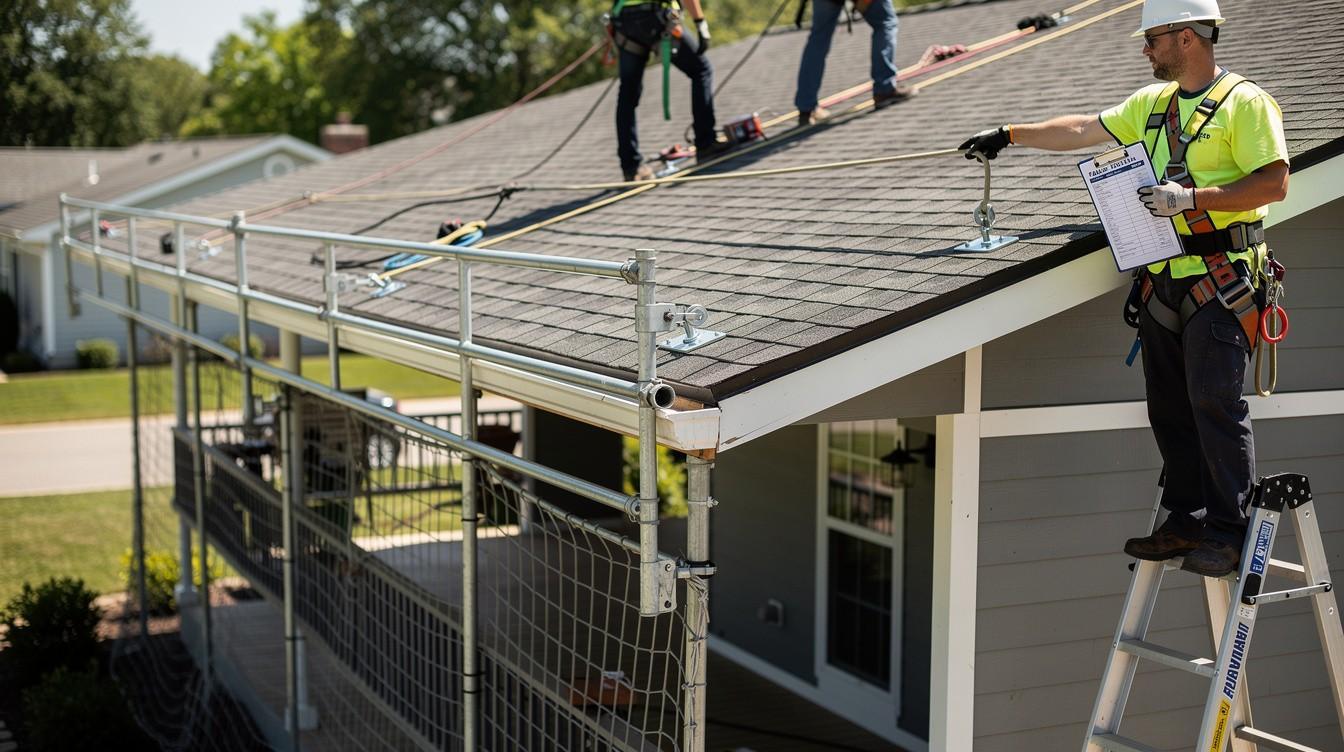
Falls remain the leading cause of serious injuries on Australian home renovation sites. We at Home Owners Association know that proper fall protection planning in Australia can prevent these accidents before they happen.
This guide walks you through the equipment, regulations, and planning steps needed to keep your renovation team safe at every height.
Understanding Fall Hazards in Home Renovations
Why Falls Happen Fast on Australian Renovation Sites
Falls occur rapidly on renovation sites, and the consequences prove severe. Safe Work Australia reports that falls from heights account for approximately 35% of all serious workplace injuries in the construction sector, and home renovations sit squarely within this risk category. The difference between a residential renovation and a commercial construction site matters significantly: homeowners often lack the formal safety infrastructure that larger projects require.

Scaffolding becomes improvised, guardrails get skipped, and workers operate without proper training because the job feels temporary or small-scale. This attitude kills. A fall from a second-storey window or roof edge causes identical injuries whether you work on a major development or a backyard renovation.
Australian Regulations Apply to Your Home Project
Australian regulations under the Work Health and Safety Act 2011 set clear expectations for fall protection on any work site, including residential projects. Work at heights above 2 metres requires fall protection measures, and this applies to your renovation whether you hire contractors or tackle work yourself. The National Construction Code and Australian Standards AS/NZS 1576 for scaffolding and AS/NZS 1891 for safety harnesses provide the technical requirements, yet many homeowners remain unaware these standards apply to them.
The Real Risks on Residential Properties
The reality strikes hard: falls from ladders, unprotected edges, and improperly assembled scaffolding cause preventable injuries every year on Australian homes. Roof work, second-storey renovations, and deck construction present the highest risks. Workers lose balance, equipment fails, or surfaces become slippery-and without proper guardrails, harnesses, or platforms, a minor slip transforms into a life-changing injury or worse.
Planning Prevents Tragedy
Planning for fall protection before work begins isn’t optional; it’s the difference between a successful project and a tragedy that affects your family and your renovation team. The next section outlines the specific equipment and systems that protect workers at height and form the foundation of any effective fall protection strategy.
What Equipment Actually Stops Falls on Australian Home Renovations
Guardrails: Your First Line of Defence
Guardrails work, and the statistics prove it. Work Health and Safety data shows that properly installed guardrails reduce fall injuries by up to 90% on elevated work areas. On your renovation, a guardrail means a horizontal rail system installed at 1000mm height with a minimum load capacity of 1.1 kilonewtons per metre. This isn’t decorative-it’s a physical barrier that stops workers from stepping into empty space.
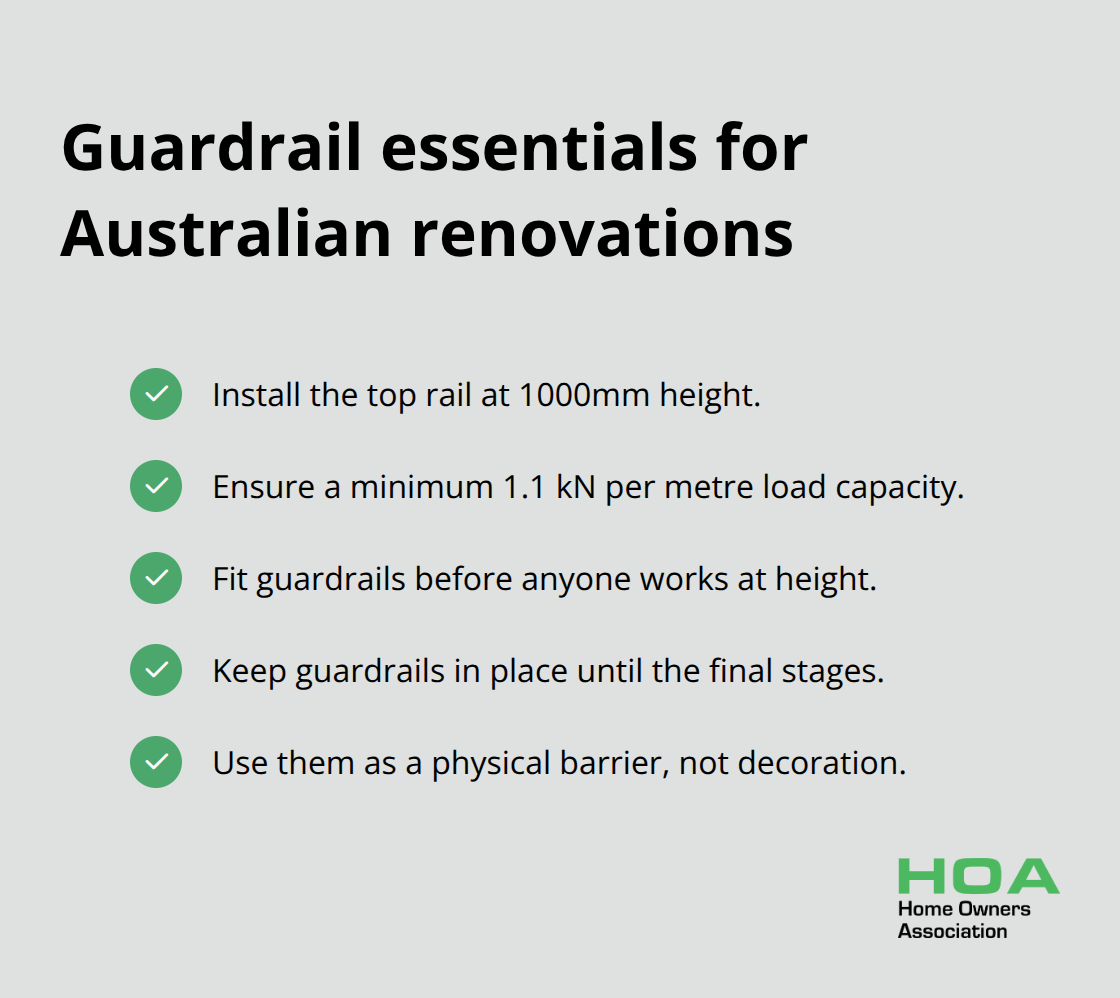
Many Australian homeowners skip guardrails because they think the job is too small or temporary, but a worker standing on a second-storey platform needs identical protection whether the project lasts two weeks or two months. Install guardrails before anyone works at height, and keep them in place until the final stages of your renovation.
Handrails for Stairs and Ramps
Handrails differ from guardrails and serve a different purpose: they provide grip and stability on stairs, ramps, and walkways. Handrails must sit between 865mm and 1000mm from the surface and installation on both sides of any stairway or ramp used during renovation work remains essential. Australian Standards AS/NZS 1576 specifies these dimensions precisely because hands need consistent positioning to prevent slips.
Safety Harnesses and Lanyards
Safety harnesses and lanyards form your second line of defence when falls from height remain possible despite guardrails. A properly fitted harness distributes fall forces across your body and stops your descent before you hit ground or obstacles below. Safety harnesses are required for work above 2 metres where guardrails cannot be installed, and this applies to roof work, fascia installation, and external wall repairs on your home.
Your harness must connect to an anchor point-a fixed structural element that can withstand 15 kilonewtons of force-using a lanyard no longer than 2 metres. Many homeowners rent scaffolding and work platforms instead of using harnesses, and this approach makes sense for extended work periods.
Scaffolding and Elevated Work Platforms
Scaffolding systems under Australian Standards AS/NZS 1576 provide stable elevated work surfaces for tasks like roof repairs, second-storey extensions, or fascia work. A basic scaffolding setup costs between $500 and $2000 for a two-week rental on a residential property, depending on height and coverage area. This investment pays for itself the moment it prevents an injury that would cost your family thousands in medical expenses and lost income.
Mobile elevated work platforms, commonly called cherry pickers or boom lifts, offer another option for specific tasks like gutter cleaning or high fascia work. Rental costs run $300 to $800 per day, making them economical for single-day jobs where harness work would prove cumbersome or impractical. Selecting the right equipment for your specific tasks requires understanding which hazards your renovation actually presents-a step we address in the next section.
Building Your Fall Protection Plan
Map Every Hazard on Your Actual Site
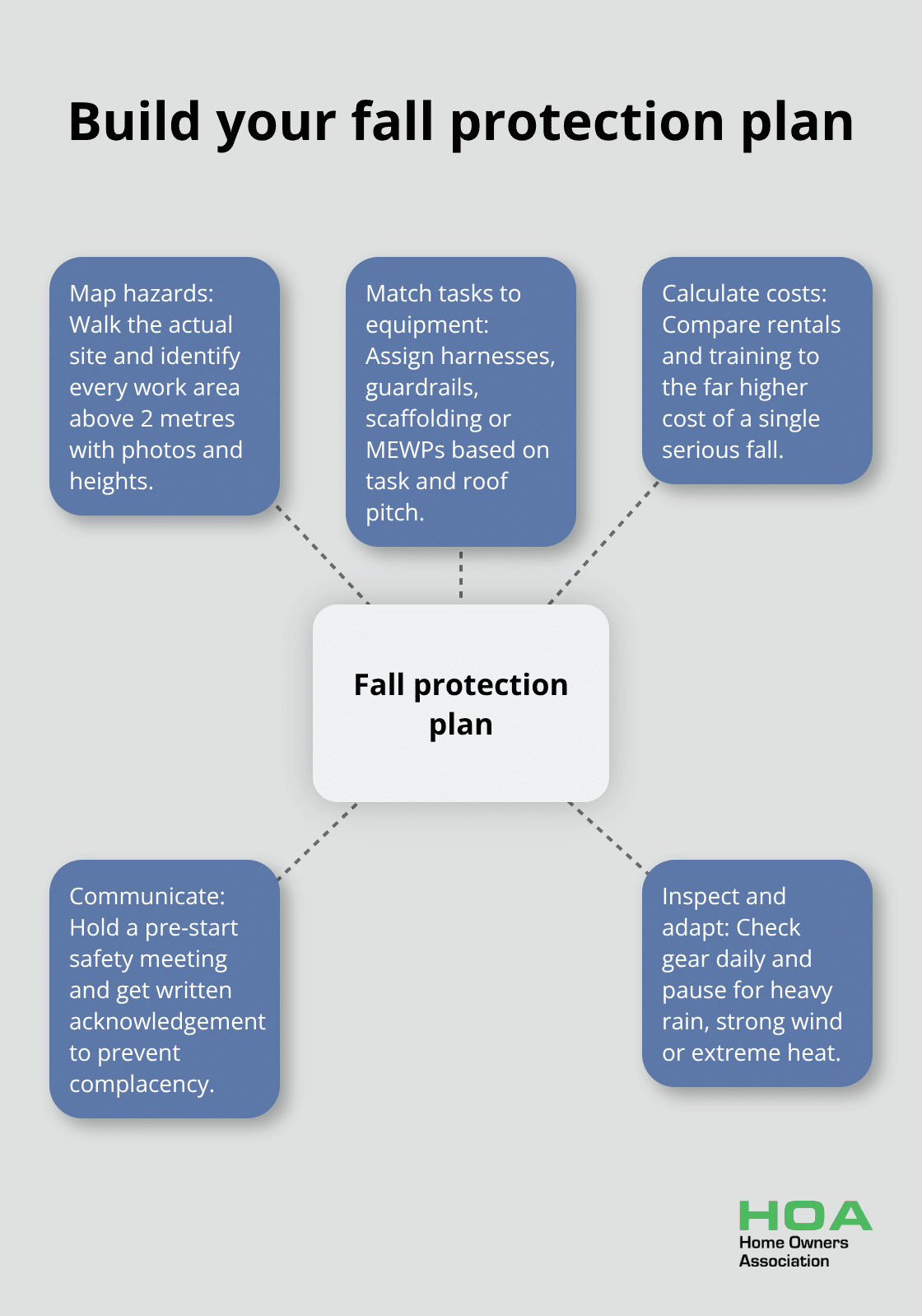
Start with a walk-through of your actual renovation site, not a theoretical assessment. Identify every area where work happens above 2 metres: roof edges, second-storey windows, deck railings, fascia lines, and scaffolding platforms. Document the exact height of each work zone and photograph problem areas like sloped roofs, loose soil near foundations, or weather exposure that increases slip risk. This isn’t busywork-Safe Work Australia data shows that serious falls on residential sites occur in areas where hazards weren’t formally identified beforehand.
Match Tasks to Protection Equipment
Write down the specific tasks for each zone: are workers installing gutters, replacing roof tiles, or building a deck? Each task demands different protection. Roof work requires harnesses and anchor points; deck construction needs guardrails; gutter work might demand mobile elevated work platforms. Once you’ve mapped your hazards, match them to equipment. If your roof pitch exceeds 30 degrees, harnesses become mandatory because guardrails won’t provide adequate protection on steep surfaces. If workers spend full days on elevated platforms, scaffolding rental costs less than harness equipment and reduces fatigue-related mistakes.
Calculate True Project Costs
Calculate costs accurately: a two-week scaffolding rental at $1000 plus safety harness training at $300 per worker totals far less than a serious fall injury. This financial reality makes fall protection an investment, not an expense.
Communicate Safety Requirements Before Work Starts
Communication separates safe projects from dangerous ones. Before work begins, hold a 30-minute safety meeting with every person on site-contractors, apprentices, family members helping out, everyone. Explain the specific fall hazards you identified, show them the guardrails or harnesses they’ll use, and demonstrate proper equipment fitting. Many Australian homeowners skip this step because they assume experienced contractors know the rules, but experience doesn’t prevent complacency. Contractors working on their tenth residential renovation often rush setup procedures or skip harness checks because they’ve never experienced a serious fall. Require written acknowledgement that each person understands the fall protection plan; this creates accountability and protects you legally.
Inspect Equipment and Adapt to Conditions
Inspect all equipment before work starts and daily throughout the project: check harness stitching for tears, verify guardrail connections remain tight, test scaffolding stability by applying downward pressure at multiple points. Document these inspections with photos and dates. If weather turns-heavy rain, strong wind, extreme heat-pause work and reassess. Wet roof surfaces become slippery instantly, wind increases fall risk on open platforms, and heat causes workers to make rushed decisions.
Your renovation stays on schedule when safety protocols prevent injuries that would halt work for weeks.
Final Thoughts
Fall protection planning in Australia requires commitment before your renovation starts, not after an injury forces you to act. The equipment exists, the regulations are clear, and the process works when you follow it systematically. Guardrails, harnesses, scaffolding, and proper training form a complete system that stops falls before they happen. Your renovation team deserves protection at every height, and your family deserves the peace of mind that comes from knowing hazards have been identified and controlled.
The cost of equipment rental and safety training disappears against the financial and emotional devastation of a serious fall injury. A worker who falls from a second-storey platform faces months of recovery, lost income, and permanent disability in many cases. Your family faces legal liability, medical bills, and the weight of knowing an injury happened on your property (all preventable through proper planning).
Start your next renovation by walking your site and identifying every work area above 2 metres. Document the hazards, select appropriate equipment, calculate realistic costs, and communicate requirements to everyone involved. Visit Home Owners Association to access resources and expert guidance on fall protection planning Australia for your renovation projects.