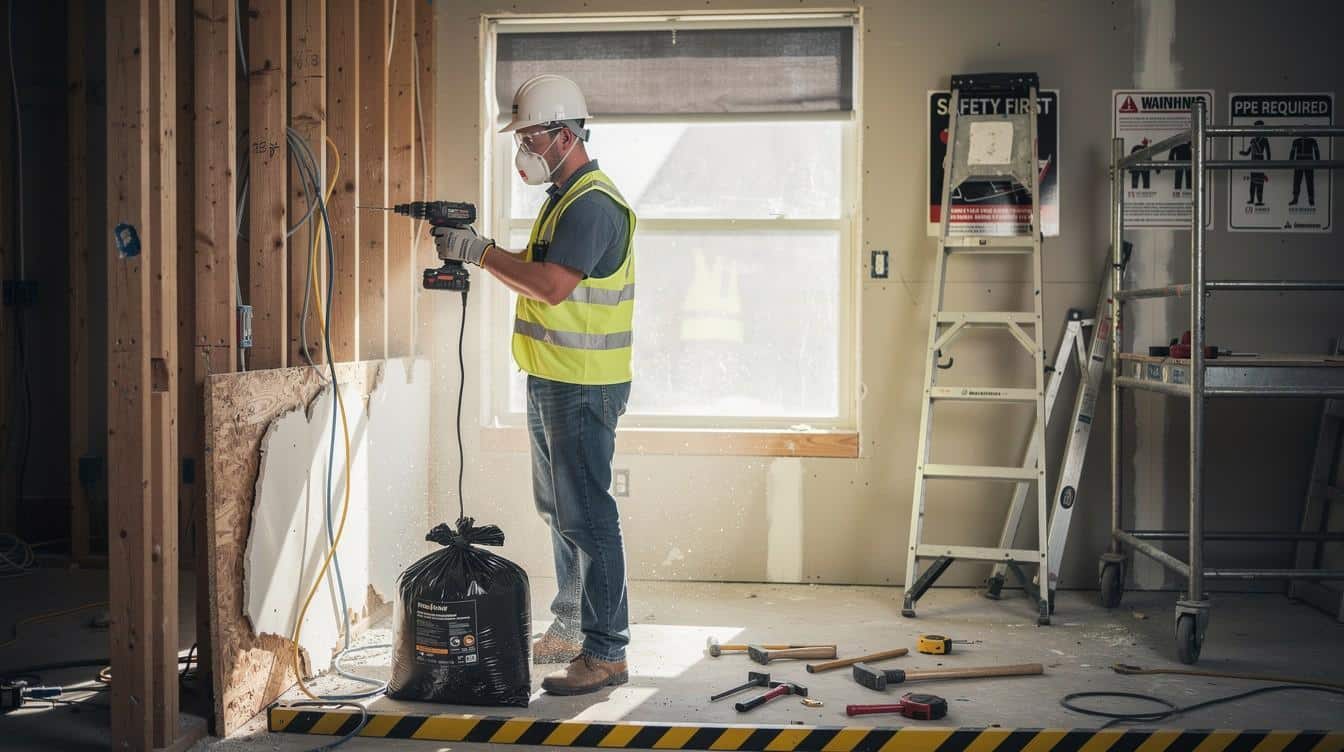
Home renovations can turn dangerous fast. At Home Owners Association, we’ve seen too many preventable injuries happen on job sites because people skip the basics.
This guide covers the renovation safety tips that actually matter-from the gear you wear to how you set up your workspace. Follow these practices and you’ll protect yourself and anyone else on your property.
Gear That Actually Protects You
The difference between a renovation that ends well and one that lands you in hospital often comes down to what you wear. Eye injuries from flying debris, respiratory problems from silica dust, and hand lacerations rank among the most common renovation injuries. Safe Work Australia data shows serious injuries in construction, with joint and ligament injuries, fractures, and wounds accounting for the majority. The leading causes weren’t dramatic accidents-they were preventable incidents from body stressing, slips, trips, and falls. You need specific gear for specific tasks, and cutting corners on protection always costs more than the equipment itself.
Eye and Respiratory Protection
Eye protection is non-negotiable on every single renovation. Use safety glasses or work goggles with sealed designs and side shields, not the cheap variety that leaves gaps for debris. When you cut, sand, or demolish, particles travel faster than you think, and permanent vision loss isn’t worth saving thirty dollars on goggles. Respiratory protection matters just as much, especially if you work with silica, asbestos insulation, or even general dust from cutting.

A basic disposable mask won’t cut it for serious hazards; invest in a quality respirator rated for the specific materials you handle.
Hand, Head, and Hearing Protection
Work gloves protect your hands from cuts and chemicals, but choose them based on the task-thick leather for demolition, nitrile for chemical handling, fitted options for precision work. Hard hats prevent head injuries from falling objects, and hearing protection guards against noise-induced hearing loss from power tools. Safe Work Australia data shows falls rank as the most common home renovator accident, often resulting in head injuries, so don’t treat a hard hat as optional. Hearing protection ranges from disposable ear plugs to high-end noise-cancelling earmuffs depending on noise levels and comfort.
Inspecting and Replacing Worn Gear
Check your equipment before every project. Cracked safety glasses won’t protect your eyes properly, torn gloves leave your hands exposed, and damaged respirators let particles through. Worn ear plugs lose their sealing effectiveness, and frayed hard hat straps won’t hold properly in a fall. If your gear shows damage, replace it immediately-it’s cheaper than a trip to the emergency department. Store protective equipment in a dry place away from direct sunlight, which degrades plastics and rubber over time. Keep your gear organised so you actually grab it instead of telling yourself you’ll be careful without it.
Building Confidence Through Proper Preparation
Having the right gear readily available means you’re more likely to use it. Full-day power tool workshops led by qualified tradies emphasise that all tools, materials, and safety gear are provided so participants can practise safely and build confidence. That same principle applies to your own projects-when you assemble your protection kit before work starts, you establish a safety habit that carries through every task. With proper gear in place, you’re ready to address the specific hazards that renovation work presents, from ladder safety to dust control and electrical risks.
Common Renovation Hazards and Prevention
Fall Risks and Ladder Safety
Falls from heights remain the leading cause of serious renovation injuries, and the statistics prove why ladder safety demands respect rather than shortcuts. Secure placement on level ground, three points of contact at all times, and avoiding the top rung aren’t suggestions-they’re requirements. Never lean sideways from a ladder to reach something just out of arm’s length; move the ladder instead. Scaffolding demands pre-use inspection, proper assembly, guardrails, and toeboards before anyone sets foot on it.

If you work at heights above two metres, fall-arrest systems and edge protection become non-negotiable. The cost of renting proper equipment or hiring professionals for high-work tasks disappears instantly when compared against a hospital bill or worse.
Dust and Respiratory Hazards
Dust and respiratory hazards kill quietly, which makes them deadlier than dramatic falls. Silica exposure from cutting engineered stone or concrete, asbestos fibres from pre-1980s insulation, and general construction dust all cause permanent lung damage that shows up years later. A basic disposable mask won’t protect you-you need a respirator rated for the specific hazard you face. Adequate ventilation (opening windows and using extraction fans) prevents dust from settling in your lungs and your home. Never rely on hope that dust settles somewhere else; active ventilation controls the hazard at its source.
Electrical Hazards and Fire Safety
Electrical hazards rank among the leading causes of construction deaths, so de-energise circuits before any work, maintain safe distances from live wiring, use residual current devices on power tools, and call a licensed electrician for anything beyond simple outlet work. Fire safety on renovation sites requires keeping combustible materials away from heat sources, maintaining clear escape routes, and having a working fire extinguisher on hand. Understanding which extinguisher type matches your potential fire hazards (water for ordinary combustibles, foam for flammable liquids, powder for electrical fires) prevents you from grabbing the wrong tool in an emergency. Addressing these risks head-on before work starts sets the foundation for a safe workspace that protects everyone on your property.
Creating a Safe Renovation Environment
Designing Your Workspace Layout
Your workspace layout determines whether your renovation runs smoothly or becomes a hazard zone. Identify your work area and keep it separate from living spaces where family members move through unpredictably. Clear the floor of obstacles, trip hazards, and clutter that could cause falls-slips, trips, and falls rank among the leading causes of serious injuries on renovation sites. Position your main work zone away from doorways and high-traffic areas. If you work on multiple levels, designate a clear pathway for moving materials and equipment, and keep this route free of debris at all times.
Securing Your Perimeter and Protecting Adjacent Properties
Secure your workspace perimeter with barriers or caution tape to signal that this area is active and hazardous. If you have neighbours sharing walls or adjacent properties, a dilapidation survey documents your property’s pre-renovation condition and creates photographic evidence of existing structures. This protects you both if any damage occurs during your work and helps resolve disputes quickly if they arise.
Managing Hazardous Materials
Waste disposal and cleanup demand the same attention as the work itself because hazardous materials left unmanaged pose risks long after your tools stop running. Homes built before the 1980s may contain asbestos that requires professional testing and safe removal or encapsulation before any demolition begins-do not assume old insulation is harmless. Separate your waste streams into recyclables, general construction waste, and hazardous materials, keeping each in clearly marked containers. Dispose of hazardous materials according to local regulations; improper disposal contaminates soil and groundwater while exposing you to fines and liability.

Maintaining Daily Cleanliness and Safety
Sweep and vacuum dust daily rather than waiting until the end, which reduces respiratory hazard accumulation in your home. Electrical cables and compressed air lines create tripping hazards, so run them along walls or overhead rather than across walkways. At the end of each workday, remove debris from stairs and escape routes so anyone can exit safely if an emergency occurs. This discipline transforms your renovation from a chaotic site into a controlled environment where safety becomes the default rather than an afterthought.
Final Thoughts
Safe renovations start with commitment, not luck. The renovation safety tips covered in this guide-from wearing proper protective equipment to planning your workspace layout-work because they address real hazards that cause real injuries. Safe Work Australia data shows that preventable incidents from body stressing, slips, trips, and falls dominate renovation injury statistics, and you now have the knowledge to avoid becoming part of those numbers.
Your next project begins before you pick up a single tool. Assemble your safety gear, inspect it for damage, and identify the specific hazards your work will create. Secure your workspace, manage hazardous materials properly, and maintain daily cleanliness throughout the project so these practices compound over time and build a safety culture that protects you and anyone else on your property.
Visit Home Owners Association to explore membership benefits and connect with a community of homeowners committed to quality and safety. Your next renovation doesn’t have to be risky when you apply these safety principles and start your project with confidence.