A timber retaining wall transforms your garden while solving real drainage and erosion problems. We at Home Owners Association see these structures as one of the most practical investments homeowners make for sloped properties.
This guide covers timber retaining wall ideas that work, from sleeper walls to log cabin designs. You’ll also learn the maintenance practices that keep your wall standing strong for decades.
Which Timber Type Works Best for Your Garden
Sleeper walls stand out as the most durable option for retaining walls that face ground contact and moisture exposure. Hardwood sleepers, such as ironbark and spotted gum, offer superior strength and natural resistance to decay and termites, delivering 20 to 25 years or more with minimal upkeep. According to Canstar’s analysis of five main retaining wall types, timber walls rank among the most cost-effective options available, making them practical for homeowners watching their budget. Sleeper walls work particularly well for raised garden beds because their design supports healthy drainage-water runs through rather than pooling behind the structure.
Post and Rail Construction for Adaptability
Post and rail walls offer flexibility that sleeper designs cannot match. This system uses vertical posts spaced roughly 1.2 metres apart for standard walls, with horizontal rails attached between them. Taller walls require closer spacing at about 900 mm to handle increased soil pressure, especially in clay soils which push up to 40 per cent more force than sandy soils.

Use galvanised or stainless steel screws and bolts rather than nails-pre-drill every hole to prevent timber splitting and ensure the wall holds firm for decades. This construction method lets you add features like integrated seating, planter boxes, or trellis screens without major structural changes. The design also accommodates climbing plants and greenery that soften the wall’s appearance while adding privacy to your outdoor space.
Log Cabin and Rustic Aesthetics
Log cabin walls create a natural, traditional look using stacked timber, though this style suits low walls better than tall structures. Railway sleepers provide that authentic rustic character at lower cost, but recycled sleepers may contain creosote-avoid these near vegetable gardens or play areas where children spend time. For longer-lasting rustic appeal, choose termite-treated timber that resists decay while maintaining the warm wood appearance. Composite timber offers a modern alternative with a wood-like finish, moisture and termite resistance, and durability up to 40 years, though upfront costs run higher and the appearance remains more uniform.
Foundation and Drainage Essentials
Whichever timber type you select, proper drainage behind the wall prevents water buildup and rot. Install a slotted drainage pipe at the base with 20 mm drainage gravel, covered by geotextile fabric, sloping toward a safe outlet away from your home’s foundation. The construction method involves laying long sleepers horizontally and anchoring them with posts dug roughly 300 mm in diameter, deep enough to support about half the wall’s height. This straightforward approach means you can adjust the design as your garden evolves, unlike concrete or stone alternatives that demand permanent commitment. With the right timber type and proper drainage in place, your wall resists the elements and supports whatever features you add next.
How to Style Your Timber Wall for Maximum Impact
Curved Walls Create Visual Depth
Curved timber walls create visual depth that straight structures simply cannot achieve, and they work particularly well in compact gardens where space feels limited. A gentle curve draws the eye and makes the garden feel larger than it actually is, rather than a flat plane running across your yard. The construction requires posts spaced closer together-roughly every 900 mm instead of the standard 1.2 metres-to allow the timber to bend without cracking or losing structural integrity. Hardwoods like spotted gum handle curves better than treated pine because their density resists stress from the bend. Climbing greenery through gaps in the timber or planter boxes along the base soften the curve further and transform a functional retaining wall into a garden feature that people actually notice.
Tiered Walls Solve Sloped Garden Challenges
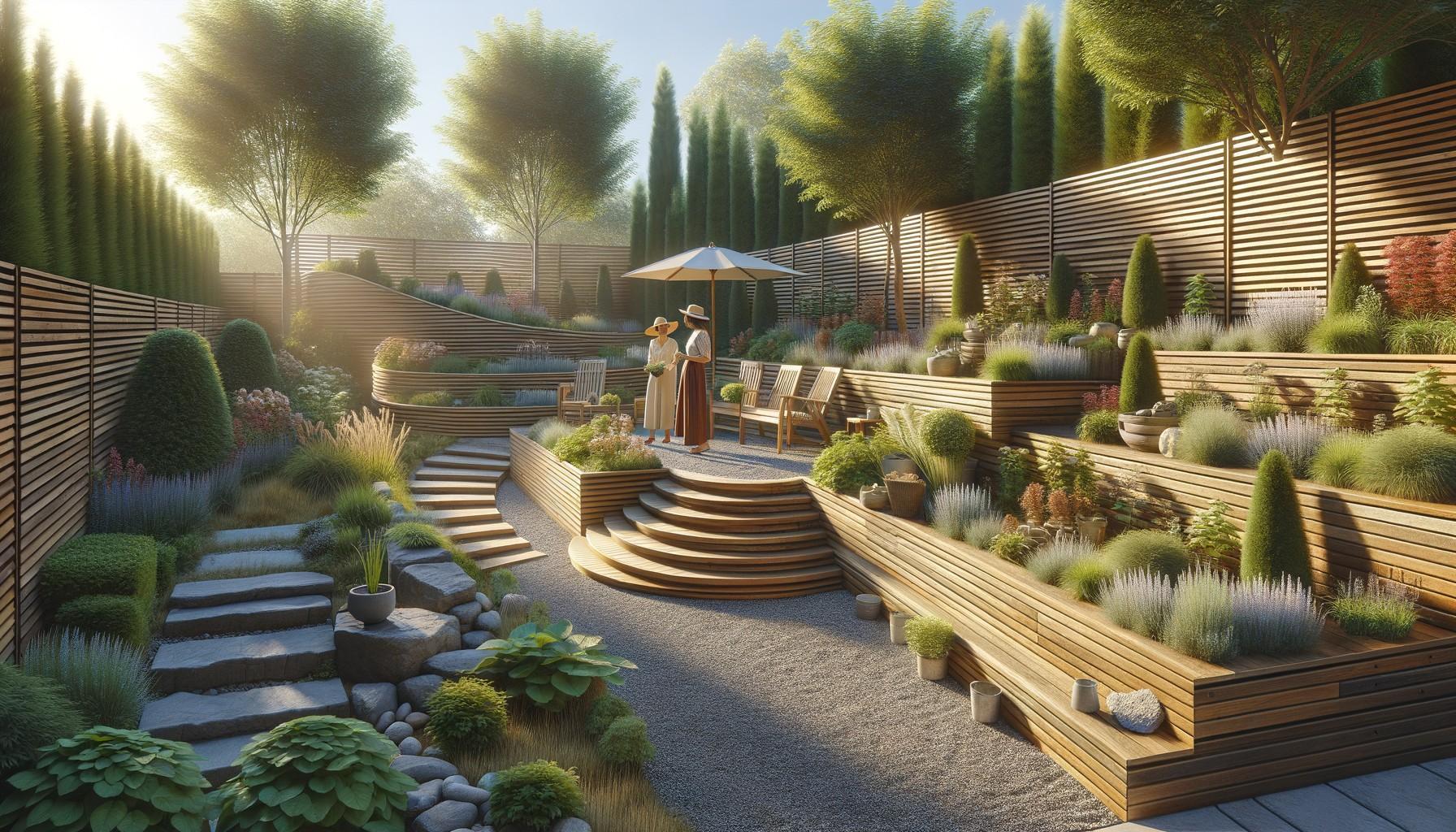
Tiered walls solve sloped garden challenges by creating a series of level terraces on sloped land. Instead of one tall wall, build two or three shorter walls stacked at different levels, each roughly 600 to 900 mm tall. This distributes soil pressure more evenly, reduces the structural demands on each individual wall, and creates distinct planting zones throughout your garden. Each tier becomes its own raised bed-perfect for vegetables on the lowest level, ornamental plants in the middle, and shallow-rooted ground covers on top.

The spacing between tiers lets you incorporate seating areas, pathways, or water features that break up the vertical landscape.
Integrated Seating and Planters Save Space
Integrated seating built directly into the wall structure saves enormous amounts of space in smaller gardens. A bench with built-in planters along the edge provides both functionality and greenery without requiring additional square footage. Pair timber seating with stone courtyard elements or pale painted background walls to create a contemporary outdoor room that feels intentionally designed rather than hastily assembled. Step lights along the timber edges highlight texture and plants after dark, turning your retaining wall into a focal point that works day and night.
With your wall styled and functional, the next step involves understanding the maintenance practices that keep these structures standing strong. Proper drainage and regular inspections determine whether your timber wall lasts 15 years or 25 years-and that’s where most homeowners make critical decisions about their long-term investment.
Keep Your Timber Wall Standing Strong
Install Proper Drainage to Prevent Water Damage
Drainage determines whether your timber wall lasts 15 years or 25 years, and most homeowners underestimate how aggressively water works against wood. Install a slotted drainage pipe at the base of your wall, positioned roughly 300 mm from the back face, sloping gently toward a safe outlet away from your home’s foundation. Surround this pipe with 20 mm drainage gravel, then cover it with geotextile fabric to prevent soil from clogging the slots over time. Without this system, water pools behind the wall, applying constant pressure that forces the timber outward and accelerates rot from the inside out.
Clay soils demand extra attention because they hold moisture far longer than sandy soils and push up to 40 per cent more force against your wall. Inspect the drainage system twice yearly, especially after heavy rain, to confirm water flows freely rather than pooling near the base.

If water sits behind your wall for more than a few hours after rain stops, your drainage has failed and requires immediate attention.
Spot Rot and Deterioration Before Structural Failure
Timber deterioration happens silently until the damage becomes structural, so regular inspections catch problems before they threaten your wall’s integrity. Walk the length of your wall every six months and press a screwdriver firmly into the timber at several points along its length. If the screwdriver sinks easily into the wood, rot has penetrated deeper than surface treatment can reach and that section needs replacement.
Look for soft or spongy timber, visible cracks that run perpendicular to the grain, or sections where the wood has darkened significantly. Bowing or tilting toward the garden indicates soil pressure has overwhelmed the structure, usually from failed drainage or inadequate post spacing. These warning signs demand immediate action to prevent collapse.
Choose Timber That Resists Decay Naturally
Hardwoods like spotted gum and merbau resist decay naturally with basic maintenance, while treated pine requires more vigilant care and generally lasts 15 to 20 years depending on treatment level. Reseal or restain every 2 to 3 years to provide a protective barrier against moisture and UV damage. In termite-prone regions or areas with high humidity, increase inspection frequency to quarterly and consider upgrading to H5-treated timber or Class 1 hardwoods that resist both decay and insect damage more effectively than standard materials.
Final Thoughts
Timber retaining wall ideas work because they solve real problems-drainage, erosion, and uneven terrain-while adding genuine character to your outdoor space. Sleeper walls last 20 to 25 years with minimal upkeep, post and rail construction offers flexibility for adding seating and planters, and log cabin designs create that warm rustic aesthetic without breaking your budget. Each approach we’ve covered delivers practical value that concrete and stone alternatives struggle to match.
The maintenance practices that keep your wall standing strong boil down to three essentials: proper drainage behind the wall, regular inspections every six months, and resealing every 2 to 3 years. These habits cost far less than replacing a failed wall and extend your investment by a decade or more. Hardwoods like spotted gum naturally resist decay better than treated pine, but any timber type demands attention to water management and early detection of rot.
Timber retaining walls outperform other materials for homeowners who value flexibility and affordability, and you can adjust your design as your garden evolves without major structural changes. Contact Home Owners Association to access personalised advice and member benefits that help your timber retaining wall project succeed within budget.